At the end of April, the American Clean Power Association (ACP) announced a $100 billion commitment to building new battery manufacturing facilities and buying domestically produced batteries for the grid. The press release expanded on the multiple benefits that will be achieved, “The industry will advance American battery manufacturing leadership, enhance U.S. energy security, provide energy affordability and reliability, and drive international competitiveness.” The commitment is also estimated to create about 350,000 American jobs by 2030.
CEO Jason Grumet said, “The energy storage industry is providing essential power when needed most while boosting domestic manufacturing and creating jobs across the country. Today’s historic commitment will invest billions of dollars into American communities and position the United States as a manufacturing leader in battery technology that is critical to national and grid security.”
In addition to advancing the country as a battery-making leader, the investment will advance the industry toward being able to provide American-manufactured batteries for every domestic energy storage project by the end of the decade. The press release elaborated, “A pro-business environment, supported by stable tax and trade policy and streamlined permitting, is essential to the industry fulfilling this commitment.”.
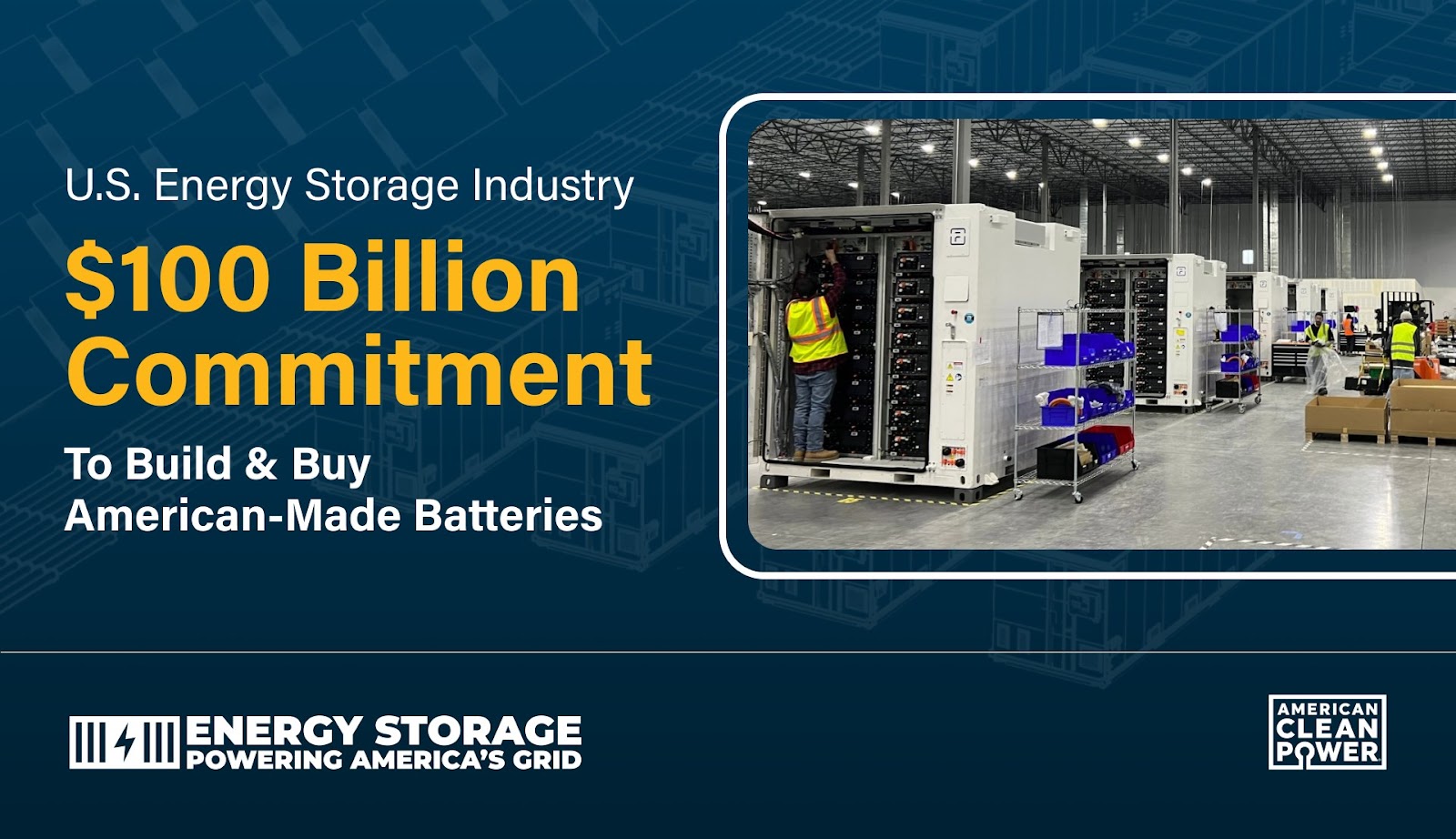
Photo Courtesy American Clean Power Association
Since 2018, when the Federal Energy Regulatory Commission (FERC) issued Order 841 to remove any barriers standing in the way of electric storage resources’ participation in Regional Transmission Organization and Independent System Operator-run markets, energy storage development has grown by a factor of 25, according to ACP. “The ongoing growth in energy storage deployment is driving investment in American battery manufacturing facilities,” the organization explained. Companies have already committed to building or expanding more than 25 factories for manufacturing grid-scale energy storage, with 11 already being built or in operation, and 31 states building energy storage projects.
One of the most notable projects is Form Energy’s Form Factory 1, a $760 million investment to transform a former steel mill in Weirton, West Virginia into a battery production hub initially employing at least 750 people. Co-founder & CEO Mateo Jaramillo recently reflected, “The newly built Form Factory 1 is proving that America’s greatest manufacturing epoch isn’t behind us; it’s unfolding now. This investment in American manufacturing not only supports the creation of high-quality jobs in West Virginia but also ensures that the U.S. remains a leader in energy innovation. As the energy storage industry commits to investing $100 billion in American-made grid batteries by 2030, Form Energy is excited to play a key role in building a more reliable, resilient, and secure energy future for our country.”
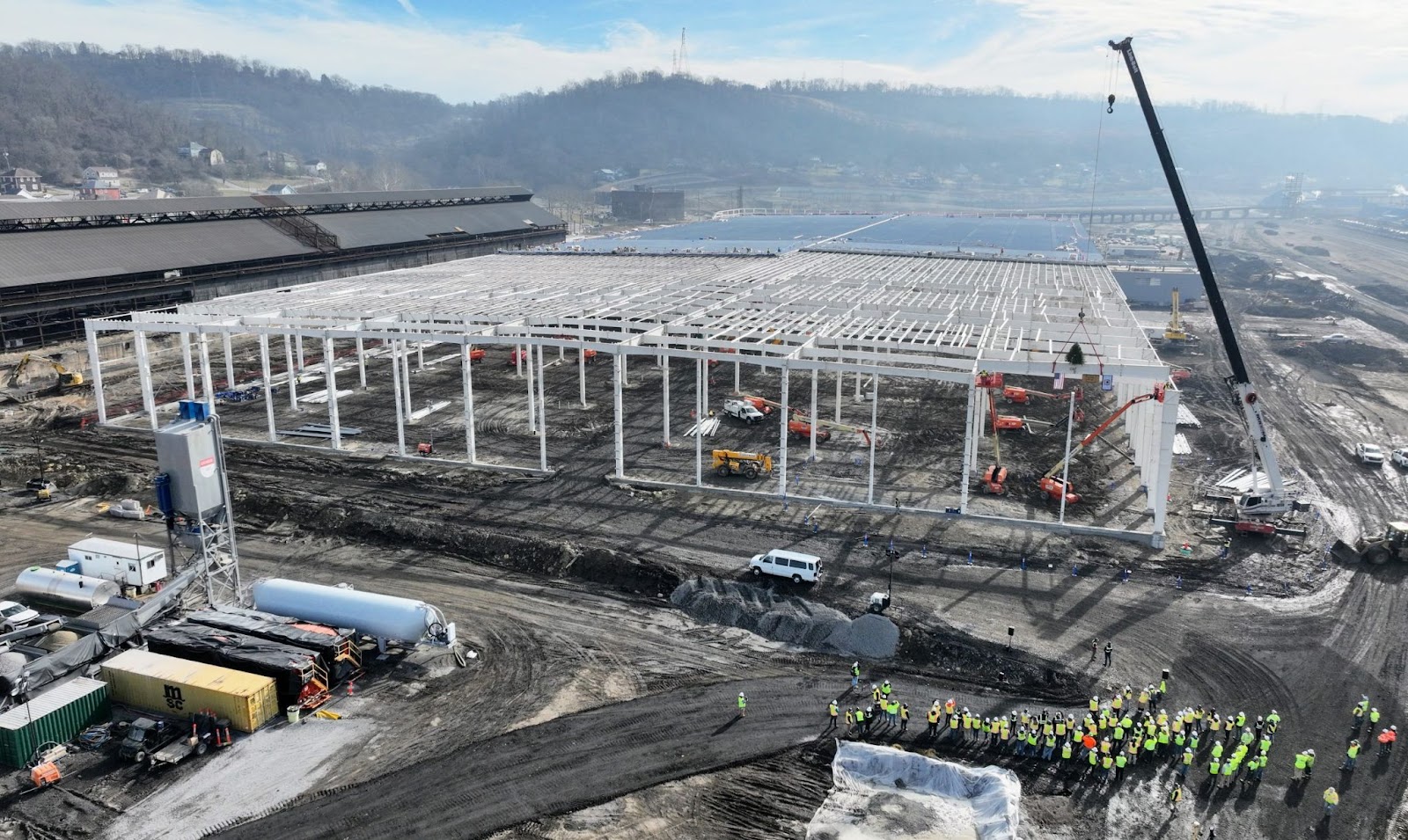
Photo Courtesy Form Energy
Additionally, LG Energy Solution makes batteries and battery components in Georgia, Ohio, and Tennessee. The company is expanding in Michigan, investing $2.7 billion in its Holland, Michigan, location. Jaehong Park, CEO of LG Energy Solution Vertech, explained, “LG Energy Solution is fully committed to expanding US energy storage manufacturing, with our fist factory lines expected to begin production in 2025 in Holland, Michigan, where we will adapt existing lines to provide 16.5GWh of ESS batteries, with an additional 11 GWh of capacity planned for the beginning of 2026.”
Meanwhile, Fluence Energy which produces cells, modules, and equipment has locations in states including Arizona, Tennessee, Texas, and Utah, representing about $700 million in investment, 1,200 manufacturing jobs, and 450 construction jobs. The company recently opened a new factory in Goodyear, Arizona, to produce battery management system hardware and enclosures for energy storage systems. John Zahurancik, president, Americas, noted, “Our manufacturing facilities in Utah, Texas, Tennessee, and Arizona support more reliable and cost-effective energy production while creating a resilient U.S. supply chain that advances American innovation, jobs, and energy security. These investments are about building the future of energy—right here in the United States.”
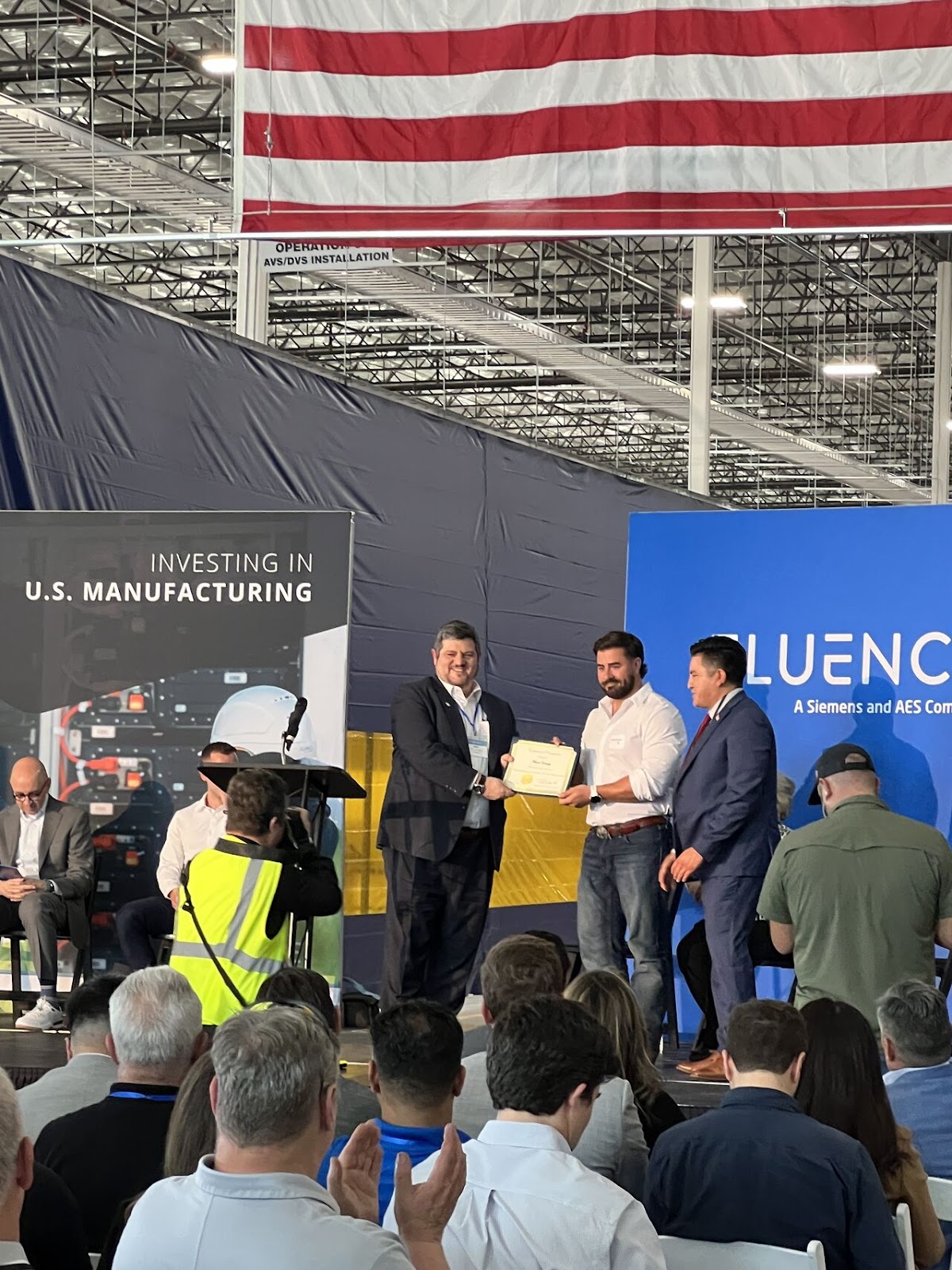
Photo Courtesy Fluence
“As communities across the country grapple with skyrocketing energy demand, aging grid infrastructure, and concerns over reliability, battery energy storage is providing a ready-to-deploy solution to these challenges,” ACP wrote in its press release. Energy storage projects significantly benefit local communities, keeping the power on during bad weather and climate disasters. They help households save money on their energy bills, too. In Texas, for example, ACP found that battery systems contributed to $750 million in consumer savings in 2024. These resources contribute to American energy independence and dominance and ensure the country can maintain its leadership in the artificial intelligence (AI) race.
However, these benefits of the $100 billion investment will not be felt without favorable policies, ACP warns: “For the industry to meet this commitment to invest in American manufacturing, policy certainty is critical. Without a pro-business policy approach that ensures enough certainty to sustain these significant investments, there is a risk that America loses out on both becoming a global battery manufacturing leader and meeting the economy’s rapidly growing energy needs.”