When the Casco Bay Island Transit District board met in September 2023 to name its new Peaks Island car ferry, island schoolchildren had already sent in ideas. Students suggested Osprey, Dawnland, Blue Thunder and Penobscot. A motion for Penobscot failed, and the directors then voted 11-0 for a name with deeper island roots: Battery Steele.
The name works on two levels. Casco Bay Lines explained that it refers both to the vessel’s battery technology and to “the beloved historic military fort on Peaks Island.”
That fort is a piece of World War II history. Battery Steele held two 16-inch guns that, according to the Maine Historic Preservation Commission, could fire a 2,000-pound shot 26 miles to sea and were intended to defend Portland from a naval attack, although they were never fired during the war. Atlas Obscura reports that the concrete fortification was one of the largest gun emplacements the country ever built. Islands reports that it was decommissioned in 1948 and once housed a garrison of more than 800 soldiers.
In 1994, a small group formed the Battery Steele Association to keep the battery from being sold “into private hands and becoming inaccessible to the public,” according to John Whitman, now board president of the Peaks Island Land Preserve. Through telethons and bake sales, the group raised the $70,000 asking price by July 1995.
“We owned the Battery and it would forever be open to islanders and visitors,” Whitman wrote in a history of the organization. That campaign grew into the Peaks Island Land Preserve, which has preserved more than a dozen properties on the island, totaling 150 acres. The battery itself joined the National Register of Historic Places in 2005.
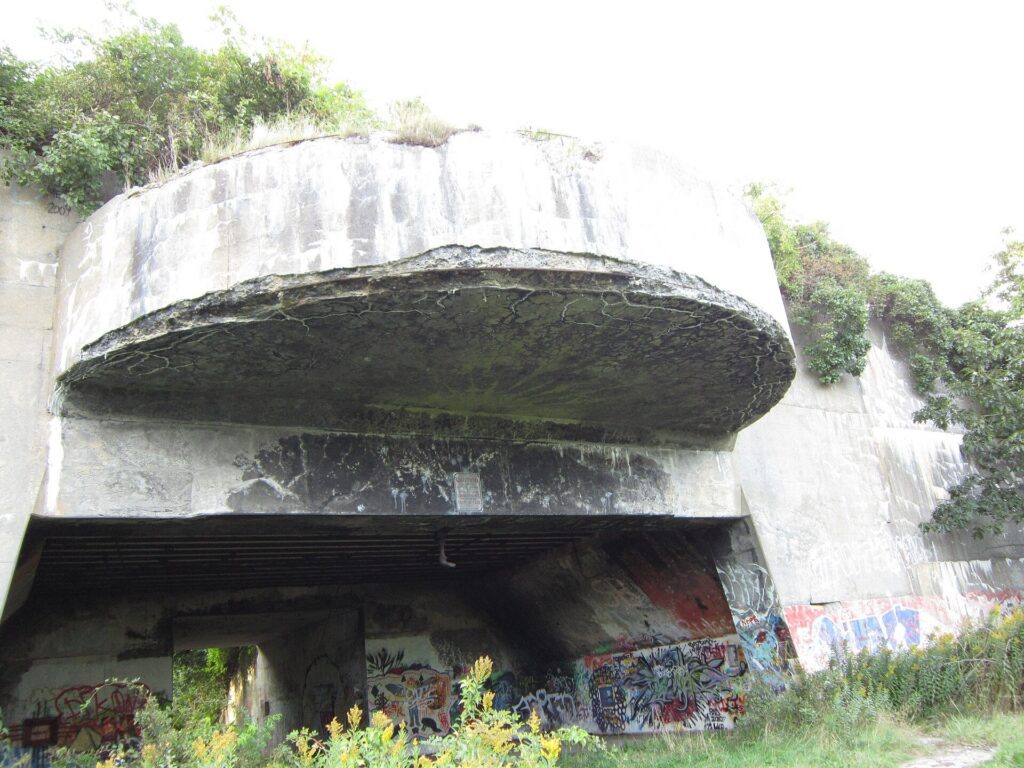
Photo Courtesy Sunilkabin, Wikimedia Commons
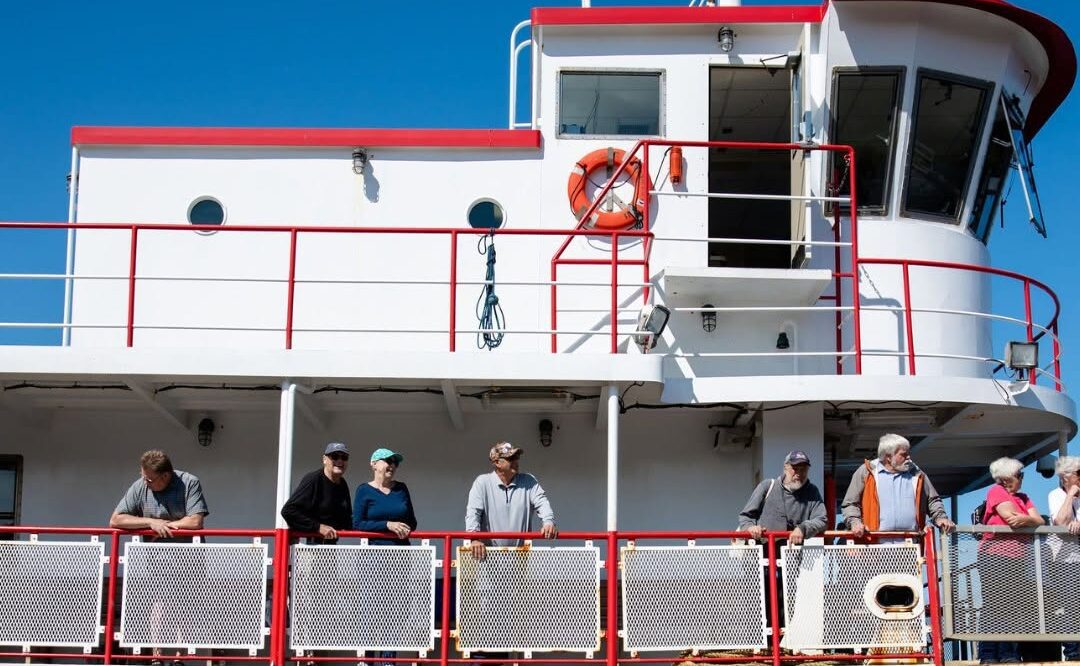
Now the name is returning to the water. Casco Bay Lines, the public ferry system serving the islands of Casco Bay, expects Battery Steele to arrive in Portland on Nov. 20, according to its most recent public update. The 164-foot ferry can carry 599 passengers and 15 vehicles between Portland and Peaks Island. Riviera calls it “one of the first diesel-electric hybrid-powered public passenger ferries in the United States.”
The boat was built in America. Seattle-based Elliott Bay Design Group designed it, and Senesco Marine built it at its North Kingstown, Rhode Island, shipyard with a workforce of more than 200 shipbuilders. The shipyard told the Providence Business News that the Federal Transit Administration funded the project and that it meets Buy-America requirements. WorkBoat reports that Senesco describes the vessel as “the first electrically propelled ferry built in New England.” ABB provided the battery-powered propulsion system, while the batteries come from Norwegian company Corvus Energy, which ABB brought in after the original supplier exited the marine battery market. Mainebiz said Corvus meets federal Buy-America rules through its plant in Bellingham, Washington.
Federal grants have covered most of the bill. Casco Bay Lines won a $6 million Federal Transit Administration grant in 2018 to help build the ferry, followed in 2020 by $3.2 million from the same agency for its hybrid propulsion system and $750,000 from the U.S. Department of Transportation’s Maritime Environmental and Technical Assistance program, according to the operator. Mainebiz put the ferry’s price at $22.8 million in 2024, reporting that “federal funds are paying most of the vessel’s price tag.”
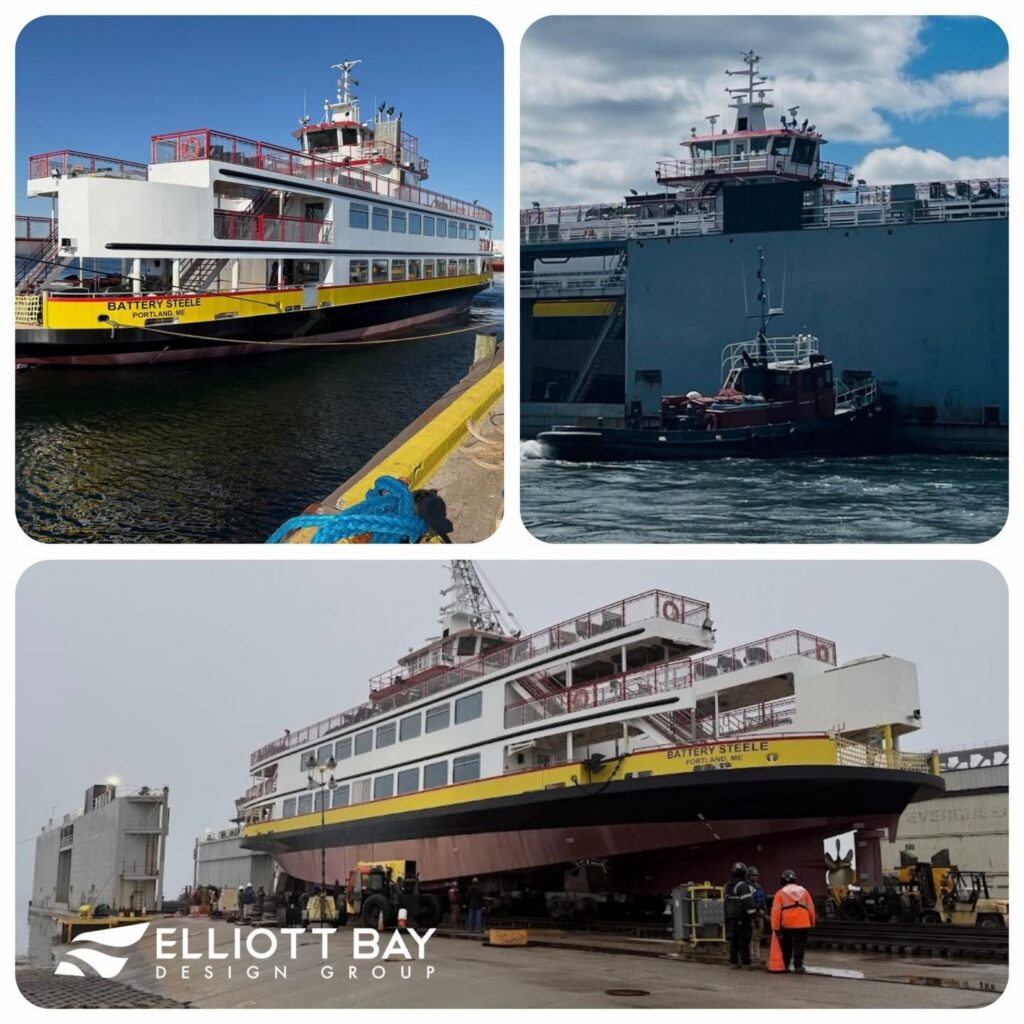
Photo Courtesy Elliott Bay Design Group LLC
The route suits battery power. “It’s about a two-mile transit from the docks in Portland to Peaks Island, and the ferry operates 365 days per year,” Bruce Strupp, a vice president at propulsion supplier ABB Marine & Ports, told Passenger Ship Technology. On a crossing that short, the ferry can make an entire round trip without leaving battery mode, according to WorkBoat, even on a peak-season schedule of up to 17 round trips a day.
Charging happens at the Portland terminal through a Wabtec FerryCHARGER, which Strupp described as “‘basically a robotic arm.’” As a ferry docks, Wabtec says, the system detects the vessel’s socket, connects, and starts charging “all in 10 seconds or less. When the charge completes, the system automatically detaches, and the ferry is free to go.” Nick Mavodones, then Casco Bay Lines’ operations manager, added, “The electric grid infrastructure near the terminal was such that a major upgrade of the grid to support a rapid charger would not be necessary.” Two Caterpillar diesel generators ride along as backup to the roughly 1 MWh battery system. “If the power cuts out in a storm, they will still be able to operate on diesel generators, providing reliable ferry service to island passengers,” Strupp said.
The ferry is also expected to cut costs. “We expect to save approximately $100,000 in operating costs per year that will help to maintain lower ticket prices for our customers. These savings will be obtained through lower energy costs and lower maintenance costs associated with the system,” Mavodones told WorkBoat in 2025. Riders should also notice a quieter ride with less vibration, the operator says, and Casco Bay Lines expects the vessel to prevent up to 800 metric tons of carbon dioxide emissions a year. “Ultimately, the electric-diesel hybrid option provided the best overall operational cost benefit as well as a superior environmental and passenger experience,” Mavodones concluded.
Once the ferry arrives, the operator expects roughly two months of crew training before a final U.S. Coast Guard examination, with passenger certification expected in the first quarter of 2027. Casco Bay Lines plans to keep its current car ferry, the Machigonne II, on hand for at least six months after Battery Steele enters service “to evaluate how the new vessel performs and confirm she is meeting our operational and performance standards.” The new ship will have more capacity, too, as the Machigonne II could only carry 399 passengers and 12 vehicles. It will be essential to helping Casco Bay Lines meet current demand, as each year, it carries more than 1 million passengers and 35,000 vehicles.
“Casco Bay Lines is more than a ferry service; it’s a lifeline, a connector of communities, and a reflection of the people who call these islands home,” general manager Ben Dinsmore said when he took the job in 2025. Three decades after islanders passed the hat to save their battery, its name will carry them home.
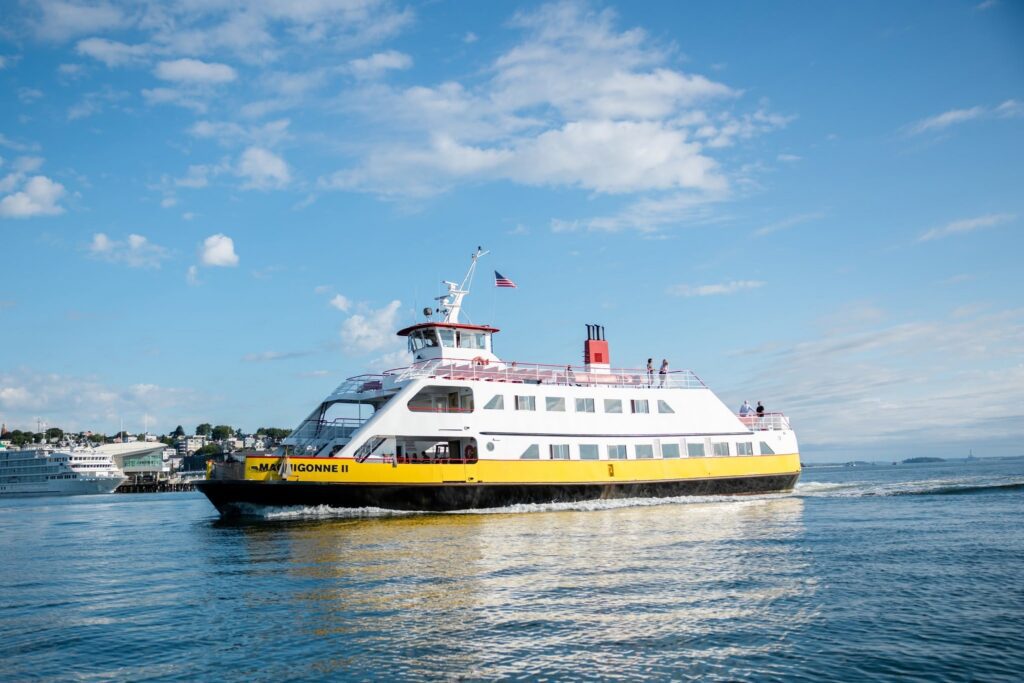
Photo Courtesy Casco Bay Lines