In 1937, the farm families of the Matanuska Valley colony near Palmer, Alaska, wanted electric lights. Dr. C. Earle Albrecht, the colony doctor, wrote to the Rural Electrification Administration (REA) for help. The agency agreed to consider the request, but only if the colony could first provide “an accurate report and survey showing that adequate and constant power can be made available.” To pay for the survey, the community held the Electric Ball at the Palmer community hall under the slogan “Dance your way to electric lights.” The event raised $150, enough to fund an 18-page survey, and the REA approved a $140,000 loan.
The loan allowed the community to form an electric cooperative and build their lines. On Jan. 20, 1942, power reached 127 consumers spanning 93 miles of line, and all 242 members had lights by the end of 1943. E.E. Clements, a territorial health official, later said, “The people who formed the electrical co-op created something that ensured the success of the colony and made for a real livelihood [dairying] for the colonists… It was a huge investment of optimism.”
Today, that cooperative is the Matanuska Electric Association (MEA). Its 2025 Annual Report counts more than 58,000 members, 73,000 meters, and 4,850 miles of line. MEA calls itself “Alaska’s oldest and fastest-growing electric cooperative,” and the region bears that out. The Matanuska-Susitna Borough’s population has reached 118% of its 2015 level, 51% of Alaska’s new homes in 2024 were built there, and its jobs have nearly doubled over 20 years.
Keeping the lights on for that many people is hard work, and December 2025 showed how hard. In December 2025, windstorms knocked out power to more than 17,000 Mat-Su residents. MEA employs 17 full-time linemen, but 23 worked the storm, putting in 16-hour shifts with limited rest while the dispatch team doubled to four. Falling trees are the No. 1 threat to the grid, Jennifer Castro, MEA’s senior cooperative communications manager, told Big Cabbage Radio. Vince Volpe of Sutton thanked the crews in a letter to the Anchorage Daily News for their “long, hard, cold, dangerous hours.” In MEA’s annual survey, 74% of members gave the cooperative an “A” for reliability.
MEA has invested in ways to maintain that grade, starting with the threat of falling trees. Its drones, flown by pilots licensed by the Federal Aviation Administration (FAA), use LiDAR to spot trees encroaching on power lines. Up to 350 members are piloting radio-frequency meters that cost nearly 50% less than MEA’s current meters and should eventually report outages wirelessly straight to dispatch.
The largest build, the Fishhook to Pittman project, adds two new substations and a 22-mile looping transmission line, then-Board President Bill Kendig wrote in the annual report. MEA reported in July 2026 that the first phase, a roughly 7-mile, 115-kilovolt line, is complete, with the full project scheduled to finish in 2029.
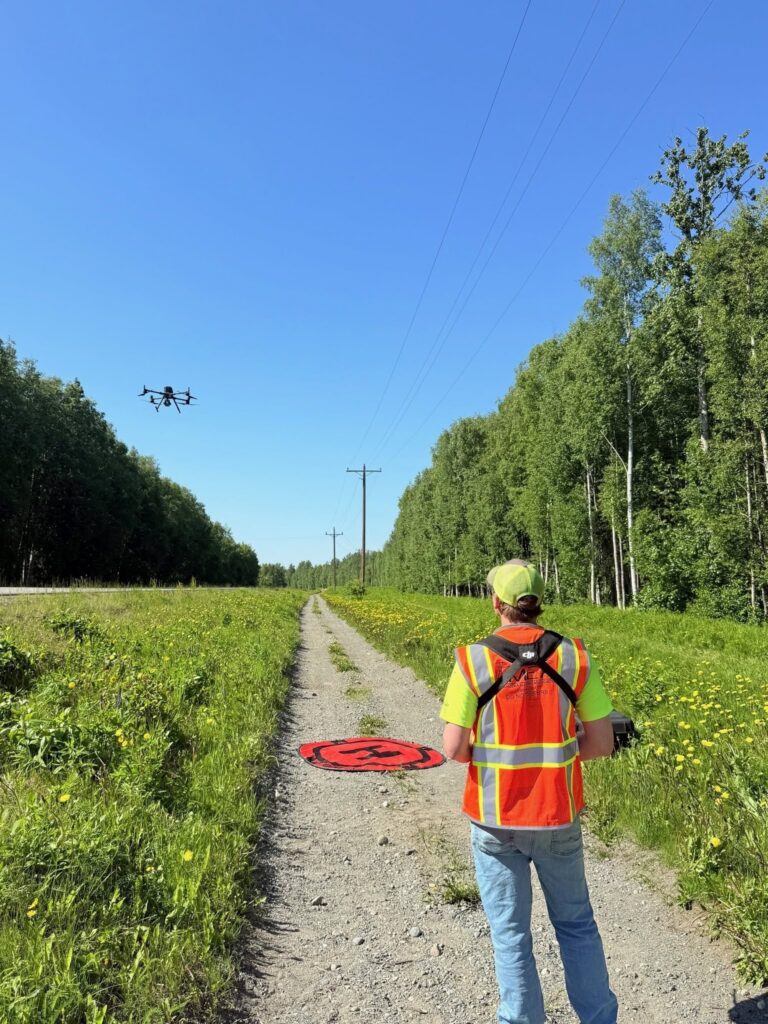
Photo Courtesy Matanuska Electric Association
Since May 1, 2015, MEA has generated its own electricity at the 171-megawatt Eklutna Generation Station. CEO Tony Izzo calls it “the largest dual-fuel power plant in the state,” since it can also run on diesel, “giving us the ability to maintain service even during emergencies.”
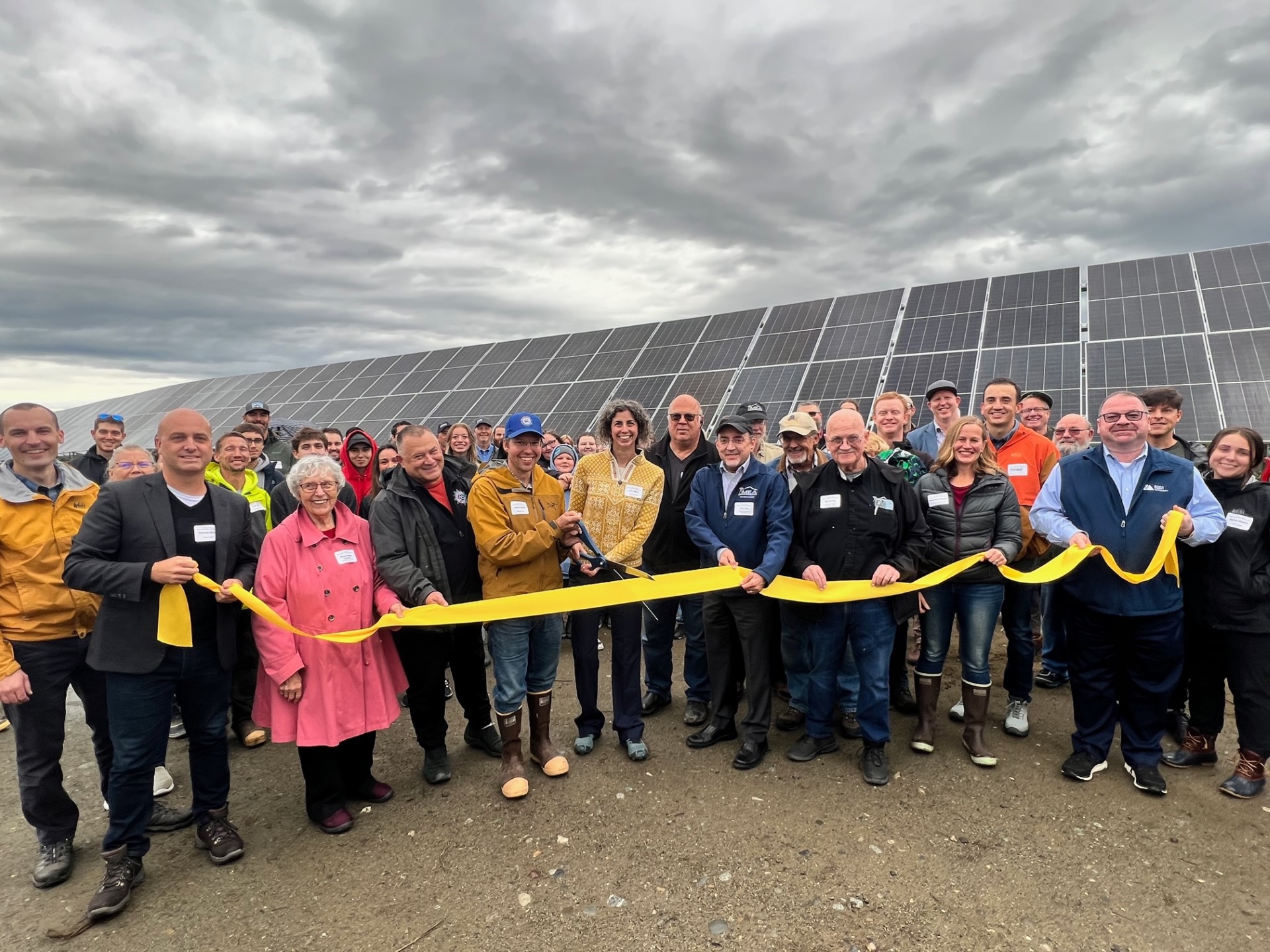
MEA also draws on renewable power. In August 2023, Alaska’s largest solar farm began powering MEA members from Houston, producing 8.5 megawatts, enough for about 1,400 homes. Developer Renewable IPP built it with 14,400 bifacial panels on land burned in the 1996 Miller’s Reach fire, creating more than 30 construction jobs, and chief executive Jenn Miller told the paper MEA would buy the power for slightly less than the cost of Cook Inlet gas. MEA buys the farm’s power from its long-term owner-operator, CleanCapital, under a 25-year contract.
Izzo explained the appeal: “Member surveys indicate people want MEA to produce more power with renewable energy, but not at an additional cost.” Jenn Miller, CEO of Renewable IPP, elaborated, “Projects like the Houston Solar Farm are critical to suppressing future electricity costs and shoring up Alaska’s energy security.”
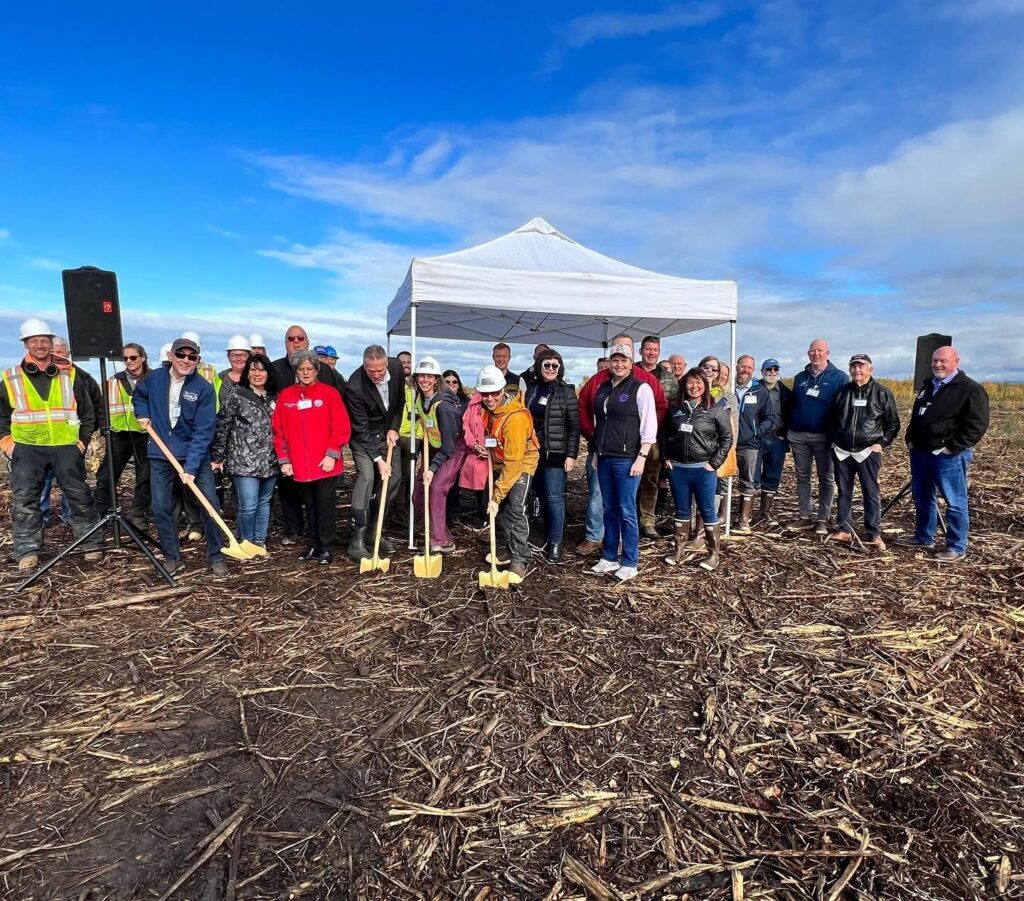
Photo Courtesy Matanuska Electric Association
Additionally, on Oct. 8, 2024, a 40-megawatt battery system of 24 Tesla Megapacks was commissioned. The $65 million system, 75% owned by Chugach Electric Association and 25% by MEA, was projected to cut each utility’s natural gas use by about 5% a year and provide backup reliability during grid disruptions. “The BESS enhances system flexibility, boosts reliability, saves fuel, and brings cutting-edge technology to the Railbelt,” Chugach CEO Arthur Miller explained.
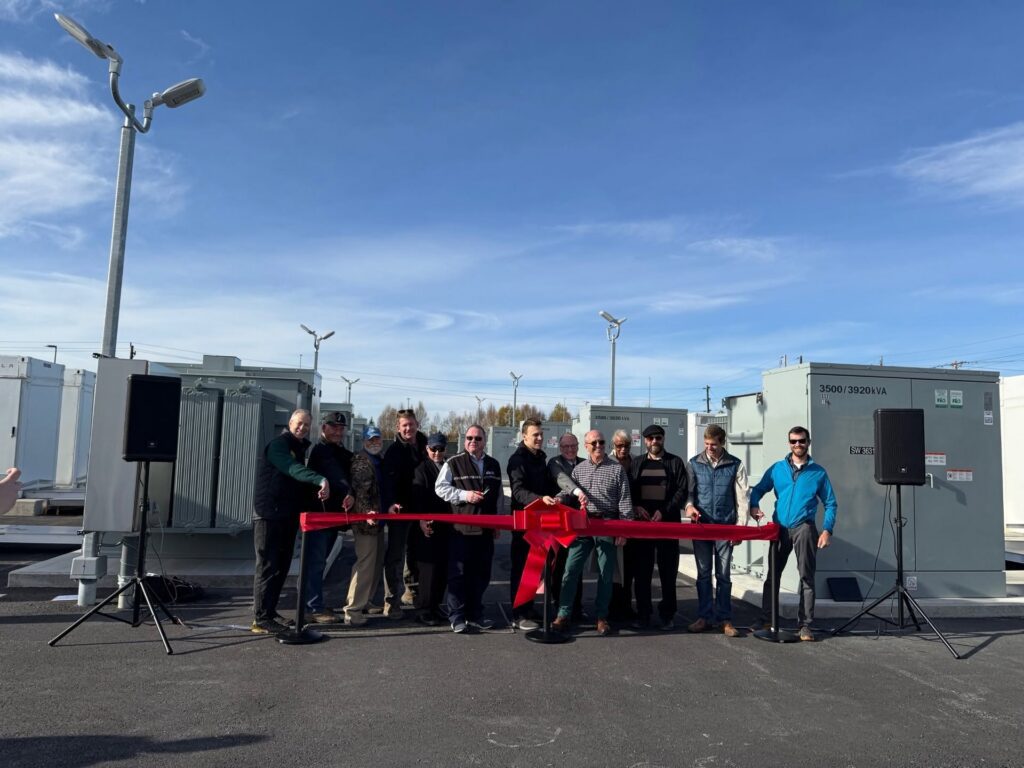
Photo Courtesy Matanuska Electric Association
Hydropower also anchors MEA’s clean supply. The Eklutna Hydroelectric Project provides the lowest-cost power in Southcentral Alaska and about 44% of MEA’s renewable portfolio, eliminating about 72,500 metric tons of carbon emissions annually. On Oct. 2, 2024, Gov. Mike Dunleavy approved a final fish and wildlife program restoring year-round flow to 11 of the Eklutna River’s 12 miles.
The Alaska Energy Authority (AEA) reports that Bradley Lake hydropower supplies about 10% of Railbelt electricity and saves local utilities more than $20 million annually compared with natural gas. An expansion targeted for 2031 would raise its output about 50%, enough for roughly 30,000 more homes. MEA’s members are also generating their own power: 550 members now generate 3.6 megawatts of their own renewable energy, up 50% in five years. MEA has cut its carbon intensity 28% since 2012 and aims for 50% clean energy by 2050.
In September 2026, MEA invited proposals from independent power producers. “Our Board has directed us to leave no stone unturned and keep all options on the table as Alaska’s energy landscape continues to change,” Izzo said.
The urgency is clear. In 2022, Railbelt utilities learned that long-term Cook Inlet gas could not be guaranteed beyond existing contracts. Gas makes up roughly 35% of a member’s bill, and rising fuel costs have already pushed up rates. An earlier projection estimated increases of about $8 a month for the average residential member.
In the third quarter of 2026, MEA’s cost-of-power adjustment rose 29.4%, adding $14.53 a month for a home using 623 kilowatt-hours. The cooperative cited higher gas costs, a cold spring, less shared power and hydropower, and a new gas storage fee of about $170,000 a month. Fourth-quarter rates brought partial relief of $5.32 less per month. MEA says new power supply opportunities could further lower rates.
Still, MEA holds the lowest base rate on the Railbelt at 17 cents per kilowatt-hour and delivered two overall quarterly rate decreases in 2025. “That doesn’t happen by accident,” Izzo wrote. MEA extended its Hilcorp gas contract through March 2029 at prices below other recent Cook Inlet contracts, and signed a gas exchange with ENSTAR and Hilcorp, now before the Regulatory Commission of Alaska, that MEA estimates could save members about $2 million. The cooperative reports all of MEA’s gas for this winter is secured.
Margins flow back to members, too. MEA returned $3.7 million in capital credits in 2025, and $4.8 million is going back to member-owners who had service in 1990, with checks to be issued by the end of November 2026.
Members also give back. Through Operation RoundUp, those who round their bills up to the next dollar have given $2,927,086.92 to local causes since 2011, an average of $4.22 a year per member. In 2025, RoundUp grants topped $220,000 for 37 organizations, and MEA awarded $35,000 in scholarships to 2026 students.

Photo Courtesy Girl Scouts of Alaska
Clay Koplin, who has led Cordova Electric Cooperative for almost 20 years and chairs the AEA board, will become MEA’s chief executive on Jan. 7, 2027. Izzo will continue advising on gas supply and strategy before retiring in spring 2027. “I first met Tony while he was supporting the community at our local Drive Your Tractor To Work Day event and I knew it was a team I wanted to join,” said Board President Arthur Keyes, adding that Izzo “has brought tremendous value to our members and the interconnected Railbelt electric system” and “will be greatly missed.”
Eighty-five years after its founding, the “investment of optimism” that began with a $150 dance keeps compounding.

Photo Courtesy Matanuska Electric Association