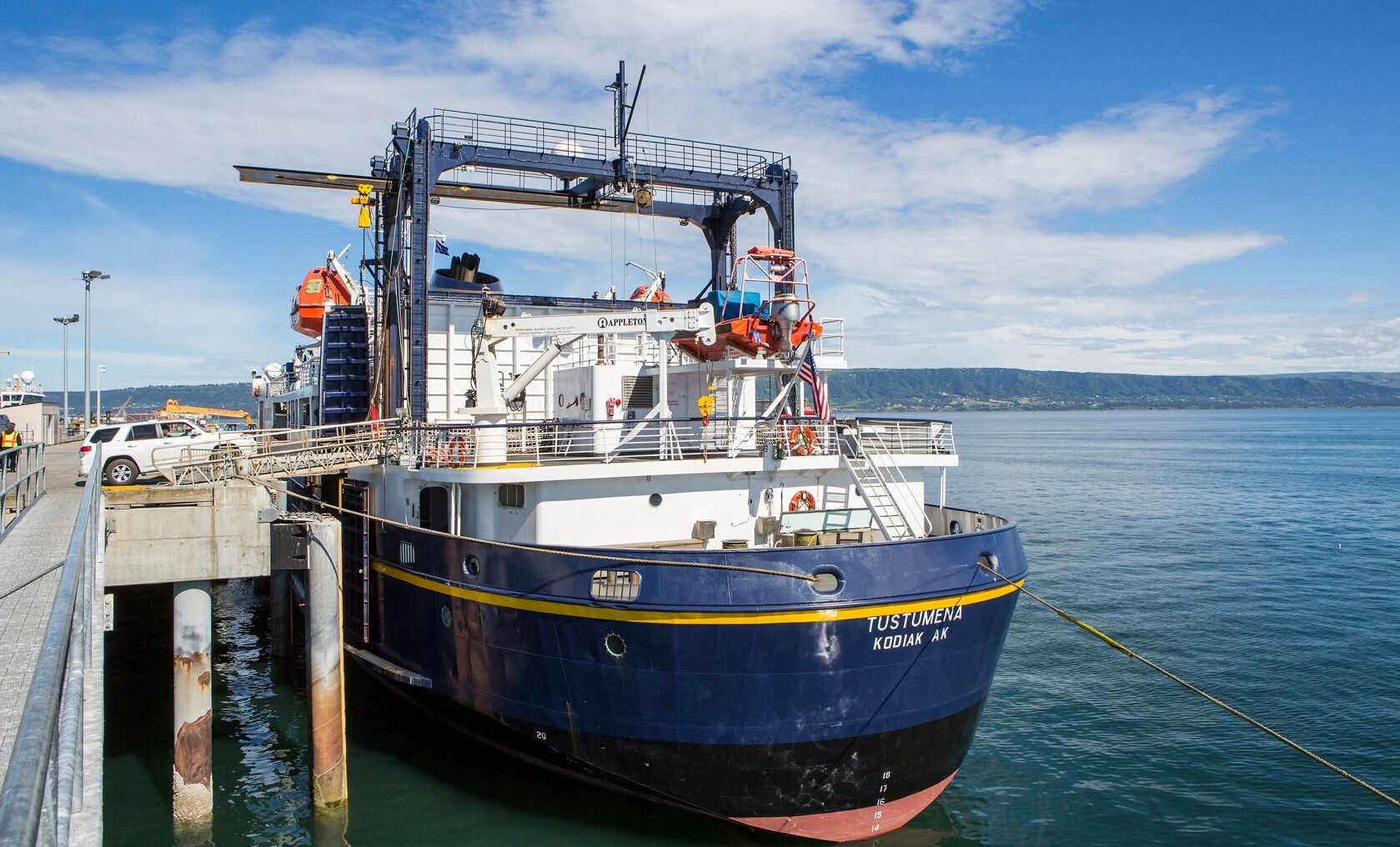
When the state ferry Tustumena docked in False Pass, a fishing village of about 30 people, in August 2025, residents boarded for dinner. “There’s no other places to get food,” Ellie Hoblet told Alaska Public Media. At its stop in False Pass, the galley was still full at the ferry’s scheduled departure time, and Capt. John Mayer held the ship until each diner was served. Capt. Mayer shared, “I love seeing us bring families into Kodiak and they’ll (be) waving to their family members on the dock and bringing people together.”
For the communities along its route, the Tustumena has served as a lifeline since 1964. Villagers along the ship’s route affectionately call it “Trusty Tusty,” “Rusty Tusty,” and even “McTusty,” although the ferry takes its real name from the Tustumena Glacier. No other state ferry reaches the villages of the Aleutian Chain, and it is cheaper and more reliable than barged freight. “Reliability, Reliability, Reliability is what the communities and residents most impacted by the marine highway system want,” said Katie Berry from McKinley Research Group.
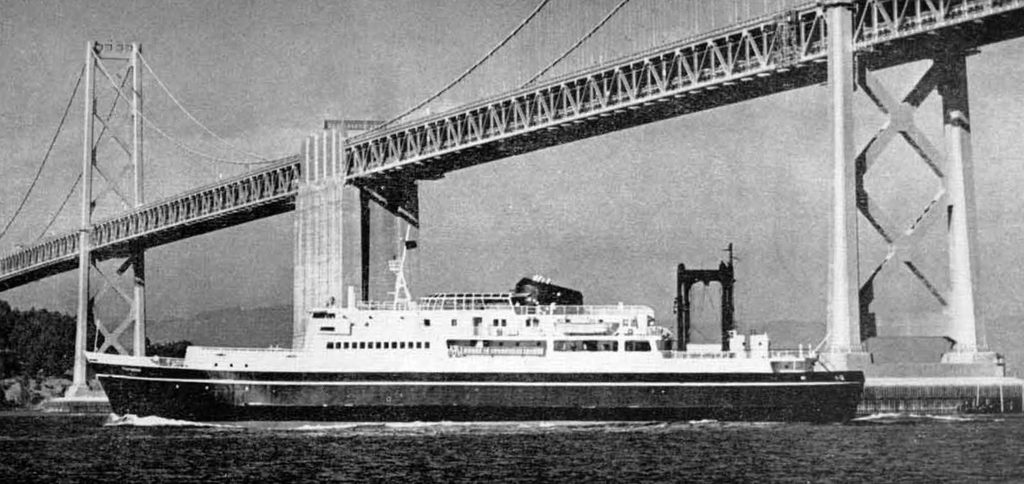
Photo Courtesy Alaska Marine Highway (Alaska State Ferry)
The Alaska Beacon describes the Tustumena’s run between Homer, Kodiak and Unalaska as “the longest, most remote state ferry route in the United States.” According to the Alaska Department of Transportation and Public Facilities (DOT&PF), the ship serves ports including Seldovia, Old Harbor, Ouzinkie, Chignik, Sand Point, King Cove, Cold Bay, False Pass, and Akutan. For many of those towns, the ferry is also the affordable way out. A ferry ticket costs $350, while a one-way flight from False Pass to Anchorage costs more than $1,000.
Six decades on, the North Pacific has worn the ship down. By its 60th year, the Tustumena had served about twice as long as its designers intended. Age-related problems took it out of service for months in 2012, leaving Kodiak without its link to the state road system, and a hull crack in 2016 kept it out of strong storms until repairs were made.
Capt. Mayer, who has worked on the ship for about 25 years and became captain in 2015, has adjusted. “I’m far more prudent in the weather I choose to go out in because she is a 61-year-old ship,” he said in 2025. “When I first started here, it wouldn’t be unusual to leave the harbor in 20-foot seas. Now I don’t even think about that.”
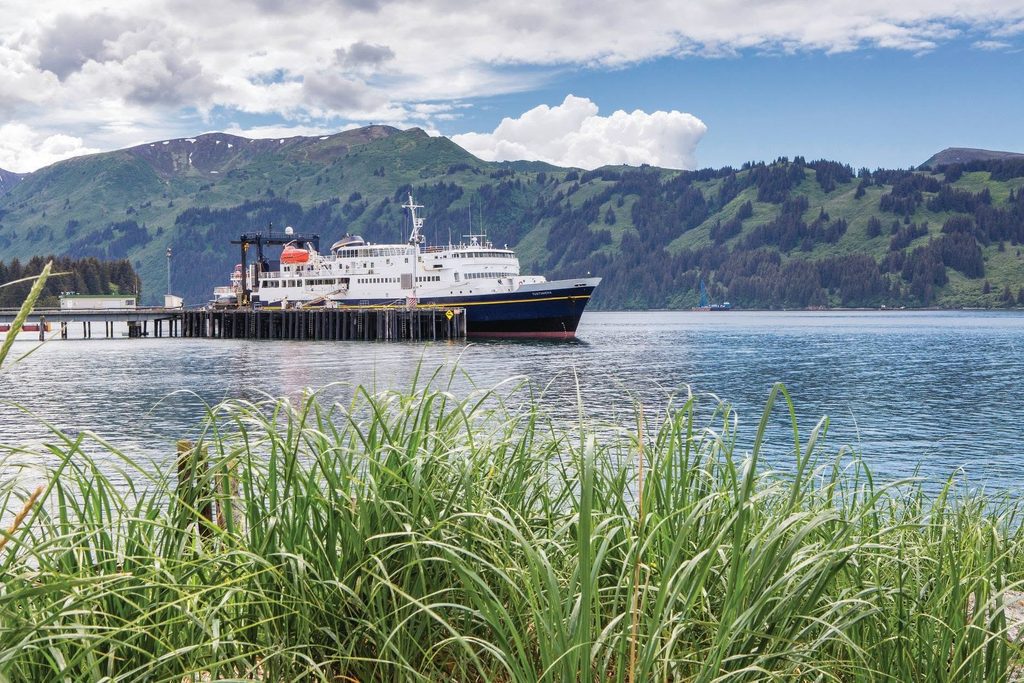
Photo Courtesy Alaska Marine Highway (Alaska State Ferry)
The ferry’s successor is now under contract. DOT&PF awarded the construction contract on Oct. 1, 2026. The new ship will run on hybrid power, and Alaska Public Media reported that it will be the first hybrid vessel in the state fleet.
Replacing the Tustumena took years. Governor Mike Dunleavy announced the project in 2021, but the state’s first 2022 solicitation drew no responses. One requirement for the project was that 70% of its spending should go to American companies, and the project cleared that bar after Louisiana’s Thoma-Sea Marine Constructors, which submitted a $349,996,251 bid, passed a federal Buy America audit.
Thoma-Sea is a family yard. Robert Thomassie launched the family’s shipyard in 1990 by bringing a shuttered Houma fabrication site back into use, according to his son Walter Thomassie, the company’s managing director. He told Marine News in 2025 that the shipyard employs more than 500 people and has built vessels up to 330 feet long. Recalling the many jobs he and his brothers did as the family business grew, he said, “You name it, we did it with our own hands.” The yard also delivered the Arctic Fjord, a factory trawler that fishes for pollock in the Bering Sea.
“I know there’s concern sometimes among the public about, are the ships going to be built by someone who understands Alaska waters,” Alaska Marine Highway System (AMHS) public information officer Gabe Strong told Alaska Public Media. “And I think that, in this case, the answer is yes.”
In conversation with Alaska Public Media, State Rep. Louise Stutes, a Kodiak Republican, asked, “What do you think my reaction is? Excitement! It’s been a long time coming.”
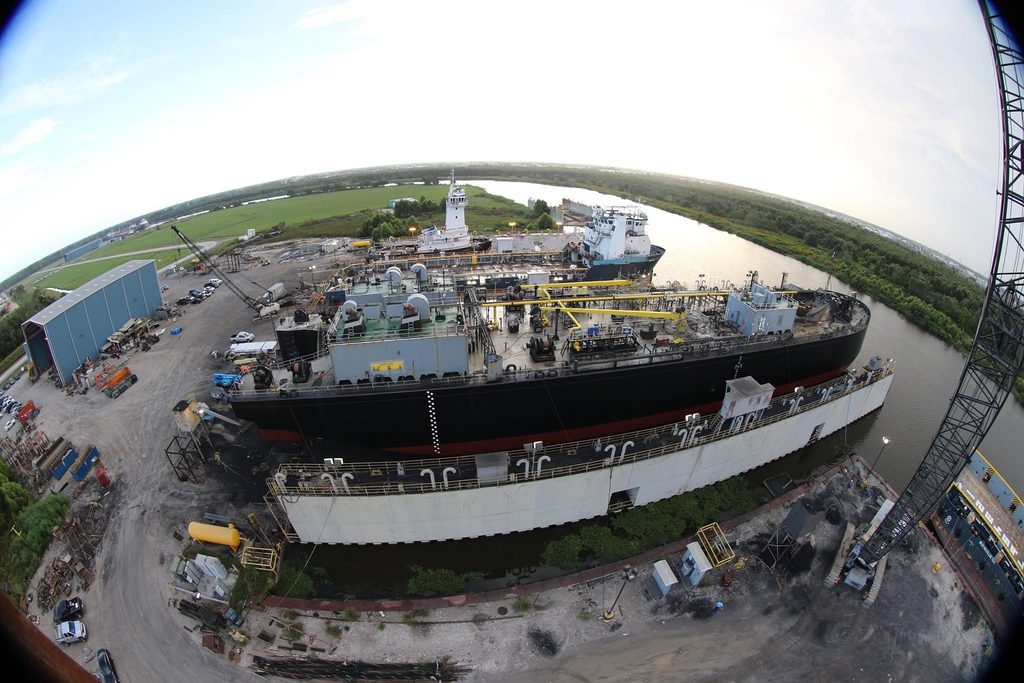
Photo Courtesy Thoma-Sea Marine Constructors LLC
The new ship will measure 330 feet, with room for 250 passengers and 58 cars, with a service speed of 15 knots. The current Tustumena measures 296 feet and has a service speed of 13.3 knots. Its designer, Seattle naval architecture firm Glosten, says its hull design will result in “significantly lower fuel consumption and operating costs.” Unlike the current ship, the new one will be able to dock at all 22 of the system’s other terminals using standard stern and side doors. The project is set to be completed by Jan. 31, 2029.
The hybrid system is about flexibility. A battery room will let captains run on one diesel engine at times, and the batteries can provide extra power when the ship works through rough seas. The current Tustumena uses two diesel engines and burns 150 gallons of fuel per hour when cruising. In 2022, Greg Jennings, a special projects liaison with the state transportation department, told Alaska Public Media that electrification would reduce fuel consumption by 1%. “So if you look year over year, over the lifetime use of the vessel, that’s a major savings to the state. One percent may not sound like a lot, but in ship design, you go to immense lengths to get 1% savings, because it’s like every day you operate that vessel that’s 1% you’re saving fuel.”
KRBD reported that the Tustumena replacement is one of six new hybrid ferries in the ferry system’s 20-year plan. “All of our boats will be hybrid because we always want redundancy in the system,” AMHS Marine Director Craig Tornga told the station in 2024. “They’ll just be more efficient vessels.”
Engineer Ed Schwarz sees the hybrid vessels as the future. “When I first started, seven-eight years ago, working in this kind of systems hybrid business, you would have to go to Scandinavia to actually see one of these vessels running,” he said. Now, he said, hybrid ferries operate in New York, Texas and Washington.
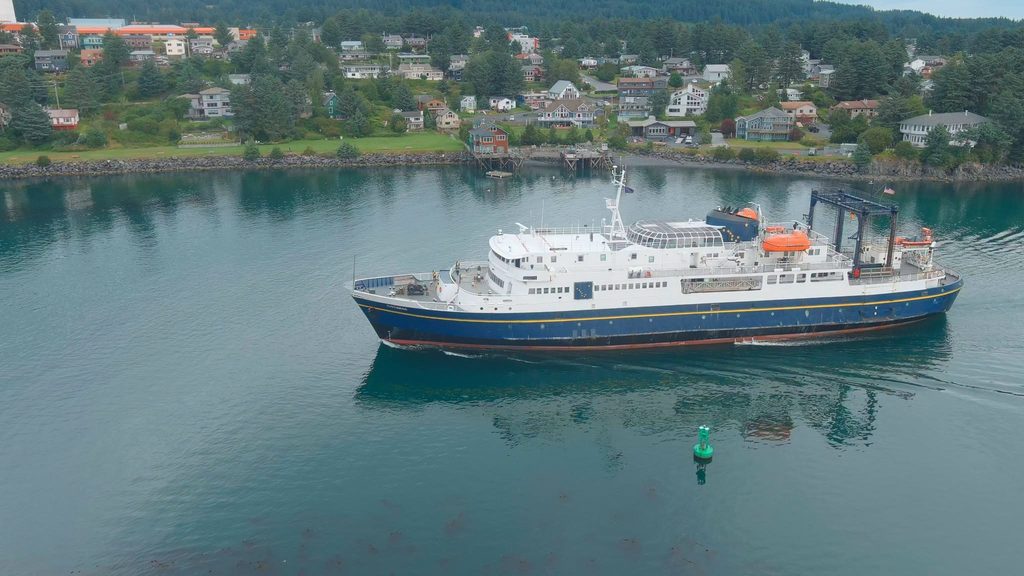
Photo Courtesy Alaska Marine Highway (Alaska State Ferry)
Alaska students will have the unique opportunity to help name the ship through a DOT&PFessay contest. Students in grades 6 through 12 can propose an Alaska glacier as the new ship’s name in essays of up to 300 words, and entries are due this November. The Legislature ultimately decides the name, and if it enacts the winning proposal, the student’s essay will be framed and displayed aboard the vessel.
Capt. Mayer hopes a new ferry will let the crew sail as often as it did in the past. “Maybe with the new ship we can, because it could just be more resistant to heavier weather,” he said. Until then, the Tustumena keeps making its runs. “In the maritime industry, it’s amazingly remarkable yet regrettable that she’s made it to 60 years,” Capt. Mayer said to Alaska Public Media. “It behooves us to take a look back and see how much effort and funding and muscle and sweat that went into keeping her going all these years.”
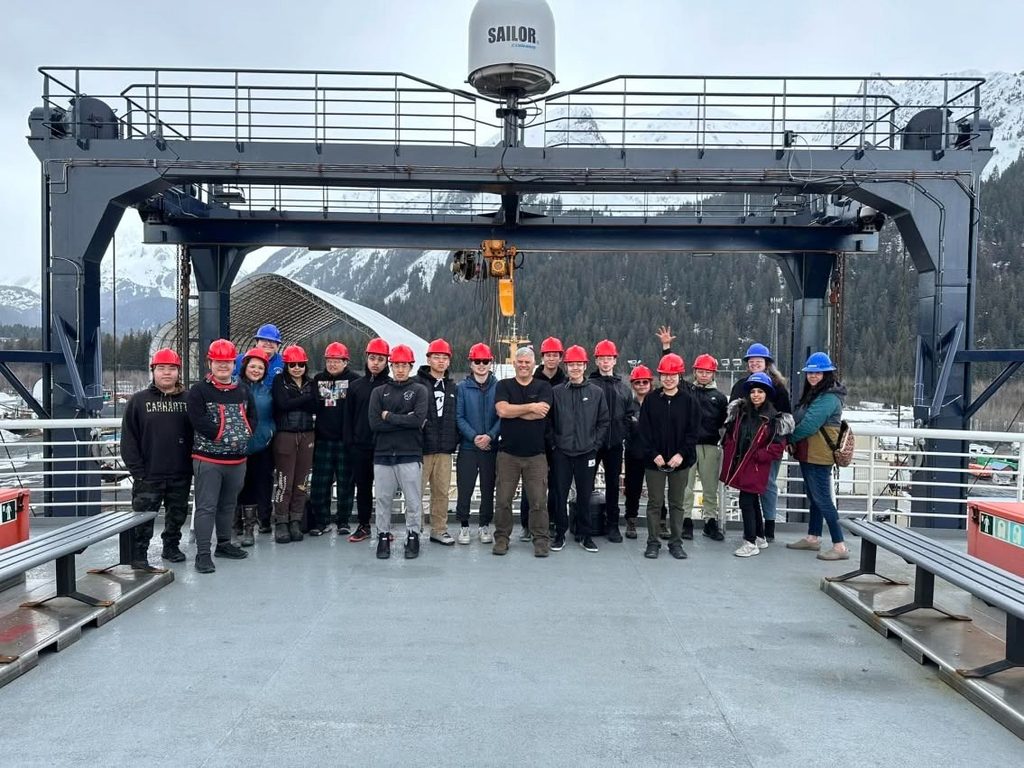
Photo Courtesy Alaska Marine Highway (Alaska State Ferry)