In the off-season, Matt Weber works as a lobsterman. From April to November, he and his wife, Mary, brew beer with her father, Danny McGovern, at Monhegan Brewing Company, which claims to be Maine’s first outer-island brewery.
In January 2025, the U.S. Department of Agriculture (USDA) awarded the brewery $21,000 through its Rural Energy for America Program to help install an 8.2-kilowatt rooftop solar system with battery storage. According to the USDA announcement, the system is expected to save the business $6,754 a year. On Monhegan, the clean energy project continues a long local tradition of generating its own power.
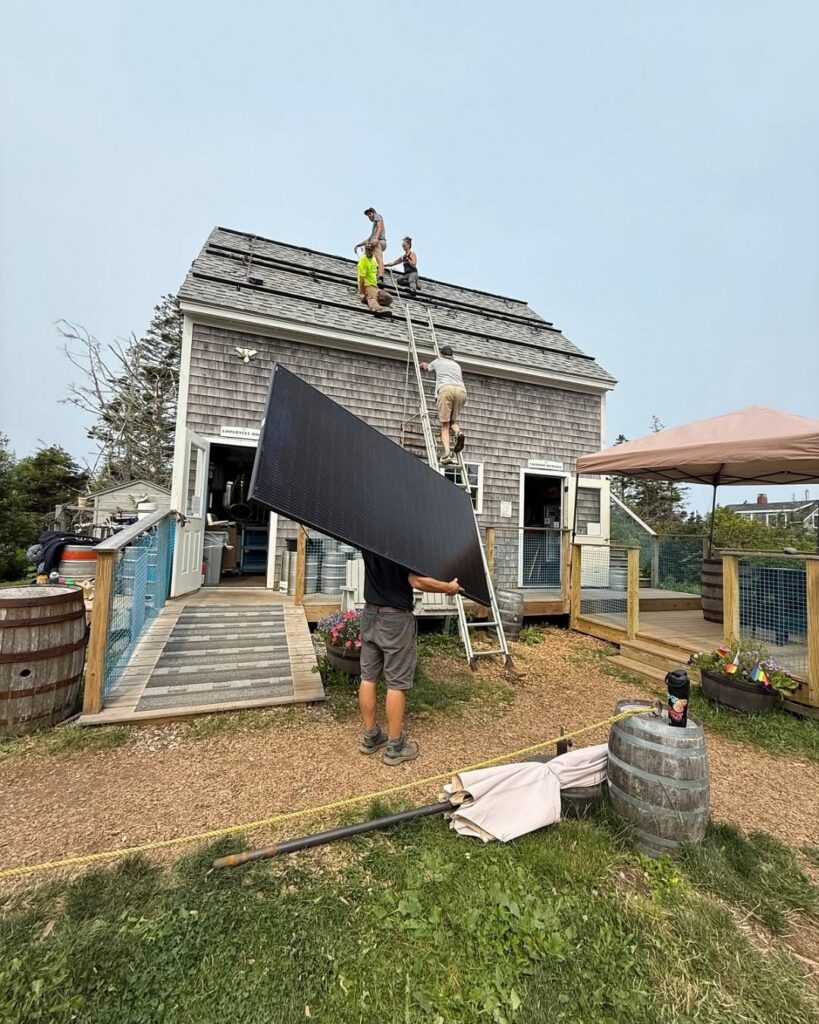
Photo Courtesy Monhegan Brewing Company
Monhegan sits about 10 miles off the mainland, and in winter its only year-round link is a passenger ferry from Port Clyde three times a week, the Island Institute reports. About 70 people live there year-round, according to the Island Institute’s Suzanne MacDonald, who described the island to a U.S. Senate committee in 2017. With no undersea cable to the mainland grid, the island depends on the community-owned Monhegan Plantation Power District (MPPD) for its electricity.
MacDonald described the island as “emblematic of energy challenges that I have seen resonate from the Hawaiian island of Molokai, to Alaskan villages, to the Maine Woods,” listing “complete dependence on costly, imported fuels; aging generation equipment; an inefficient grid; barriers to financing; and median household incomes below national and state averages.”
The district’s diesel plant began creating trouble almost as soon as it started running in 2000, and the people keeping it going were “primarily fishermen who were good at working on engines,” MacDonald told the committee. As fuel prices soared in 2007 and 2008, the Maine Public Utilities Commission granted the district an emergency increase to 70 cents per kilowatt-hour, according to MPPD, five times the state average.
Before building new infrastructure, islanders focused on improving energy efficiency. The district bought energy-efficient equipment in bulk for its customers, which lowered peak demand, enhanced returns, and cut the need for new generation, MacDonald testified. Through the Island Institute’s Weatherization Weeks model, backed by Efficiency Maine grants and rebates, 87% of year-round homes were weatherized. Between 2013 and 2017, Efficiency Maine paid $400 toward insulation and air-sealing work that usually runs $700 to $1,000, and the Island Institute covered travel and lodging so island households paid what mainland households would. Additionally, a spray-foam insulation truck was barged out to the island and, in MacDonald’s words, “returned to the mainland empty.” She told senators the island was “likely the most energy efficient in the state of Maine.”
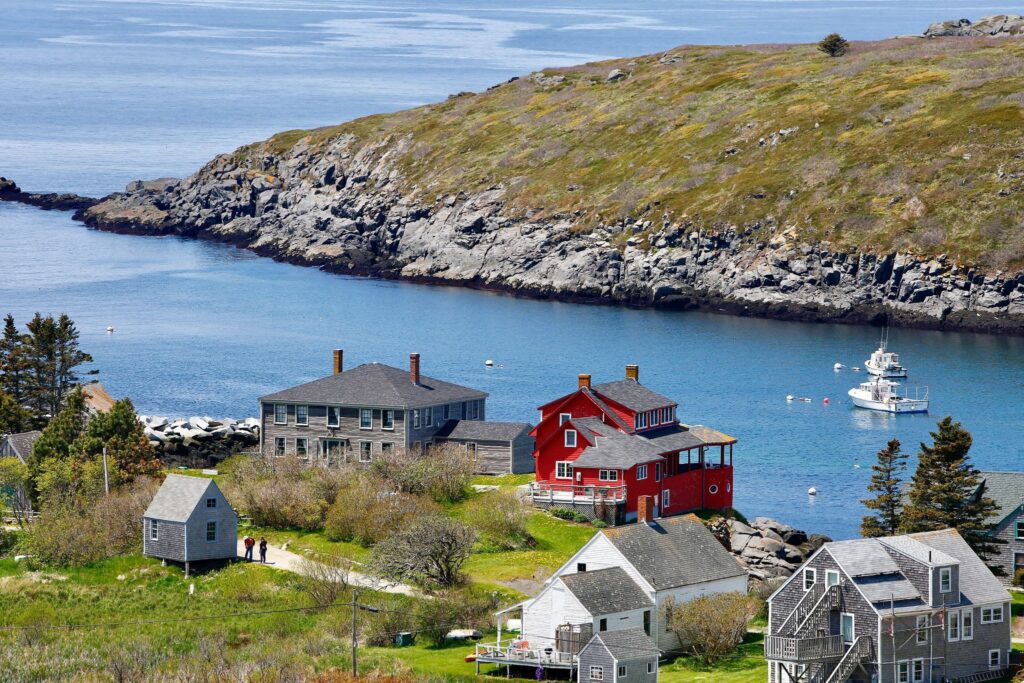
Photo Courtesy Rorythomasoconnor
In December 2012, the district won a $420,154 grant from USDA’s High Energy Cost Grant program, which it planned to use to replace switchgear, buy a 40-kilowatt generator, and install a 13-kilowatt rooftop solar array. Chris Smith, the district’s operations manager, called it “a game-changer for our year-round island community.”
Then new emissions rules from the U.S. Environmental Protection Agency (EPA) upended the plan. “Essentially, the system we planned for when we applied for the grant was no longer accepted by the EPA because of the emissions standards,” Smith told the Bangor Daily News. Through the Island Institute’s ties to isolated communities in Alaska, the district learned about diesel-fired microturbines, and USDA agreed to fund a project of more than $1 million.
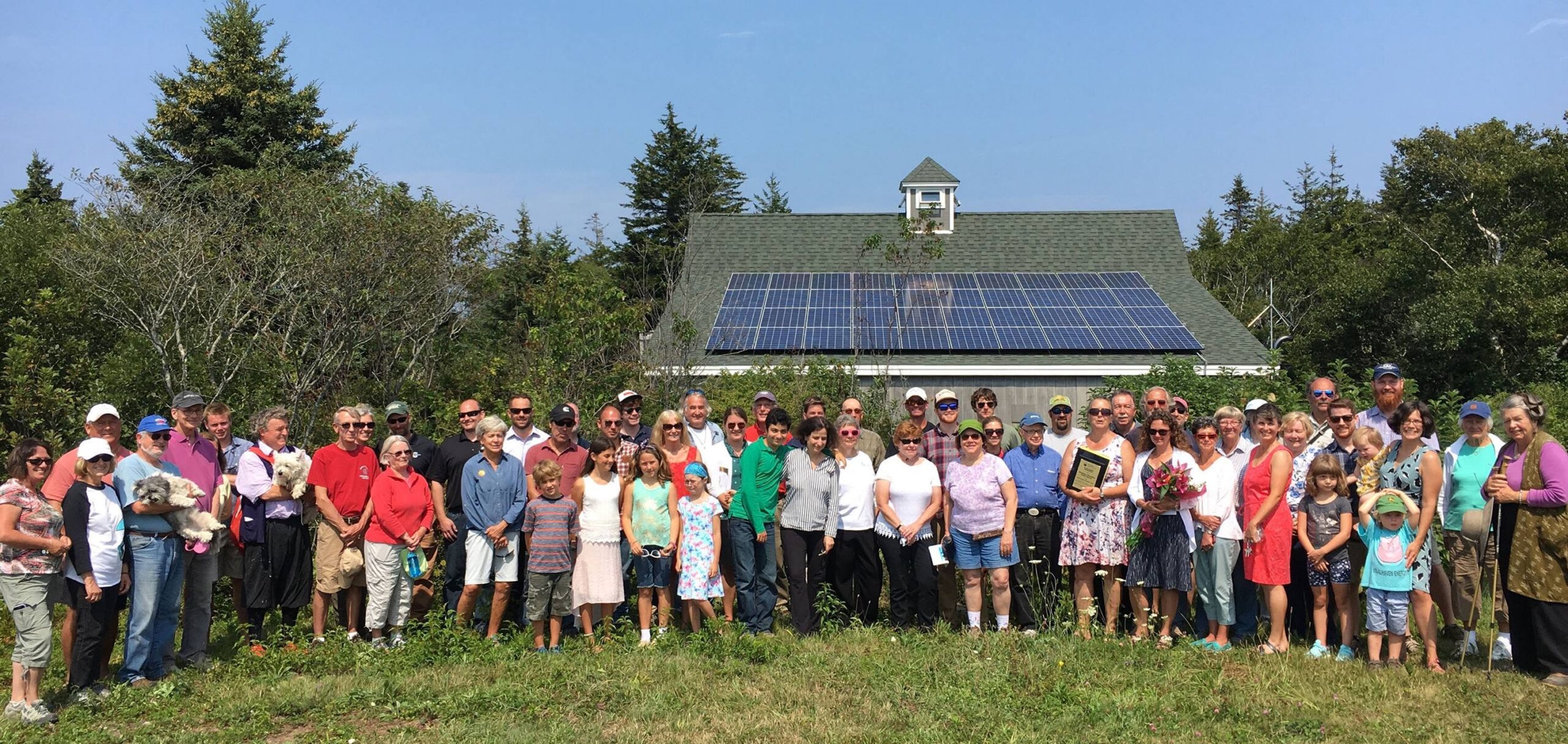
Islanders, including Smith, installed the four microturbines themselves, with no outside contractor. “We had a small crew, but it was made up of people who were very invested in seeing these upgrades happen,” Smith told the Bangor Daily News. In winter, a single microturbine carries the entire island; in August, the district runs three. “The fourth is our ‘just in case,'” Smith said. He described the new system as “90 percent cleaner” than the generators it replaced: “Even though we’re technically burning more fuel, the emissions are so much cleaner than what we had before.” ReVision Energy also put a 12.65-kilowatt solar array on the power station roof.
“While we are still dependent on diesel, we are using it smarter through the use of the advanced Capstone Microturbine System as well as recapturing the waste heat that is otherwise thrown away,” Smith said in a 2017 Island Institute announcement.
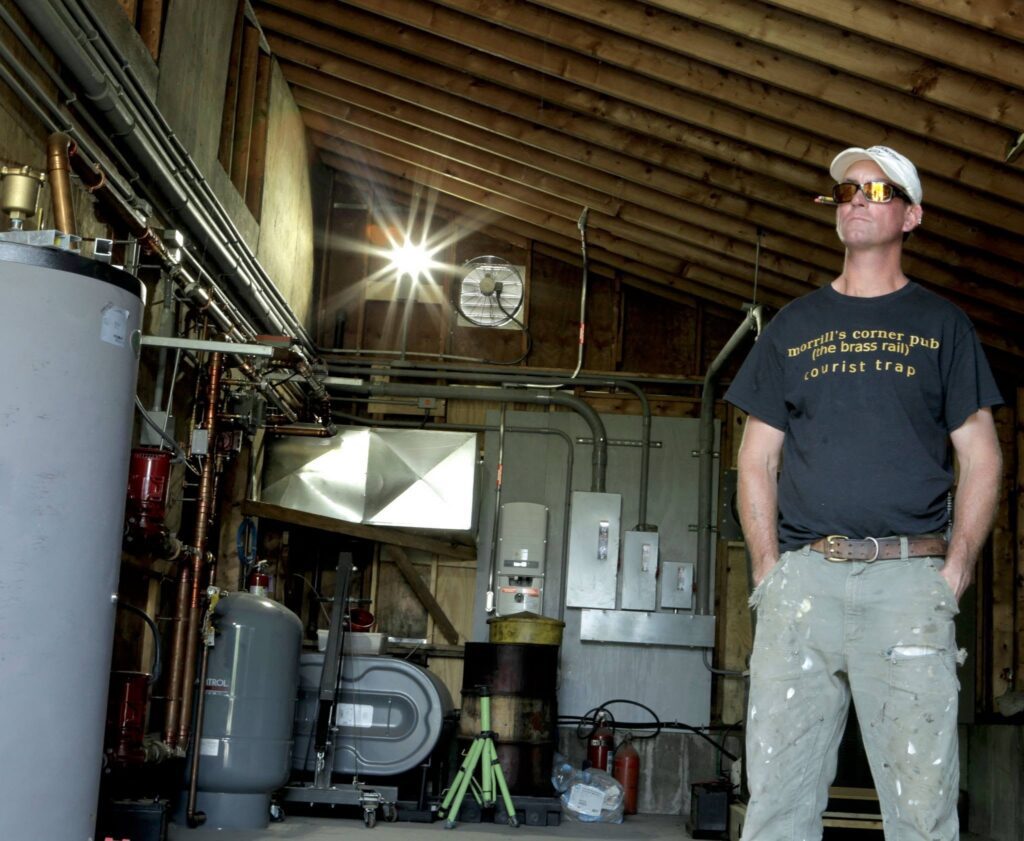
Photo Courtesy Island Institute
That heat goes into the community. The Monhegan Museum of Art & History uses it to heat and dry the air around its collection, simultaneously cutting energy costs and minimizing its environmental impact. The museum holds about 1,300 works by artists including George Bellows and Lynne Drexler, the Maine Art Museum Trail notes. “Monhegan provides inspiration for artists, photographers and many other visitors; however, being entirely surrounded by water, the high humidity and extreme weather conditions of this island environment creates numerous preservation challenges,” museum director Jenn Pye explained in 2017. “This innovative partnership has allowed the museum to improve the environmental conditions for our collections, while reducing our dependence on electricity and fossil fuels.”
The National Endowment for the Humanities, which funded the museum’s upgrades, reported that staff also leaned on low-tech fixes and local materials, including painting storage racks made from lobster-trap mesh.

Photo Courtesy Island Institute
Reliability matters most on an island this remote. On the night of June 17, 2025, Monhegan lost electricity because of an equipment failure, Lincoln County Emergency Management Agency Director Emily Huber told the Lincoln County News. The U.S. Coast Guard helped carry household generators and bottled water to the island, the county shipped a 30-kilowatt generator by ferry from Port Clyde, and the district rented generators to keep power flowing. “We’re leaving (the generators) out there for now just in case, and with this heat, we want to make sure everything’s going to be sustained,” Huber said.
Every kilowatt the island makes or saves for itself counts, from the power station on Lighthouse Hill to the brewery roof. When the upgrade was complete, Marian Chioffi of MPPD summed up what got the island there: “It’s really about unity for us.” As Senator Susan Collins noted about the clean energy initiative, “This project truly benefits the entire community.”