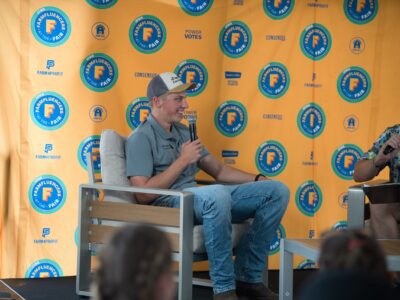

Dustin Hamilton runs operations at one of the most remote industrial facilities in North America. As Chief Operating Officer of UniSea, Inc., he oversees a Bering Sea seafood plant in Dutch Harbor, Alaska, a community located on an Aleutian island that is 800 miles from Anchorage and farther west than Hawaii.
This facility is UniSea’s primary processing plant and sits on the working waterfront of Unalaska, a port that has led the nation in commercial fish landings by volume and value for more than 25 years. Every year, about 400 vessels work the Aleutian Islands and Bering Sea, and in 2022, they delivered 613.5 million pounds of seafood through the Port of Dutch Harbor, worth $160 million. There are five seafood processing facilities in Unalaska, but by its own description, UniSea is “Dutch Harbor’s largest seasonal employer.”
A Liberty ship and 50 years on the Bering Sea
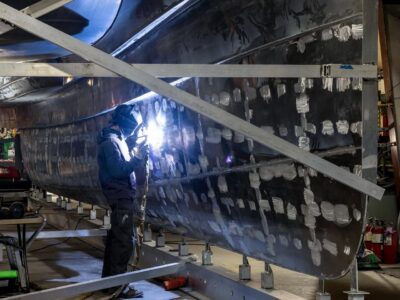
Originally named Universal Seafoods, Ltd., UniSea was founded in 1974 and started processing Red King Crab in October 1975. Operations began aboard the Barge UniSea, a World War II Liberty ship docked in Dutch Harbor, which the company converted into a shore-based seafood-processing vessel. In the second half of the 1980s, the company opened two plants, G1 and G2, focused on turning Pollock into surimi, a frozen fish protein used in products like imitation crab, and expanded into Pacific cod in 1991, pollock fillet blocks in 1999, and increased crab production in 2005. Each of these products is uniquely Alaskan, as UniSea describes, “all our seafood is sustainable, traceable, and wild caught in the pristine, icy waters of the Bering Sea.”
Today, UniSea is a subsidiary of Japan-based Nissui Corporation, but the Dutch Harbor plant remains American in every operational sense: built locally, staffed locally, and supplied by a long-tenured fleet of independent fishing vessels, many of which have delivered to UniSea for more than 40 years. The Alaska Department of Labor reports that the facility has held STAR status under the State of Alaska Occupational Safety and Health’s Voluntary Protection Program since 2002, making it the only seafood company in Alaska to earn that safety designation.
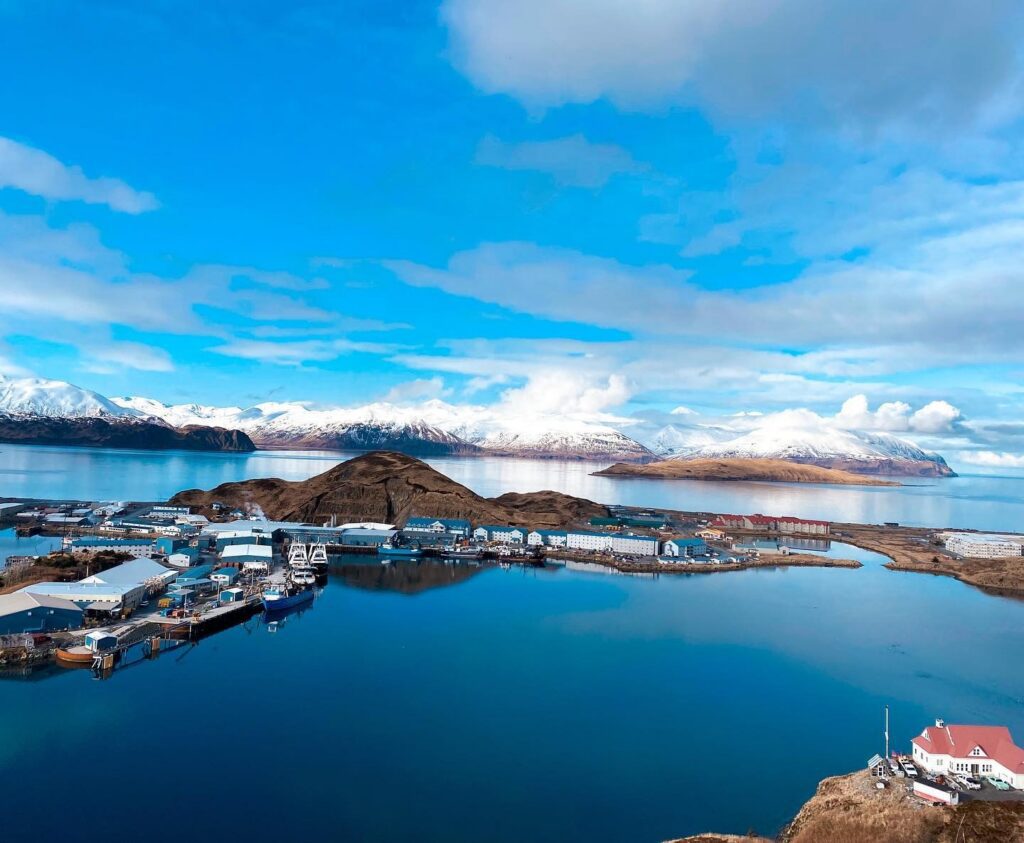
Photo Courtesy Genuine Alaska Pollock Producers
Fish oil that fuels the plant that processes the fish
UniSea’s most distinctive operating decision is to run a meaningful share of its plants on fuel made from its own byproducts. After fillets, blocks, surimi, and crab sections leave the production line, the remaining raw material goes to an on-site rendering plant, which produces fish meal, bone meal, and fish oil. The fish meal and bone meal are sold for use in aquaculture feed, livestock feed, and fertilizer. The fish oil, UniSea states, is “used as fuel in our very own production process. In fact, a substantial percentage of the total fuel we burn in Dutch Harbor comes from the fish oil we produce. We use it for heat, to create power in our onsite power plant facility, and to fuel the extraction process in the meal plant.”
It is a closed loop built decades before “circular” entered corporate vocabulary, for the reason most good Alaska practices are built: every gallon of diesel that does not have to be barged into Dutch Harbor is money kept inside the operation.
A first for Alaska seafood: turning waste heat into power
On September 4, 2025, UniSea pushed its resource discipline tradition into new territory. ICE Thermal Harvesting, a Texas-based clean-power company and portfolio member of Launch Alaska, and UniSea announced the first deployment of a Waste Heat to Power (WHP) system in Alaska’s seafood industry. The modular system captures heat from UniSea’s existing diesel generators and converts it into clean electricity, with no carbon emissions and no need for a powerhouse overhaul. The joint release describes, “This reduces diesel consumption, cuts operational costs, and lowers greenhouse gas emissions all while reinforcing energy resilience in one of the most challenging working environments in North America.”
The impact was immediate. During its three-week start-up phase, the system generated 67 megawatt-hours of electricity, equivalent to roughly 5,000 gallons of diesel saved. In long-term operations, it is projected to deliver 300 kilowatts of continuous output and offset approximately 3,500 gallons of diesel each week during processing seasons.
Hamilton said in the announcement that the system “furthers UniSea’s sustainability efforts by reducing our use of fossil fuels and is a significant step in achieving our decarbonization initiatives.” Rob Bordenave, Vice President at ICE Thermal Harvesting, framed the project in business terms: it “not only benefits UniSea by lowering fuel costs today, but also positions them for long-term resilience against volatile energy prices.”
This is not the only way UniSea’s operations are environmentally-friendly. The company also invests in other technologies that reduce energy use or improve shipping logistics, while working within its facilities to use more recycled process water and materials and send less solid waste to landfills.

Photo Courtesy UniSea Inc
Anchoring a community that runs on what comes ashore
The Alaska pollock fishery, which supplies much of UniSea’s production, is the largest fishery in North America and the largest certified sustainable fishery in the world. The Marine Stewardship Council (MSC) recertified the eastern Bering Sea and Gulf of Alaska pollock fishery in March 2026, extending a certification it has held continuously since 2005, indicating that it has consistently demonstrated positive performance in stock health, ecosystem impacts, and comprehensive management systems. UniSea, in turn, processes MSC-certified Alaska Pollock and Pacific cod that are “traceable from fishing vessel to finished product” and encourages active participation in the North Pacific Fisheries Management Council process.
According to the 2026 Economic Value of Alaska’s Seafood Industry report produced byMcKinley Research Group for the Alaska Seafood Marketing Institute, Alaska’s seafood industry generates $5.3 billion in economic value each year and directly employs 41,800 people, including more than 15,000 Alaskans across 120 communities. UniSea’s community reach extends through a partnership with SeaShare, a nonprofit that has delivered more than 270 million servings of seafood to U.S. food banks and feeding centers over the past three decades. UniSea processes donated salmon and halibut for SeaShare, and the company’s president, Tom Enlow, sits on the SeaShare board of directors. It is clear that UniSea is transforming communities across Alaska for the better.