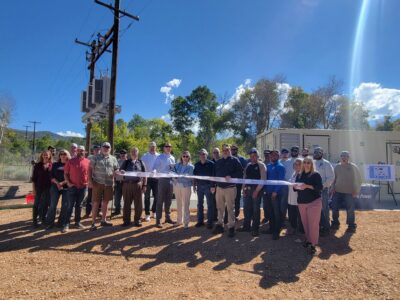
The Chugach Electric Association was incorporated in Alaska in 1948. A population boom in Anchorage during World War II led to electricity shortages, as local hydroelectric power plants lacked the capacity to meet the increased demand. In fact, in 1947, the city had to resort to using boilers and generating equipment from a wrecked ocean-going tanker to provide almost half of Anchorage Public Utilities’ local power needs, at a high cost. Therefore, a group of 200 neighbors came together to form the Chugach Electric Association as a Rural Electrification Administration (REA) cooperative, and within four years, it had skyrocketed from nine customers to over 5,300. “In the years leading up to statehood in 1959, Chugach delivered the energy for growth, forging new partnerships and expanding generation and distribution capabilities,” the association described. Now, it is the largest electric utility in the state and among the largest across the country.
In 2021, the association released a Renewable Energy Plan with a goal of adding 100,000 megawatt-hours of renewable generation by March 2025. The following year, it set targets of 35% carbon reduction by 2030 and 50% by 2040, relative to 2012 levels. At the end of 2023, Chugach had already reduced its carbon intensity by 28%.
At the end of 2024, the company had 824.3 MW of net generation, with 472 miles of transmission lines and 3,361 miles of distribution lines. “It is our goal to deliver safe, reliable power at competitive rates,” the association wrote. Its diverse resource mix is a testament to that statement. Although 80.8% of the kilowatt-hours were generated from natural gas, 16.9% from hydroelectric resources, and 2.3% from wind.
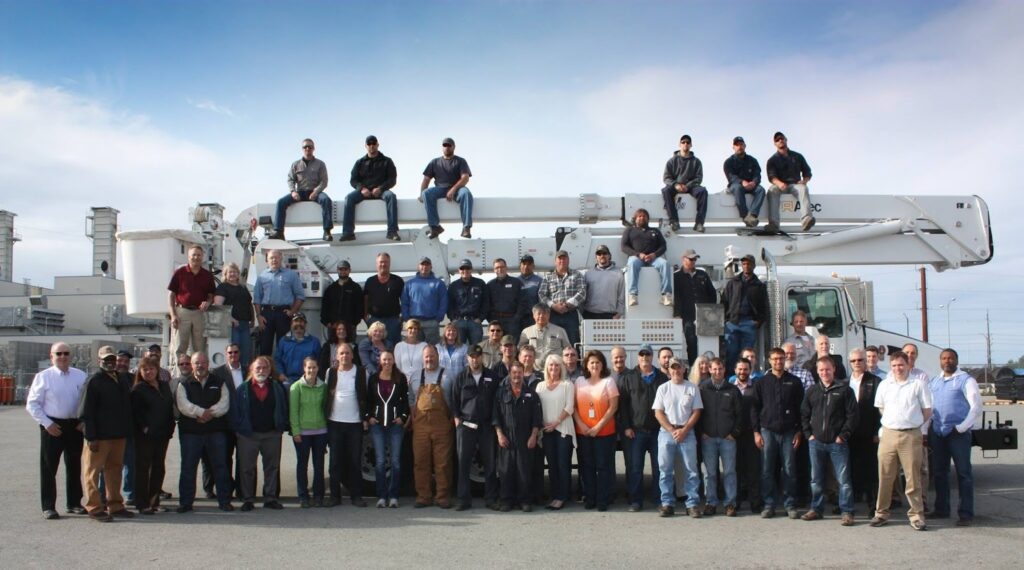
Photo Courtesy Chugach Electric
Among renewable sources, Chugach has used hydroelectricity the longest. The Eklutna Power Plant along the Knik River and the Cooper Lake Power Plant on the Kenai Peninsula were both commissioned between 1955 and 1960. Chugach, the Municipality of Anchorage, and the Matanuska Electric Association (MEA) jointly purchased the 47 MW Eklutna Power Plant in 1997, with Chugach owning 64.3%, having increased its percentage from an original 30% through a power purchase agreement (PPA) for part of the Municipality of Anchorage’s share. Chugach now receives 25.7 MW of energy from the two vertical hydraulic turbines on an annual basis. Overall, the project generates enough power for nearly 25,000 residences and offsets approximately 86,000 tons of carbon per year. And it is powered by a form of energy available year-round. Meanwhile, the Federal Energy Regulatory Commission (FERC) issued a new operating license for the 19.2 MW Cooper Lake Power Plant in 2007, guaranteeing it will be able to provide power to Southcentral Alaska through 2057. Chugach also owns 56.3% of the Bradley Lake Hydroelectric Project, which the Alaska Energy Authority built with state grant funding.
This February, Chugach announced it also filed preliminary permit applications with FERC and water-right applications with the Alaska Department of Natural Resources (ADNR) for four feasibility studies, after spending the past two years investigating 158 potential locations. Chugach CEO Arthur Miller described, “As we are all focused on the energy future of Alaska, we know hydro is dependable, is the lowest cost long-term energy source for ratepayers, allows us to reduce the need for fossil fuels, and helps us meet our decarbonization goals. Our early outreach to potentially impacted stakeholders and partners has received a very positive response as Alaskans understand the need for future energy diversification and low-cost power.” Plus, if they begin construction on these hydro projects before December 31, 2033, they could benefit from Investment Tax Credits.
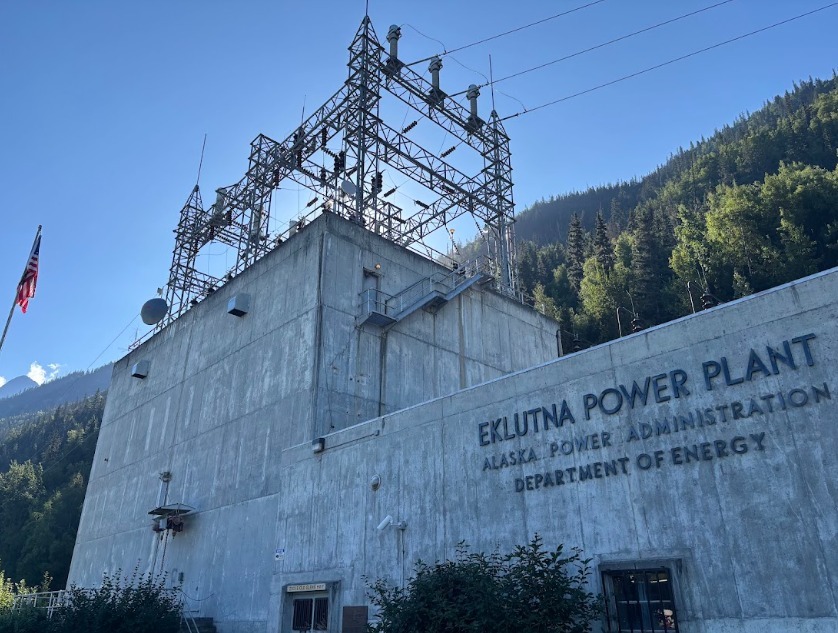
Photo Courtesy National Hydropower Association
In 2011, Chugach also expanded into wind power with a 25-year power PPA with Cook Inlet Region Incorporated subsidiary Fire Island Wind, LLC. Fire Island represents Anchorage’s first commercial-scale wind farm, with eleven turbines. Chugach buys all 49,000 megawatt hours of the power produced each year, enough to meet the annual energy needs of 7,500 residences. While the association acknowledges that wind power varies by the season, it notes that “the knowledge Chugach has gained by integrating Fire Island Wind has increased our capability to integrate new renewable energy resources and diversify our generation portfolio while maintaining safe, reliable, and affordable electric service to Chugach members.”
Under the terms of the agreement, Chugach pays a fixed price of $97 per megawatt hour, or $0.097 per kilowatt hour, which, the association explains, “serves as a hedge against future increases in the price of natural gas and helps stabilize the cost of electric service to members.” In total, Chugach estimates that it saves about $2.4 million in fuel and operational costs, offsetting about half of what it pays annually. Chugach also offsets some of the cost by selling some of the Renewable Energy Certificates earned for every megawatt hour of energy that the project generates.
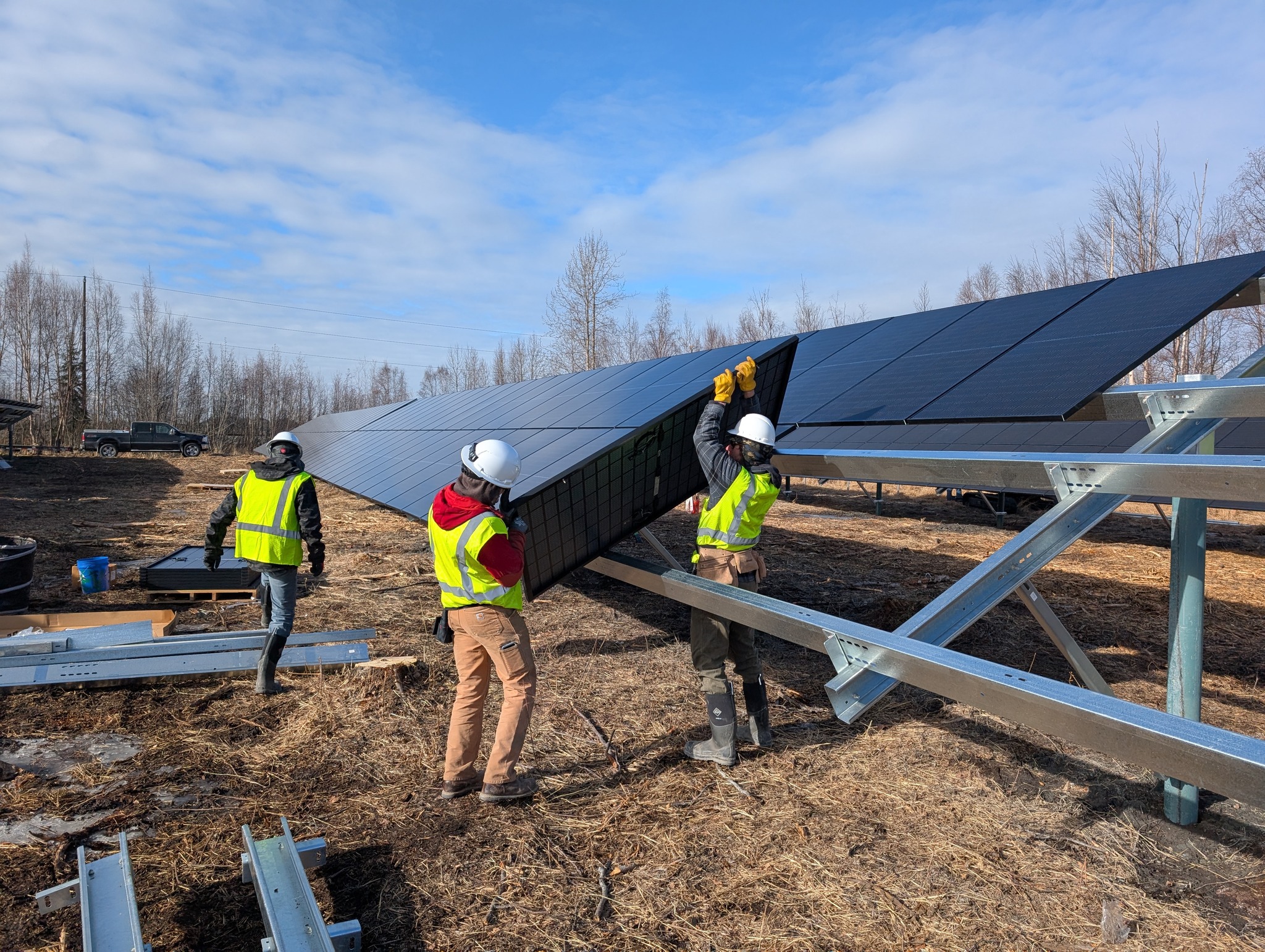
Chugach recently began branching into solar power, too. In 2024, the Regulatory Commission of Alaska gave its approval for Chugach to move forward with a community solar program for a three-year pilot period. The 500-kilowatt project, spanning four acres, opened for enrollment in April of last year and began producing power in August, marking the first such program in the state. It is now fully subscribed, with a waitlist. Members can subscribe to receive solar energy output from 1 to 20 of the 1,560 bifacial panels, for $9.21 per panel per month, and then that energy will be credited to their bill. Steve Caroll, one subscriber, told Chugach that he only uses about 300 kilowatts of energy per month, so “with five panels, that pretty much can cover my utility usage with low-cost electrons and low-capital investment for the next twenty-five years.” Another subscriber, Ann Yates, indicated that she was a “strong believer in the need for us to develop more clean, renewable energy that does not destroy our environment, which, especially in Alaska, is one of the things that makes Alaska so precious.”
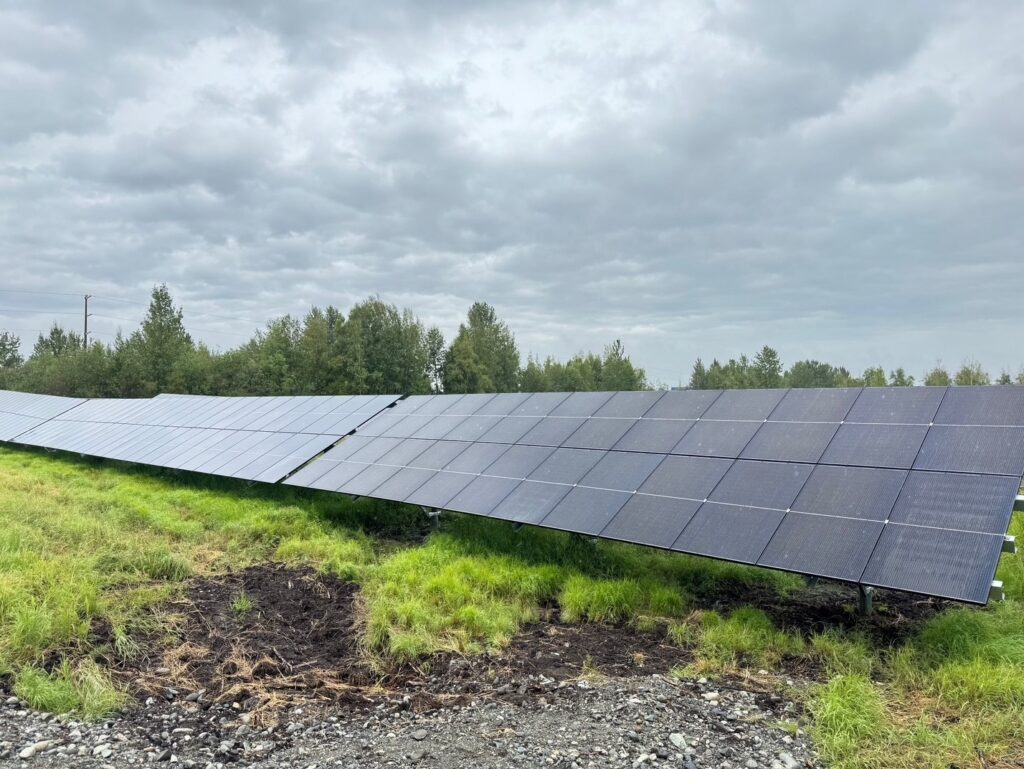
Photo Courtesy Chugach Electric
For those open to it, installing solar panels on their own homes is another option to help offset their monthly energy costs and sell excess energy back to the grid. Similarly, last year, Chugach added solar panels to two of its largest power plants, the Southcentral Power Project and the George M. Sullivan Power Plant. Miller described, “Our solar panel projects are relatively small yet will contribute to our overall goals of carbon reduction. Putting solar panels on our power plants increases the efficiency of the plants and helps offset the use of natural gas.” The association also said it planned to include about 200 kilowatts of solar capacity as it built a new Field Operations and Engineering Building as part of its south campus remodel.
Solar is not the only innovative project going on at the south campus. Chugach and MEA commissioned a 40-megawatt battery energy storage system (BESS) featuring 24 Tesla Megapack modules. The backup storage will add a reliability buffer for the associations during power disruptions. MEA CEO Tony Izzo reflected, “We’re excited to see this project contribute to our region’s energy future. We understand that reliability of power is the number one priority for our co-op members, and this initiative will improve power quality from the Bradley Lake Hydro project while reducing costs and increasing generation options for the entire region.”
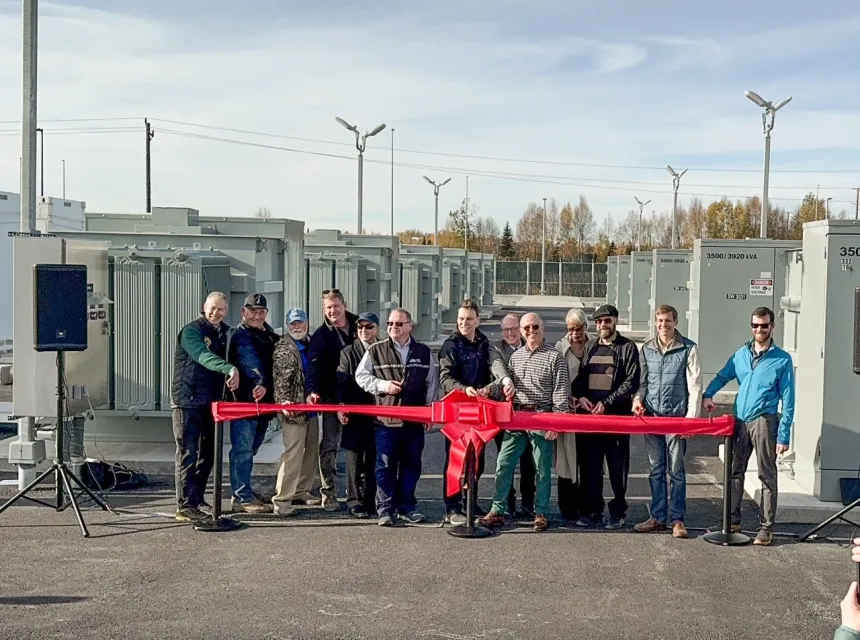
Photo Courtesy Chugach Electric Association