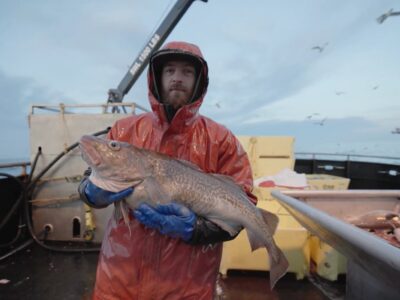
For the past two decades, Peter Nave has served as a guide in Alaska and other parts of the world. In 2008, he began guiding tourists on hiking and mountaineering paths above Juneau, where he was born and raised. Around five years later, he began leading bear-viewing expeditions in the Tongass National Forest, the largest national forest in the country, which has 17,000 miles of creeks and rivers and 128 glaciers. “The Tongass National Forest makes up over 90 percent of Southeast Alaska. It is a region of mountains and fjords, where towns are thinly stretched between steep forested slopes and deep, rich waters,” he told Travel + Leisure. Now, Nave runs Wild Coast Excursions with his wife and “office manager extraordinaire” Katie.
The brown bear-viewing tours are the highlight of Nave’s tours, offered in both small-group and private formats. Wild Coast Excursions prides itself on being locally owned and operated and on offering “authentic Alaskan experiences” led by local guides. The company describes, “Our team consists of local Alaskans deeply rooted in the wilderness, their lifelong connection shaping their expertise. These guides aren’t just knowledgeable; they are passionate storytellers fluent in the wildlife, culture, and geography of Southeast Alaska.”
To help make their dream a reality, Wild Coast excursions partnered with the Alaskan bush plane service Ward Air. Ward Air flies guests over the southeastern part of the state to the habitats on Admiralty Island or Chichagof Island.

Photo Courtesy Wild Coast Excursions
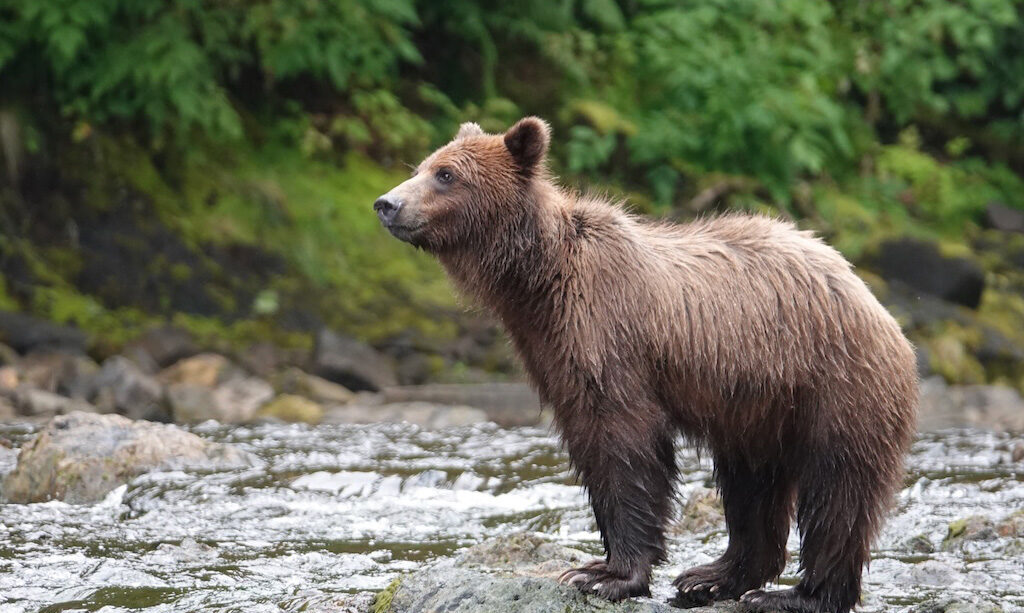
On Admiralty Island National Monument, the Kootznoowoo Wilderness sits at the mouth of Pack Creek. It is home to at least 1,500 brown bears, about the same number as in the entire contiguous U.S. That equates to about one bear per square mile. Nave brings visitors to the area in early summer, from May through the end of June. Chichagof Island, or Shee Kaax, is the primary destination in peak season at the end of July through the beginning of September, when brown bears congregate around Waterfall Creek to feast on the returning pink, chum, and coho salmon.
“Experience true Alaskan Wilderness, as it was meant to be experienced,” the company beckons. The business follows the seven Leave No Trace principles to respect the value of the wilderness and minimize any possible impact. “We’re sensitive to the area’s fragility. This is truly a wild, magical place, and we feel like we’re the guardians of it,” Nave explained to Outside.
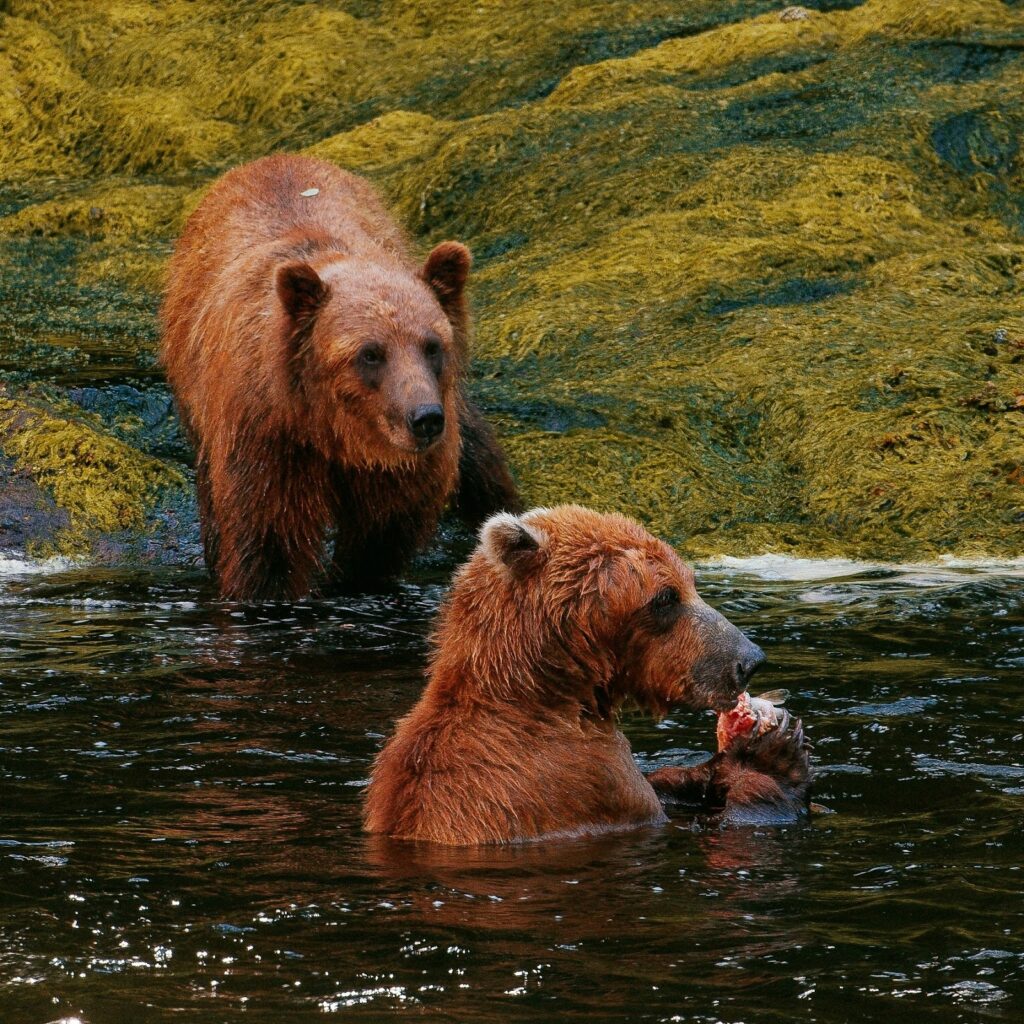
Photo Courtesy Wild Coast Excursions
As Wild Coast Excursions highlights, “We are dedicated to preserving Alaska’s wild coast. Our commitment to regenerative tourism ensures that future generations can enjoy this wilderness as much as we do.” The business partnered with the Alaska Carbon Reduction Fund to offer trips with a negative carbon footprint, which is especially important as the local Mendenhall Glacier shrinks. Together, they calculated the environmental footprint of the trips so that Wild Coast Excursions could bake it into the cost of a trip up front, taking into account differences in the number of guests, meals, aircraft type, and flight time, and offset it by 125%.
The money for the Alaska Carbon Reduction Fund goes toward installing local heat pumps, which create less pollution than heating oil and save residents money on energy bills. One resident, Kira Roberts, saw her monthly heating bill drop from $500 to just $30. “I kind of rationalized that if I could offset more than we would use, then I could feel a little bit better about taking on [the helicopter] strategy,” Peter told Grist. “I could see the reduction happening, because I know the heat pumps work, my friends have them, people I know install them.” As a result of the partnership, Wild Coast Excursions says it is “Alaska’s first carbon negative business.”

Photo Courtesy Wild Coast Excursions
The partnership with the Alaska Carbon Reduction Fund is just one example of Wild Coast Excursions’ dedication to the environment. The business also says it is “proud to be Juneau’s first 1% for the Planet program partner,” with 1% of sales going toward organizations fighting climate change or supporting conservation. In particular, Wild Coast Excursions donates to the Renewable Energy Alaska Project (REAP), which promotes local renewable energy and energy efficiency; the Sitka Conservation Society, which simultaneously protects the Tongass National Forest and promotes sustainable Southeast Alaskan communities; the Nature Conservancy Alaska, which has worked to protect salmon habitats and Indigenous stewardship in Bristol Bay for over three decades; and national organization Protect Our Winters, which unites lovers of the outdoors for climate advocacy.
The adventure and the impact combine for a once-in-a-lifetime experience. As Nave said in a conversation with Meetings + Events Magazine, “I love sharing the wilderness and mountains with our guests. These shared experiences bring people together and create unique connections. Our trips have the power to transform a vacation into an authentic experience, and group gatherings into something much more memorable. I never get enough of it!”