Biofuel company Verbio entered the North American market in 2018, with a goal of building and operating biofuel facilities in the U.S. and Canada. The company strives to establish itself as “a leader in 21st-century alternative green energy solutions,” recognizing that renewable raw materials can support the domestic agriculture industry while driving a transition away from fossil fuels.
At the end of 2021, the company’s Verbio Nevada Biorefinery in Nevada, Iowa, began producing biomethane, or renewable natural gas (RNG), with the help of 41 full-time employees. Verbio initially used corn stover to produce RNG, but now uses the cellulosic by-product, stillage, from ethanol production. The company collects the feedstocks from 80 to 100 local producers within 30 to 50 miles, who “benefit from a new source of income and enhance the productivity of their land, making the partnership both environmentally and economically valuable.” In 2023, Verbio bought 45,000 acres of corn stover for production the following year. Moreover, Verbio recognized that some growers would be able to perform all aspects of the workflow, including baling, storing, and hauling, while others would require assistance. “VERBIO is happy to work flexibly with growers using a variety of options,” the company promised.
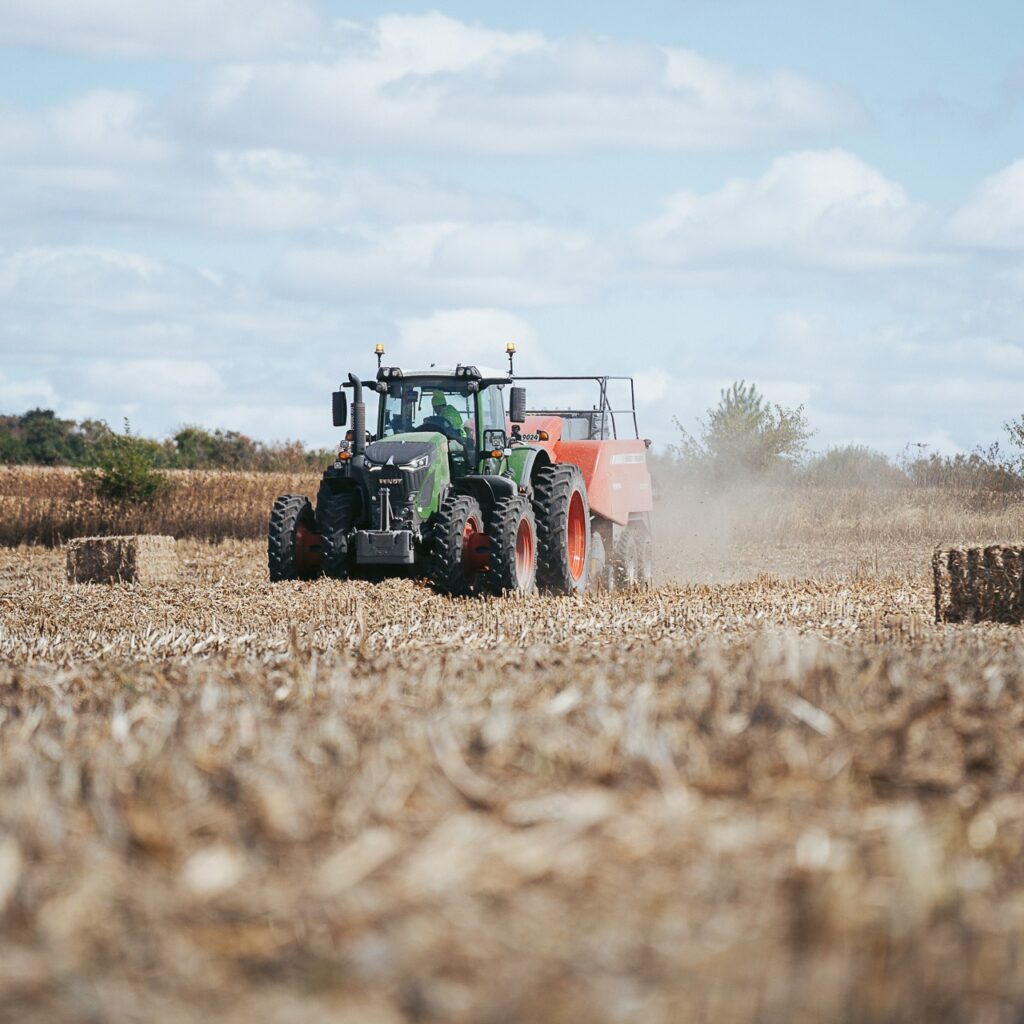
Photo Courtesy Verbio North America
During processing, the feedstocks are broken down into smaller components, mixed with water, and sent to fermentation tanks, where raw biogas is produced. The biogas starts at 55% methane and 45% carbon dioxide. A treatment process then removes the CO2 and other impurities to leave nearly pure RNG, which Verbio says is “chemically equivalent to fossil natural gas.” However, the carbon emissions associated with the process are up to 90% lower than for fossil fuels. The RNG is finally sent to Alliant Energy, a utility that delivers it to natural gas customers in the state.
Any unfermentable material left in the tanks is converted into a nutrient-rich soil amendment called humus, which can be sold back to local growers. By restoring nitrogen, phosphates, and organic carbon to the soil, thereby restoring the agronomic value of the originally harvested crop residue, Verbio explains, the material is “supporting sustainable agricultural practices and completing the circular bioenergy loop.” Moreover, the company presses the humus to recycle as much water as possible, while any remaining water in the soil amendment heads back to benefit the farmland. As Chief Technology Officer, Oliver Lüdtke told Ethanol Producer Magazine in 2024, “We’ve already got a couple of farmers [who] really like our material. [It’s] really developing, and they are spreading the information to the community basically.”
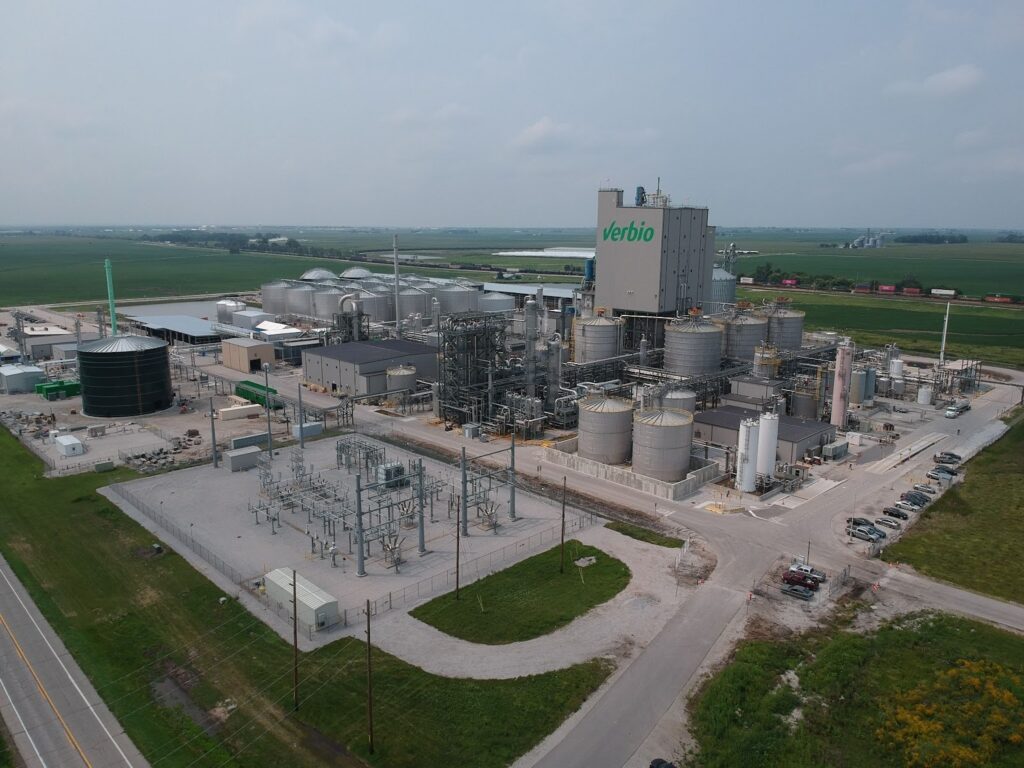
Photo Courtesy Verbio
In 2024, as Verbio completed Phase II of the facility, it became the first industrial-scale plant on the continent producing both bioethanol and biomethane. With 8 more fermentation tanks, new equipment, a corn unloading facility, silo storage, and an additional 50 full-time employees, for a total of nearly 100, the full biorefinery can now produce 60 million gallons of corn-based ethanol and 2.3 million MMbtus of RNG each year. CEO Claus Sauter reflected, “The start of ethanol production, in addition to our industrial-scale RNG operations since December 2021, means a landmark moment for us at Verbio. Bioenergy, as a growing global market, plays a fundamental role in the transition towards sustainable mobility by providing RNG for transportation fuels, as well as for industrial and commercial uses.”
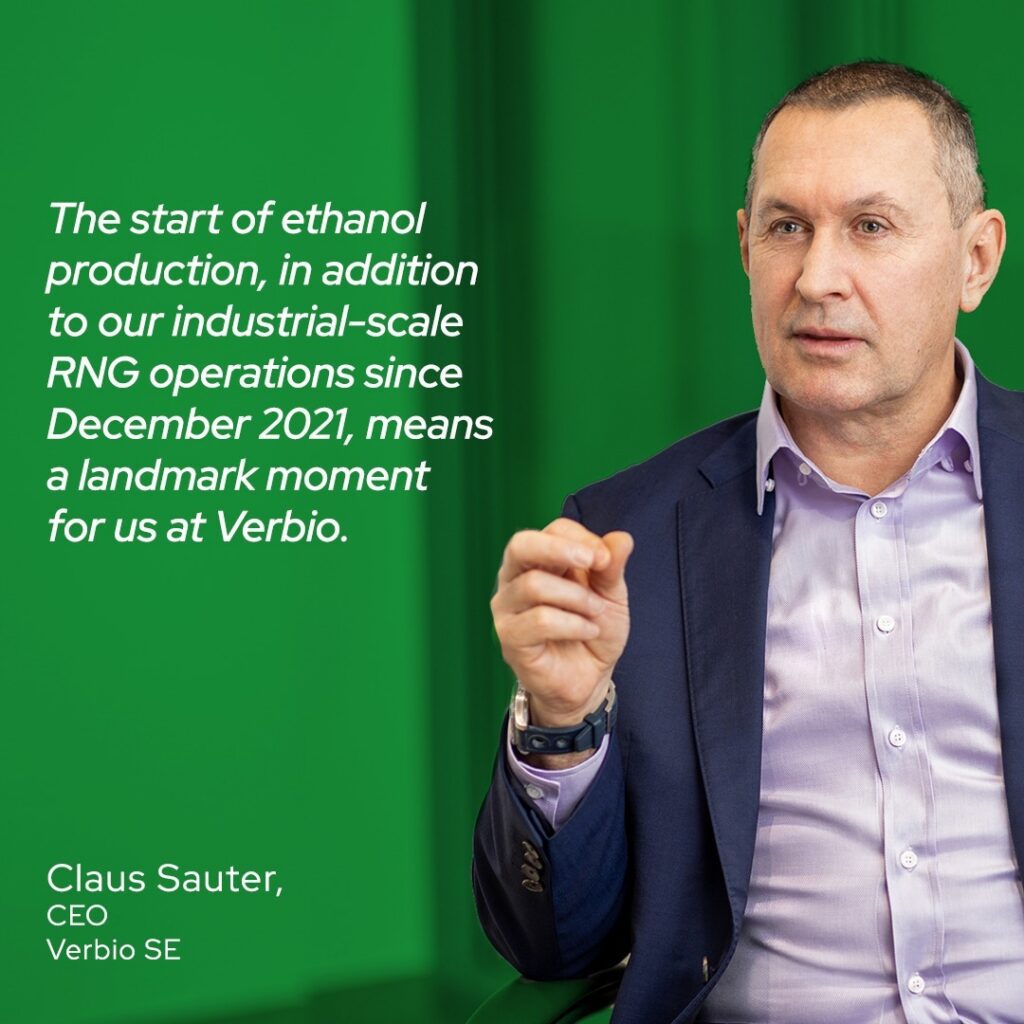
Photo Courtesy Verbio North America
With this expansion, the benefits for farmers have continued to grow, as the company now buys 20 million bushels of corn per year and sells corn oil back to growers. “By buying not only their ag residues, but as of now, also their corn, we are able to provide growers with additional revenue streams for their businesses. Our goal is to bring added value to the region,” explained Greg Faith, Verbio Nevada plant President and General Manager. Sauter told Processing Journal that this explained the company’s choice of Iowa for its operations: “One of the reasons we are in the Midwest is because corn is cheaper here than anywhere else in the world. There is an economic logic behind using corn to make renewable biomass-based materials.” Just as importantly, Sauter added, “Our biorefinery approach not only continues to support opportunities for local growers, but as importantly, drives the transition towards sustainable green energy by offering advanced renewable products.”
The dual output also helps Verbio to keep its own operations sustainable. It uses the stillage left over from ethanol production to produce the RNG and humus. With expanded RNG production, the company generates enough surplus to fuel the boilers that produce the ethanol. “Combining RNG with the ethanol process significantly reduces VNB’s emissions,” Verbio observed. Sauter elaborated to Processing Journal that the plant’s carbon intensity is lower than for other ethanol producers “because we produce more ethanol with 50% less natural gas, and we get more energy from each bushel of corn.” The company is also considering how to capture carbon at the plant. “We see big potential for marketing carbon dioxide, but we are not sure yet how or when it can be monetized,” he added.
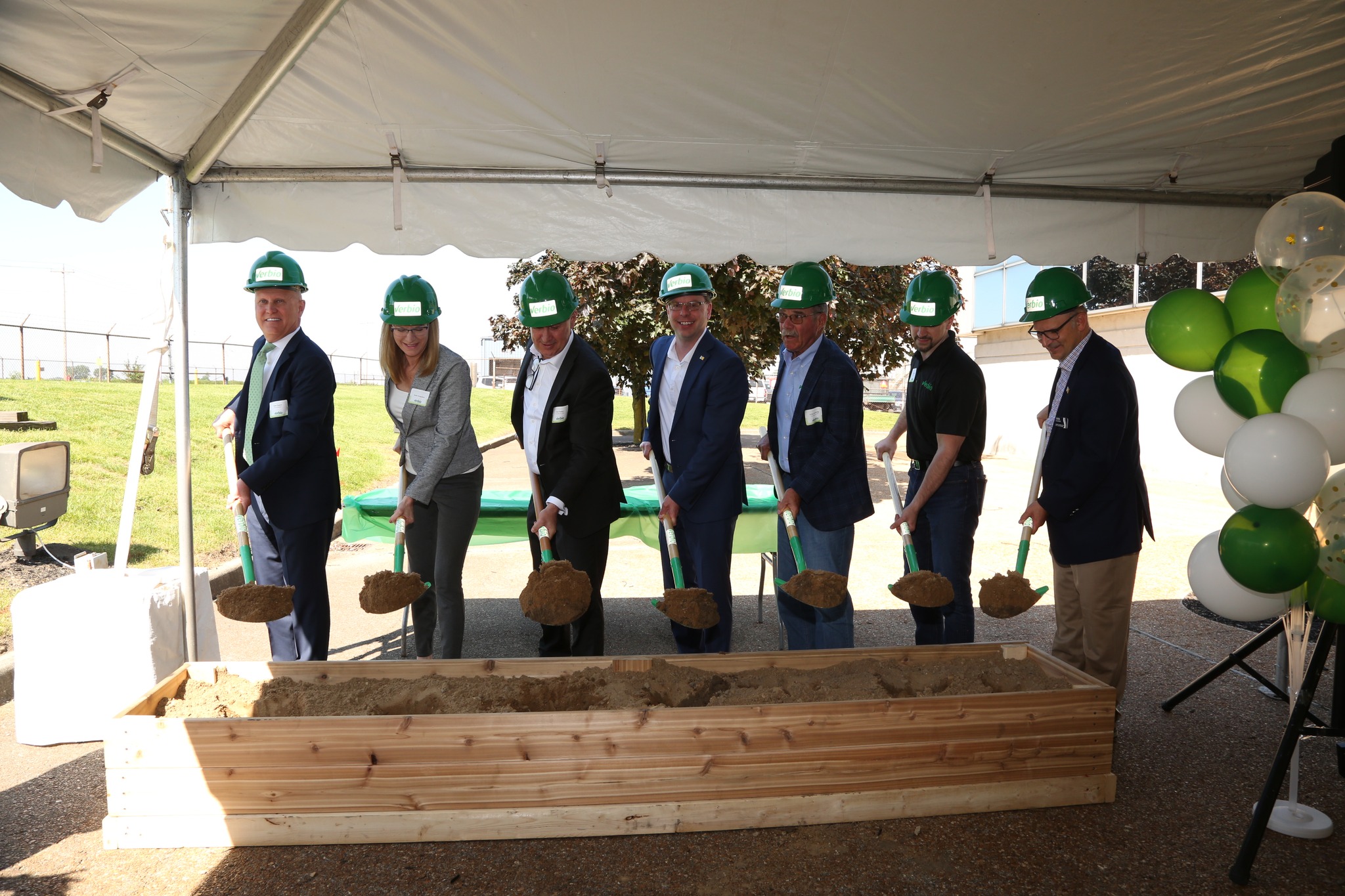
The venture has been so successful that the company is building a second biorefinery in South Bend, Indiana. Formerly known as South Bend Ethanol, Verbio acquired the facility from Mercuria Investments at the end of 2023. It will develop this $230 million investment over the next three years, with production capacity expected to reach 90 million gallons of corn ethanol and 3.5 million MMbtus of RNG each year. The fuel from the Iowa and Indiana plants, the company hopes, will contribute to the nation’s energy security.
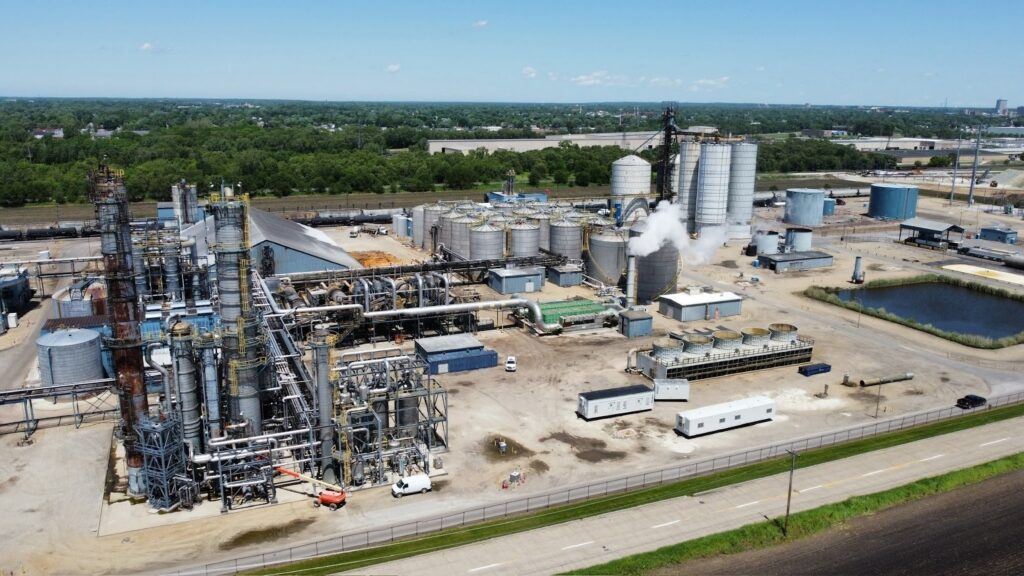
Photo Courtesy Verbio North America