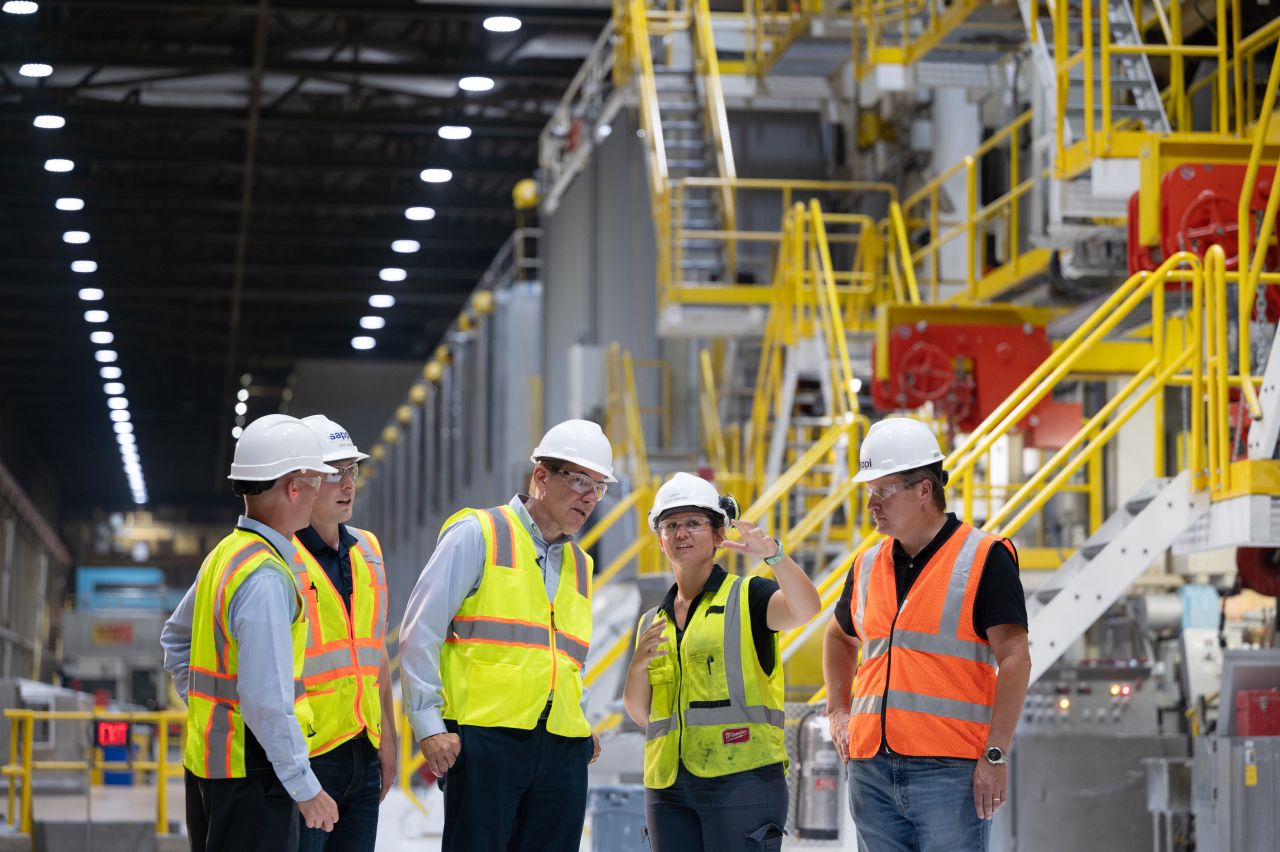
Sappi North America (Sappi) is one of Maine’s most vital manufacturers, operating two mills in the state. The Westbrook Mill was the first paper mill in Maine, built in 1734, bought by Sappi in 1994, and is now the world’s largest producer of casting and release papers. The company also maintains a Technology Center for research and development in the town. The Somerset Mill in Skowhegan, meanwhile, spans 2,500 acres and, with three advanced paper machines, is the “most technically advanced paper mill in all North America.”
Both mills employ significant numbers of Mainers. The Westbrook Mill has 170 employees who produce 23,000 metric tons of specialty papers per year, used to add textures to products ranging from shoes to kitchen cabinets. Asset manager Nick Mooney reflected, “I enjoy the creativity needed in my role. The Westbrook Mill is a small, tight-knit community. We rely on each other, and all do more than our job description.” Although the company had to shut down Paper Machine 9 in 2020 and lay off 75 employees, it shifted much of the base paper production to Skowhegan.
In total, the Somerset Mill employs 780 people and can produce up to 1.25 million tons of products, including paperboard packaging, label paper, and graphic paper. The mill has benefited from more than $600 million in recent investments. In 2016, Sappi invested $25 million to upgrade its wood debarking, chipping, and chip distribution systems, and the following year it announced another $165 million investment in the woodyard to expand its focus on paper-based packaging. Upgrades to Paper Machine No. 1 provided jobs for around 1,000 contractors at its peak, and the mill’s managing director of operations, Blue Keim, told MaineBiz that it involved “supporting not just the mill but many local businesses in Somerset County.”
Another $500 million project in Skowhegan came in 2022, when the company began converting Paper Machine No. 2 to double its capacity and produce solid bleached sulfate board (SBS) products, emphasizing a shift from graphic paper to packaging for food and beverages. After it was completed last July, Mike Haws, president and CEO of Sappi North America, reacted, “Sappi’s investment is more than just an upgrade to a paper machine; it’s a long-term commitment to our people and our community in Maine. Our team at Somerset pulled off the largest rebuild in our company’s history, all while continuing daily operations.” Afterward, the company announced the Project Elevate initiative to “drive the company’s next phase of manufacturing innovation and investment.” This initiative will accompany continued investment in its people and prosperity, two of the key pillars of Sappi’s mission. Accordingly, the Mid-Maine Chamber of Commerce recently named Sappi its Large Business of the Year, and the Maine Forest Products Council recognized it as its 2025 Outstanding Manufacturer.
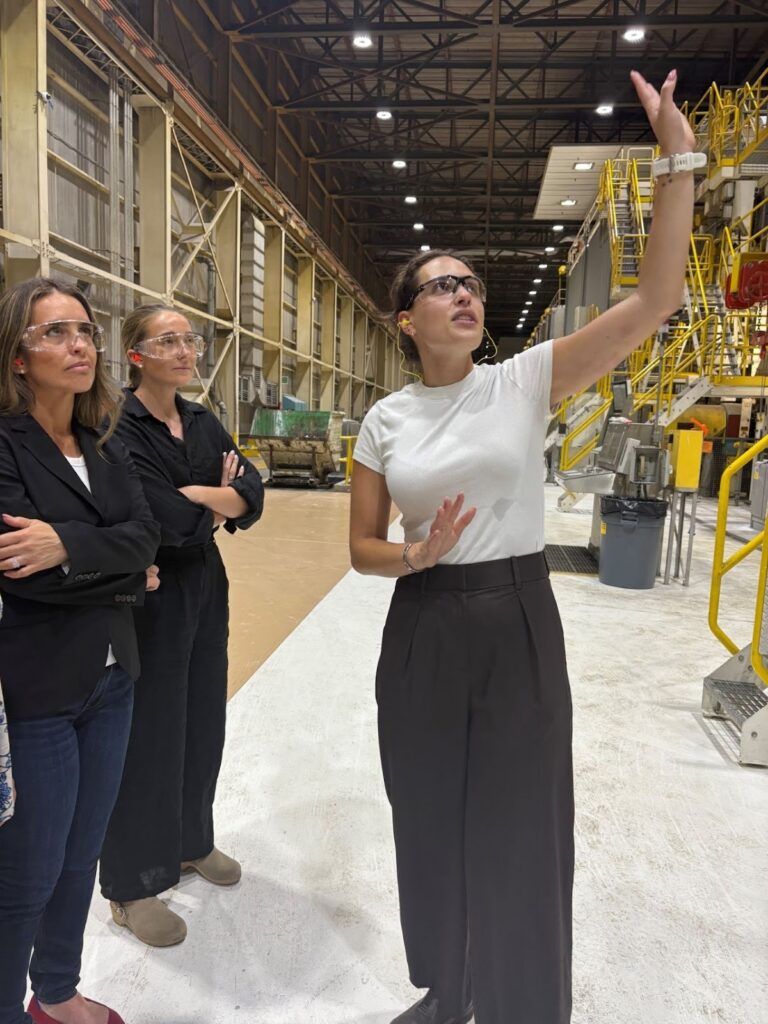
Photo Courtesy Sappi
Sustainability is inherent in Sappi’s operations, as one of the other “4 Ps” is ‘Planet.’ At the Westbook and Somerset Mills, the company says, “We use every part of the tree to make every day more sustainable.” For example, in Westbrook, Sappi sources its wood fiber and cellulose from sustainably managed forests, all of which are certified as such. In fact, both mills are triple-certified by the most well-known organizations: the Forest Stewardship Council, the Sustainable Forestry Initiative, and the Programme for the Endorsement of Forest Certification. The company recognizes the importance of actively managed forests, which sequester carbon, purify water, conserve soil, and provide homes for biodiverse life. “They also provide social and economic value,” the company writes, “contributing to livelihoods, income generation, and employment for millions of people around the world.” As Duane Roothman, Vice President of Sappi Forests for Sappi Southern Africa, reflected, “Forestry doesn’t exist in isolation—it’s a vital link in the chain of sustainability, conservation, and economic growth.”
Additionally, 78% of Sappi’s energy comes from clean energy sources. The Somerset Mill, in particular, uses byproducts from its production, such as steam, bark, and wood chips, to power its operations. These processes also lower the company’s reliance on fossil fuels. “Today, the Somerset Mill has one of the smallest carbon footprints among our domestic competition,” the company notes. Sappi’s Science-Based Targets Initiative (SBTi)-validated target is a 41.5% reduction in carbon emissions per ton of product by the end of the decade, relative to a 2019 baseline. It also wants 44% of its suppliers (by spend) to adopt science-based climate targets by the end of this year.
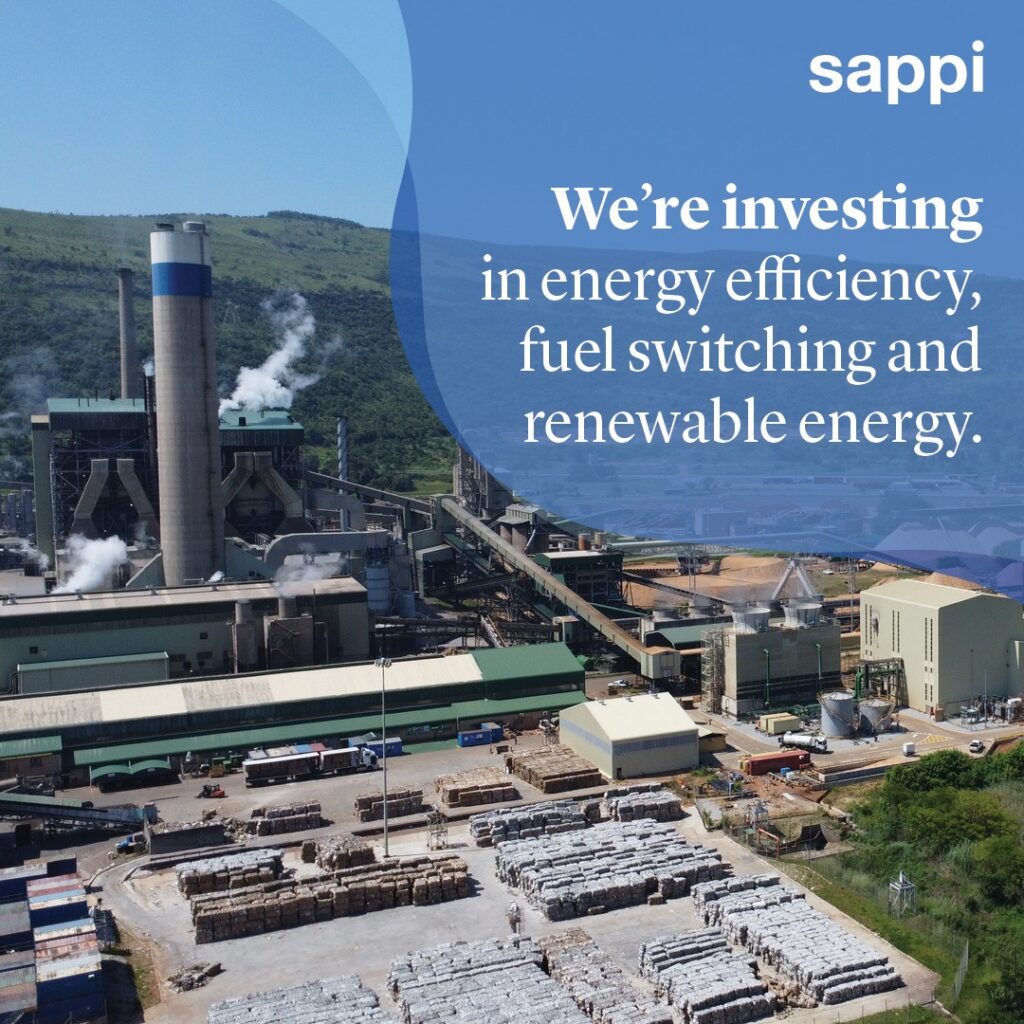
Photo Courtesy Sappi Group
Moreover, Sappi recognizes the value of the circular economy and prioritizes recycling and reuse. For example, the company can repeatedly reuse the release papers made in Westbrook. In Skowhegan, Sappi invested in technologies such as a boiler and a lime kiln to recover more chemicals, thereby lowering both emissions and operating costs. Lime and boiler ash can both be used as soil enhancers in agricultural operations.
The products themselves are also sustainable alternatives to competing products. For example, paperboard solutions are more environmentally friendly than plastic packaging, thereby transforming industries including beauty and cosmetics, health and wellness, consumer electronics, and food and beverage. It is no wonder that ClimateWork Maine awarded Sappi with its Climate Performance Award in March. As Sustainability Director Bakul Wadgaonkar reflected, “Sappi North America’s approach demonstrates that industrial innovation and environmental stewardship can go hand in hand. By leveraging renewable materials and continuously improving our processes, we are helping advance Maine’s climate objectives while supporting local communities and the forest-based economy.”