Tom’s of Maine is perhaps the epitome of a sustainable business. As the company explains on its website, it “was founded to make products that are good for people and good for the planet, and we stand by it.” Its origins date back to the 1960s, when Tom and Kate Chappell realized that the existing landscape of natural personal care products did not meet their expectations and decided to make their own. They launched Tom’s of Maine in the 1970s with their first product, Clearlake, one of the first non-phosphate laundry detergents, and followed up with natural toothpaste and shampoos, all produced using ingredients from an herb garden outside a single-line factory in Kennebunk, Maine. Although the company became part of Colgate-Palmolive in 2006 and its product offerings have expanded to include toothbrushes and dental floss, soaps, and deodorants and antiperspirants, the mission has stayed the same: “No matter how far we come, there’s always a part of us that’s still in that first, tiny factory in Kennebunk, working together to make the products the way Tom and Kate would want.” It still produces all of its toothpaste and deodorants in Maine at a manufacturing site in Sanford, even though some other smaller product lines rely on out-of-state contract manufacturers.
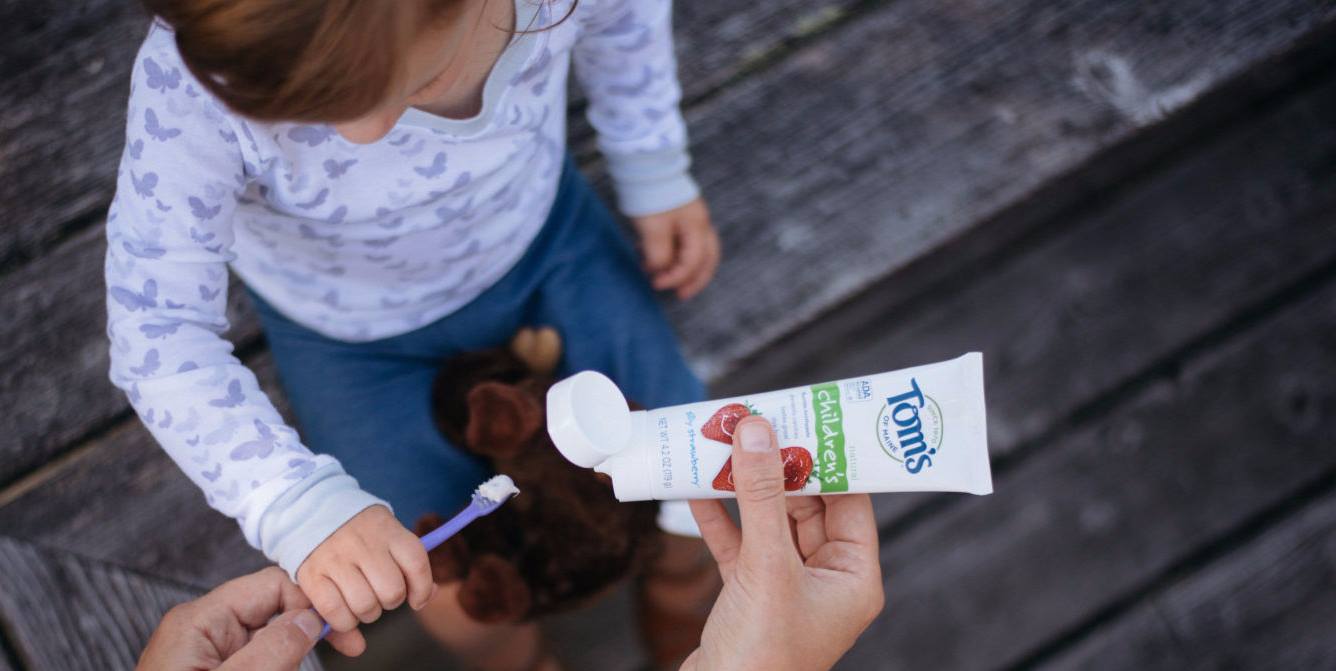
Tom’s of Maine has adopted a stewardship model and has remained dedicated to natural products. Each product uses naturally sourced ingredients, such as peppermint oil, and naturally derived ingredients, such as silica, rather than artificial ones. Plus, the company is fully transparent about every ingredient used, providing a complete list on its website and providing additional context where helpful. For example, while the company uses propylene glycol in its deodorants, it adds that it sources its version from vegetable oils, rather than fossil fuels. Most products are also vegan, using plant-based ingredients rather than animal-based ones, except for some beehive ingredients in flosses and toothpastes. Tom’s never tests products on animals. The company also makes an effort to provide customers with options, with some aluminum-free deodorants and fluoride-free or SLS-free toothpastes.
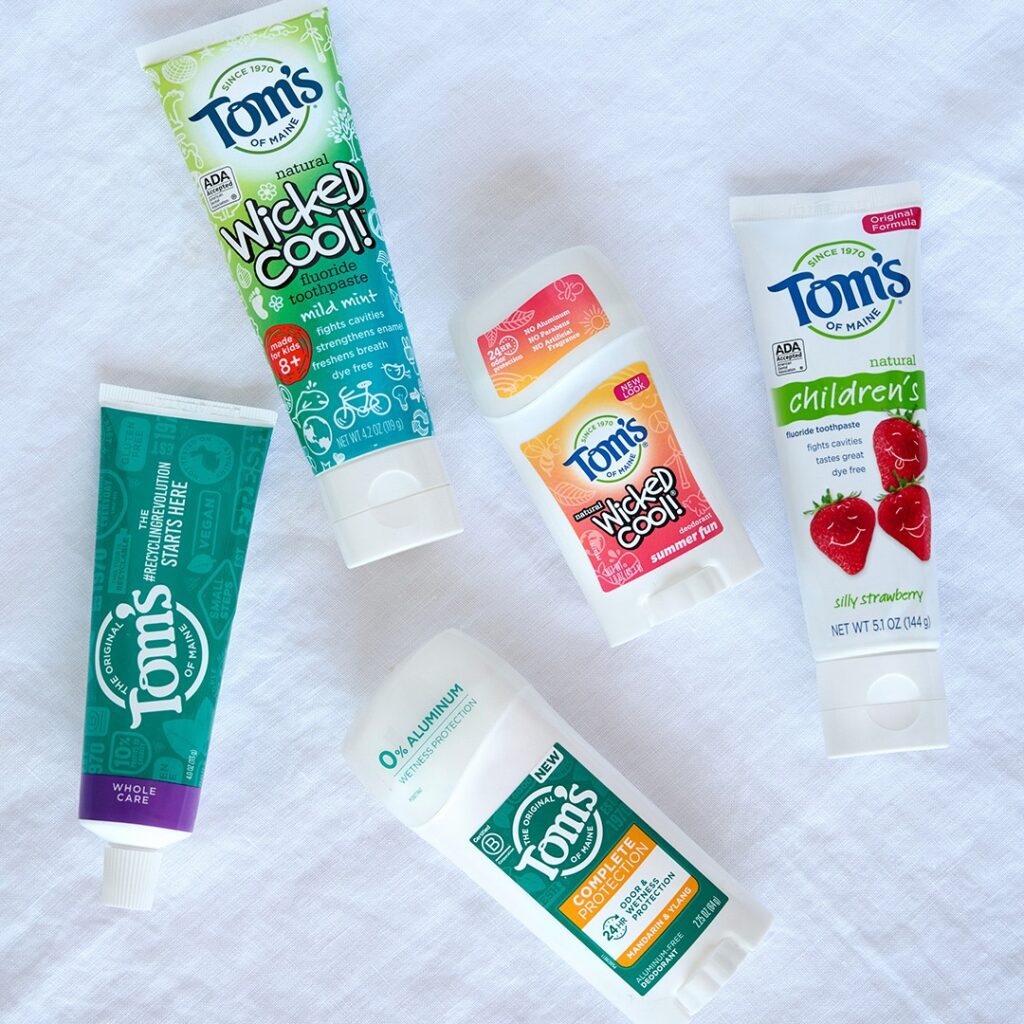
Photo Courtesy Tom’s of Maine
To reduce waste sent to landfills, the business has taken steps to advance the sustainability of its packaging. For example, its full-size toothpastes come in recyclable tubes, as Tom’s of Maine works to combat the more than 1 billion toothpaste tubes that end up in landfills annually in the U.S. Plus, they are working with The Recycling Partnership to educate communities about these tubes. Tom’s helped launch the organization’s Pathway to Circularity: Recyclability Framework, offering its tubes for a case study, and continues to be an active participant in the initiative, with additional testing in the works. The company has also partnered with Terracycle to offer a free recycling program. Customers can ship Tom’s of Maine toothbrushes, smaller toothpaste tubes and caps, mouthwash bottles and caps, and deodorant containers and caps that do not qualify for municipal recycling programs to Terracycle for recycling into raw materials that other manufacturers can turn into new products. Tom’s is continually innovating in packaging sustainability, with several initiatives underway. For example, the company is also working to increase its use of recycled plastic in mouthwash bottles and is brainstorming ways to eliminate plastic packaging altogether. As Julie Sprague, the company’s stewardship manager, discussed the benefits of sustainable shopping, “I feel good that I’m creating less waste and helping the environment just by making a purchase I planned to do anyway.”
As a B Corporation that faces an audit every three years, Tom’s of Maine wears the certification as a badge of honor. Some of these efforts are educational: the Good Matters Blog offers recommendations on natural products, ways to feel healthy, and avenues for living sustainably. Other environmental efforts, including support for community solar projects in the state and the conversion of its facility in Sanford to zero waste, demonstrate how the company cares for the planet in multiple ways. Sprague added, “The more companies that commit to these practices, the better the world will be with things like more clean water and reduced pollution.”
Additionally, the business helps others passionate about the environment and climate to do their part through the Tom’s of Maine Incubator. The five underrepresented leaders chosen to join each cohort received $20,000 in funding, along with mentorship, training, networking opportunities, and amplification of their work and voices. Last year’s recipients included Jasmine Lamb, founder and chair of the Sipayik Resilience Committee, which supports Native American-led sustainability efforts in their own communities and provides educational outreach; Zanagee Artis, a founder of Zero Hour, which empowers diverse young people who are fighting the climate crisis or promoting environmental justice; Brittney Portes, the founder of Gardens of Sol, which supports those who want to develop their gardening skills, thereby strengthening their connections to food; and Diamond Spratling, founder and Executive Director of Girl Plus Environment, which empowers Black and Brown women and non-binary individuals to stand up for environmental justice. The financial and professional support provided to these types of founders helps them to scale their companies and impact.
Tom’s of Maine also cares for its fellow Mainers. Every year, the company sends 10 percent of its profits to charities in the health, education, or environmental sectors, amounting to more than $17 million since 2010. A particular highlight was the Get Into Nature program, which, between 2021 and 2024, encouraged 50,000 students to journey into nature and helped 60 teachers run environmental programs. Plus, Tom’s of Maine employees are empowered to use five percent of their paid time, or about 12 days each year, volunteering for causes that are close to their hearts. Overall, the company’s history of benefits for Mainers and the natural world perfectly demonstrates its view of business “as a force for good.”

Photo Courtesy Tom’s of Maine