
Earlier this year, TIME released its list of the top greentech companies in the United States. Renewable energy companies claimed more than 40 of the top 250 spots, spanning across states like Texas, Arizona, Tennessee, and Georgia.
Texas
Ranking sixth in the list Houston-based Fervo Energy is an enhanced geothermal systems (EGS) company that says it is “developing next-generation geothermal projects to deliver 24/7 carbon-free energy.” The company drills horizontally into geothermal reservoirs and injects water to produce steam, thereby tapping the earth’s heat for the production of electricity. It also gathers real-time data from fiber optic cables installed in the wells to optimize heat mining efficiency. Through a partnership with Google, Fervo launched its first power plant operations in Nevada in 2023.
In June, Fervo announced that it had raised $206 million in capital to advance work on its Cape Station development located in Beaver County, Utah. When the first phase of the project is up and running next year, it will provide 100 megawatts (MW) of power to the grid. In 2028, the second phase is expected to deliver an additional 400 MW of power.
Bill Gates’s Breakthrough Energy Catalyst provided $100 million in funds for this new project. Mario Fernandez, Head of Catalyst at Breakthrough Energy, explained, “Cape Station marks a major step forward in unlocking the infrastructure capital and project financing needed to commercialize EGS. This project proves what’s possible when breakthrough innovation meets disciplined delivery. It sets the foundation for a model that can be repeated well beyond this site to provide affordable, reliable, and clean energy to the world.”
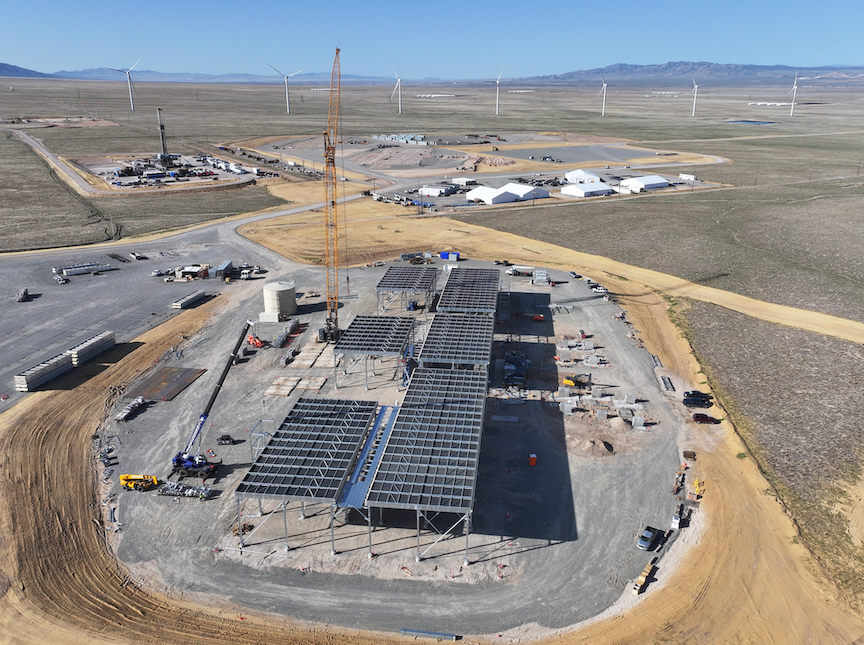
Photo Courtesy Fervo Energy
Arizona
Headquartered in Tempe, solar company Erthos ranked 68th in TIME’s list. The company claims to offer the smallest footprint and lowest visual profile of any comparable project by “distill[ing] the complexity of solar power plants into a modular, repeatable design,” and installing its Earth Mount Solar Arrays directly on the earth, adapting to natural contours with up to 15% slope. The adaptive nature of the panels simultaneously preserves natural beauty, eliminates structural steel costs, and makes the arrays able to withstand even a Category 5 hurricane. Plus, the design can increase the energy density of a particular parcel of land by up to 275%.
Last year, Erthos joined with the Navajo Tribal Utility Authority to create a joint venture that will develop projects on Navajo Tribal land, creating more than 1,250 local construction jobs and 550 full-time positions in the Navajo Nation. In June, the company also reached an agreement to develop a 92 MW solar installation for an industrial manufacturing facility in Texas, which will be its biggest deployment to date when it is operational and connected to the Electric Reliability Council of Texas (ERCOT) grid next year. As Erthos’s projects continue to increase in size, the company’s autonomous ErthBot PV array cleaning robot that works through the night will offer substantial benefits.
CEO Jim Tyler said, “More than just a validation of scale, this project proves bankability. And, even in the face of today’s uncertainties, this project shows that our low-price offering remains resilient in the face of tariffs, AD/CVD measures, prevailing wage rules, and U.S. content requirements.”
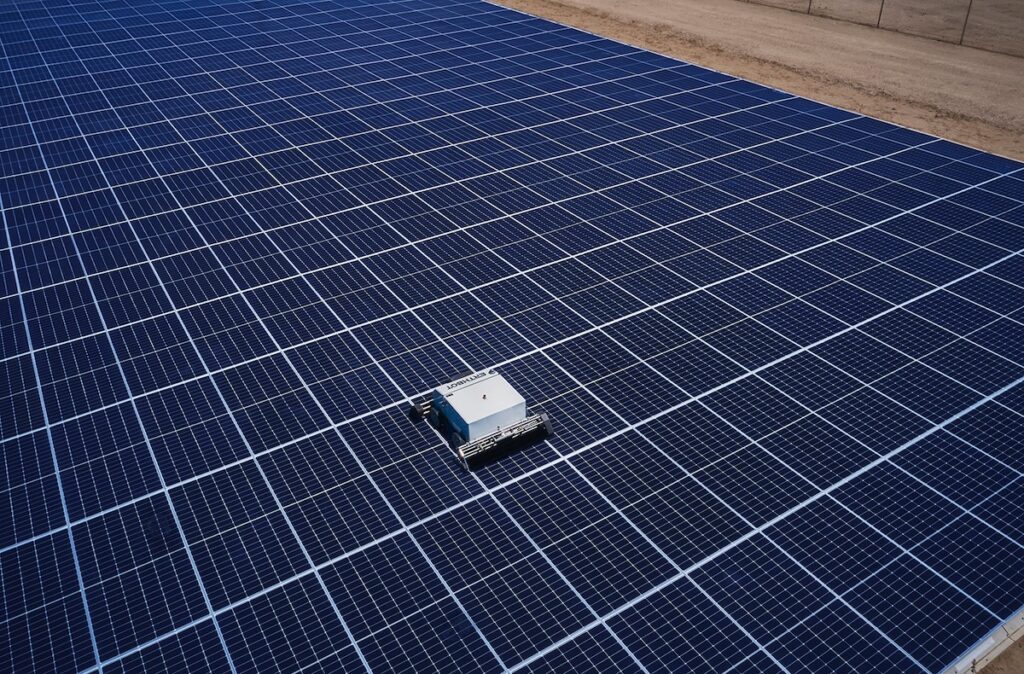
Photo Courtesy Erthos. Inc.
Tennessee
Coming in at 131st in TIME’s list, Knoxville-based Type One Energy explains on its website that it is “mission-driven to provide sustainable, affordable fusion power to the world.” In 2024, the company announced that it would build its stellarator nuclear fusion prototype machine, Infinity One, at the Tennessee Valley Authority’s (TVA) Bull Run Fossil Plant in Clinton, Tennessee. Essentially, the stellarator uses magnetic fields to allow scientists to confine and control hot plasma, resulting in helium used to produce electricity. The Type One plant, which the company claims “will be the world’s most advanced stellarator,” is part of Project Infinity, a collaboration with both TVA and the U.S. Department of Energy’s Oak Ridge National Laboratory (ORNL). Type One followed up that announcement this February with plans to develop Infinity Two elsewhere in the Tennessee Valley region.
In July, the Type One and TVA announced that the first contracts for Project Infinity were signed, with TVA agreeing to help develop the necessary tailored welding and fabrication techniques for Infinity One and Infinity Two, thereby offering the corporation’s century of experience with power component overhaul and repair.
Mark Ruis, vice president for stellarator maintenance and inspection solutions at Type One , reflected, “I have seen TVA’s capabilities from my previous work with them in the nuclear and hydro power sectors. Their PSS facilities, and highly skilled workforce which repairs and refurbishes some of the most challenging components in the power industry, will significantly derisk our ability to deliver Infinity One and Infinity Two.”
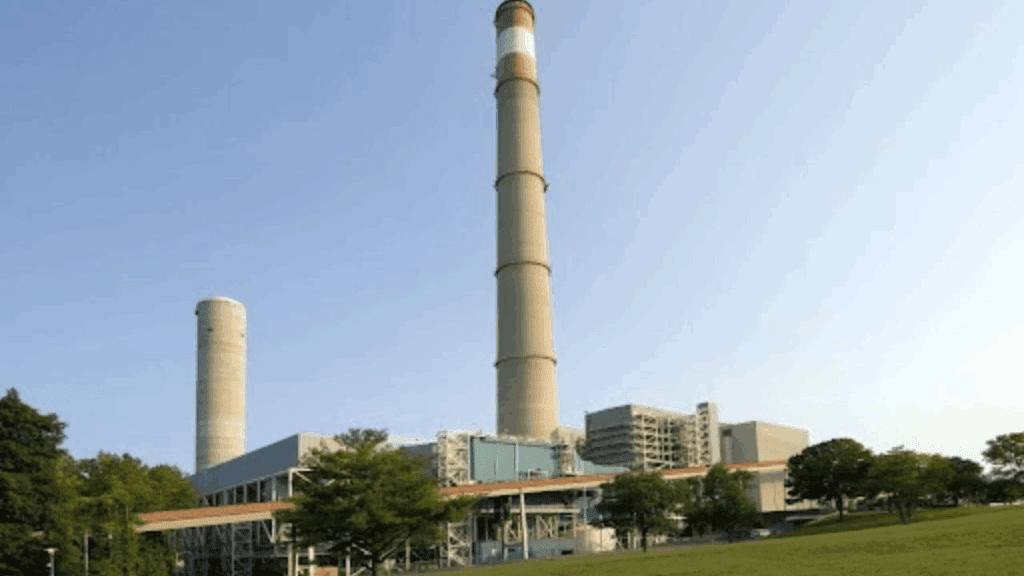
Photo Courtesy Tennessee Advanced Energy Business Council
Georgia
Atlanta-based Emrgy, which ranked 145th in TIME’s list, notes that it is “redefining hydropower to remain the world’s most reliable, continuous, and cost-effective renewable energy resource.” Founded over a decade ago, the company has gone on to deploy modular hydroelectric solutions in canals that use turbine arrays that avoid the need for large-scale dams. After deploying its first pilot demonstration at a water treatment plant in Atlanta in 2015, the company in 2017 worked with Denver Water and the U.S. Bureau of Reclamation to install the first distributed hydropower array in the country. Placed in a 9-mile-long canal, it marked the first time the company had placed its technology in an array similar to a solar installation to maximize energy generation.
“Our technology is designed to integrate seamlessly with the existing environment as opposed to modifying that environment for our needs. Our turbine runners are low-speed, and the gearing and drive system doesn’t use typical lubricants and oils that can be harmful to the environment,” founder and CEO Emily Morris explained at the time. “This concept could be replicated not just here in the United States, but also across the world. This is a game-changer.”
Plus, last year, Emrgy raised $18.4 million to scale its solution, which delivers energy to homes and businesses through electric distribution lines that run beside the canals and connect to the grid. The company will also hire more employees and build its first assembly plant in Aurora, Colorado. With more than 1,600 miles of main canals operated by the U.S. Bureau of Reclamation across the country, the potential speaks for itself.
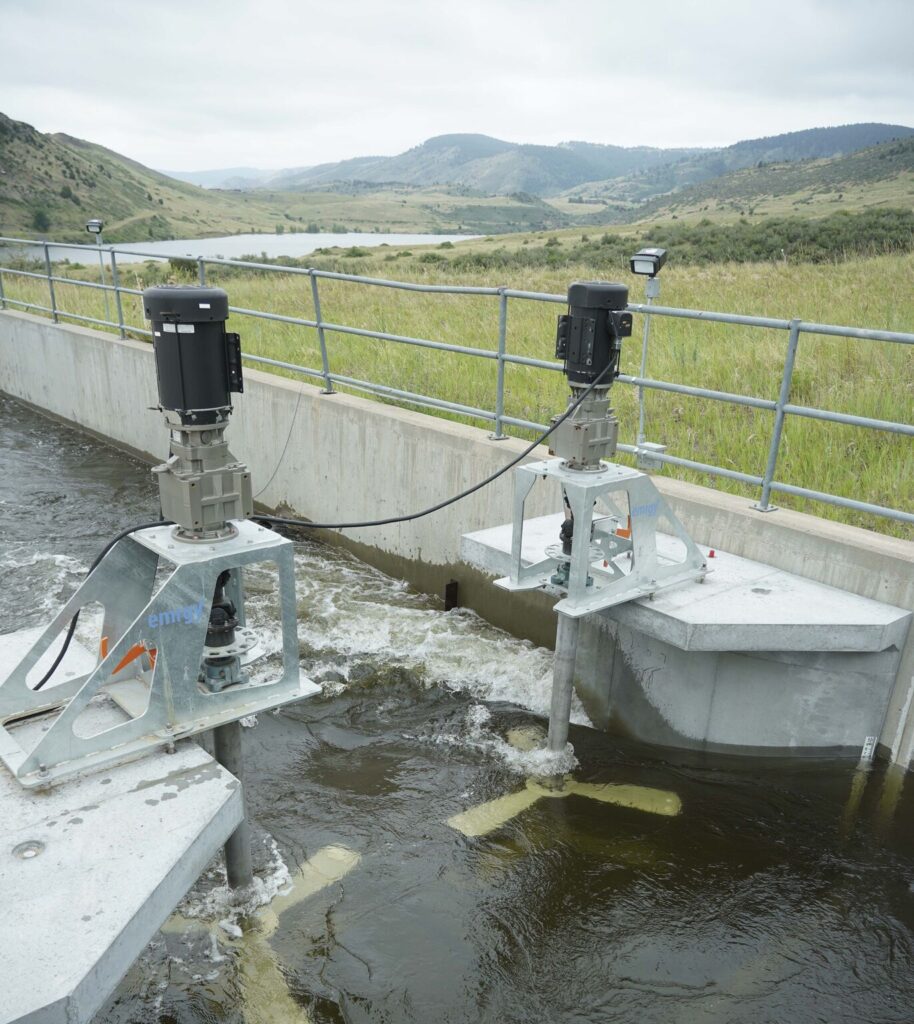
Photo Courtesy Emrgy Inc.