In 2014, Bob Varness founded Tongass Rain Electric Cruise LLC after spending most of his career in telecommunications. Based in Juneau, Alaska, the company has been designing electric vessels made of CNC aluminum and providing consulting on or executing gas-to-electric conversions. The company is also an independent dealer selling electric propulsion systems from Torqeedo and Elco Motor Yachts that power smaller vessels, including kayaks.
President and General Manager Varness came up with the concept for the country’s first ocean-going electric passenger vehicle, a 50-foot catamaran called Tongass Rain that would seat 47 passengers. British Columbia-based Jutson Marine designed the hull, while Washington-based Armstrong Marine was set to build the boat.
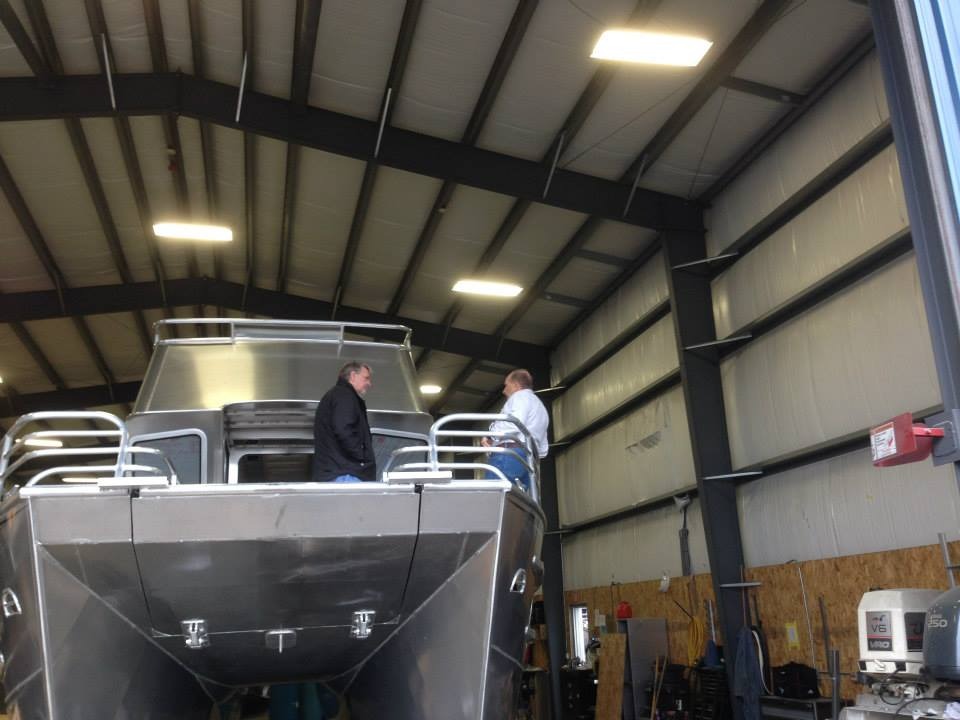
Photo Courtesy Tongass Rain Electric Cruise LLC
Rain would power the vessel via the local hydroelectric grid, which would supply it. Onboard, that power is stored in lithium-ion phosphate batteries, which are three times more powerful and charge three times faster than lead acid battery alternatives. They would then power the twin Elco engines. Varness added to The Maritime Executive, “We will be able to recharge using commercial hydroelectricity at dockside, with two 208 volt 50 amp services in 7-8 hours. Wind generators and solar panels will maintain electrical charge on the house batteries.”
With no petroleum-based propulsion, the boat would be fully net-zero. However, Varness explained that reliability is front and center for his company: “Our battery string configurations ensure reliability, and in the event a battery string is disabled, we can continue operations to our planned destination. We will have full redundancy of all propulsion systems to ensure reliability and safety.”
Varness planned to use the boat to take passengers on eco-education cruises and whale-watching tours in Alaskan waters. “No noise, no emissions … and the system only has one moving part, so you don’t have exhaust systems to deal with, turbochargers, cooling systems, or injection pumps,” Varness explained to the Anchorage Daily News. Those silent, clean operations on a boat named after the Tongass National Forest (also home to the hydroelectric power grid) were perfectly suited to educating customers about the environment and renewable energy.
Varness told the Maritime Executive that the opportunity for clean vessels was huge, “Globally, we have a huge opportunity to break from the norm, reduce operating expense and carbon emissions.” While the cost would be high, at about $5,000 per onboard battery, Varness and O’Brien both believed prices would drop as these systems expanded in the market. Additionally, using local hydropower is far cheaper than importing marine fuel to Juneau on barges. Varness added, “You can operate your boat at a 75% to 80% cost savings compared to diesel. And there are options from one horsepower to a hundred horsepower.”
Photo Courtesy Tongass Rain Electric Cruise LLC
In 2015, the U.S. Coast Guard approved the vessel’s structural design, certifying it for open-water travel of up to 150 nautical miles with passengers in tow. As naval architect Scott Jutson told Professional Mariner, “What makes Tongass Rain unique is that it’s the first in a new era of electric vessels in North America that will have Coast Guard Subchapter T certification for passengers.” Unfortunately, Bob remembered in conversation with the Juneau Empire, “It fell flat with the Coast Guard inspection process. There was no established process or code for certifying lithium-battery-powered passenger vessels carrying more than 6 passengers. Plus, the electric propulsion technology was changing so rapidly, and anytime you changed one element in the plan, you had to start the process all over again.”
At the time, Varness was beginning to think about bringing the technology to smaller fishing boats. “If you know where you’re going every day and it’s pretty much a routine, and if it’s not high speed, this technology is something that people really need to look at. All the products are off the shelf and available for purchase today,” he said to the Anchorage Daily News. However, Armstrong Marine draftsman Trevor O’Brien detailed the complications: “This first boat is a lot simpler — it’s a passenger boat, and we know exactly how many miles they run out and back. Figuring out how much electricity they need is a lot easier than a fishing boat that you don’t know where they’re going, or how long they’ll be running.”
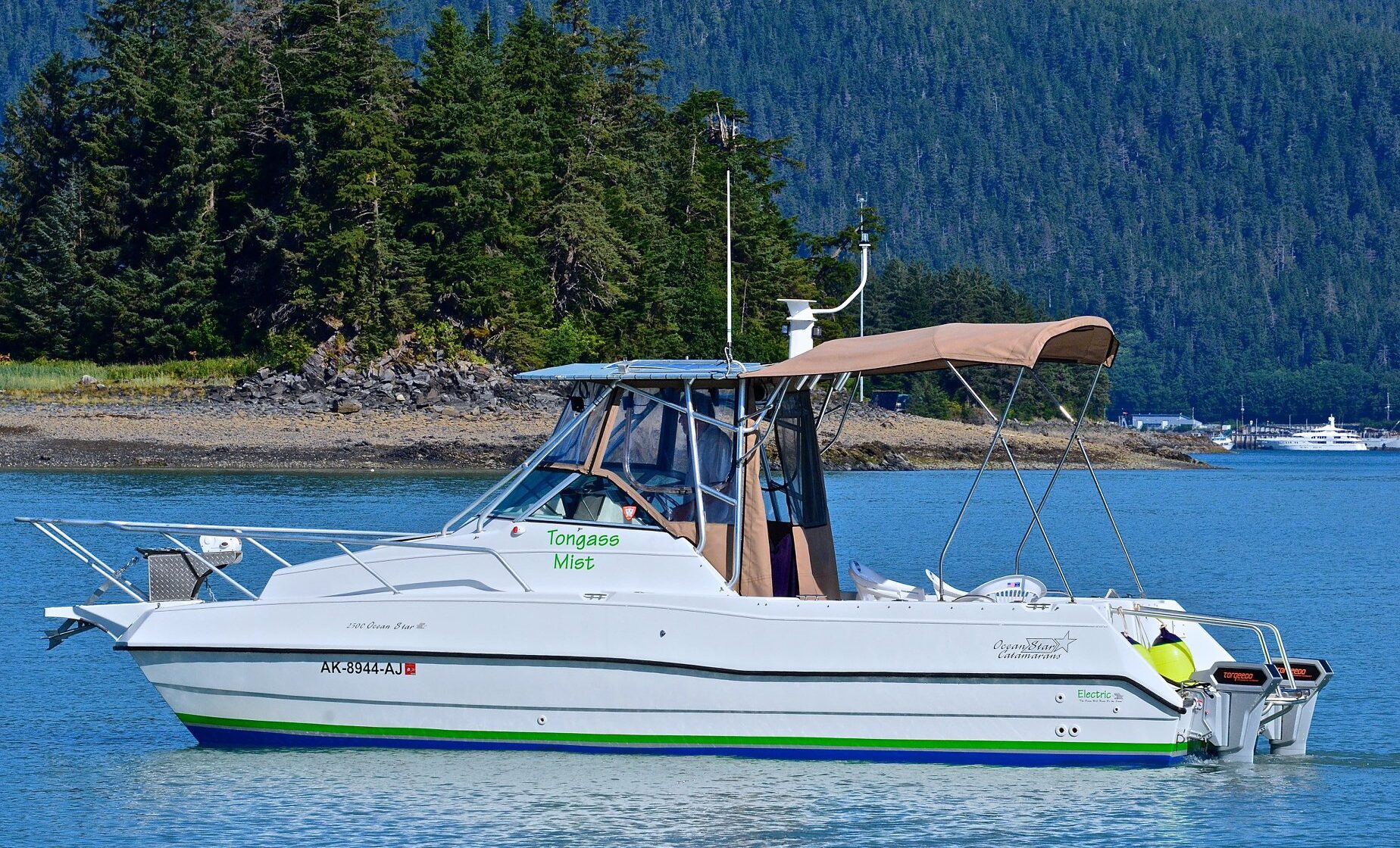
By the summer of 2018, though, Varness had completed work on a smaller follow-up vessel, the Tongass Mist, a 25-foot Ocean Star Catamaran that can hold six people. Varness told KTOO that it attracts a lot of interest and questions from others out on the water: “It turns a lot of heads. I mean, no matter where I go, and it will probably happen today, once we get over to the lightening dock, if there’s a vessel in there pitching fish off, people literally flag you down, ‘Come on over. Is that electric?’”
The Tongass Mist was once a “shell of corroded junk” that had sunk at least once near Prince of Wales Island and was sitting on a trailer in the village of Hoonah when Varness bought it on Craigslist for about $5,000. He then retrofitted the Tongass Mist to operate as its larger sister would have. “That’s its name because what we use for boat fuel is a little bit of rain,” Varness said to the Juneau Empire. He spent about $50,000 to $60,000 to remove old wiring and convert it to run on hydroelectric power, with eight below-deck Torqeedo high-performance lithium batteries totaling 20.8 kWh of propulsion battery reserve, powering two Torqeedo Cruise electric outboard motors. Like the previous concept was supposed to, the boat fully charges at the harbor overnight and can run for several hours, minimizing range anxiety. Although it was hard work, and it “actually felt pretty hopeless at one point,” Varness said, you just “need the budget, and the desire to do it.” He added to KTOO, “Basically, it’s my dream boat. It’s everything I ever wanted.”
With independent DC house, AC charging, and DC propulsion systems, “there is no single point of failure in our electrical configurations,” the company writes, which is important because “the Southeast Alaskan weather can change rapidly, and there’s not always another vessel around to assist if needed.”
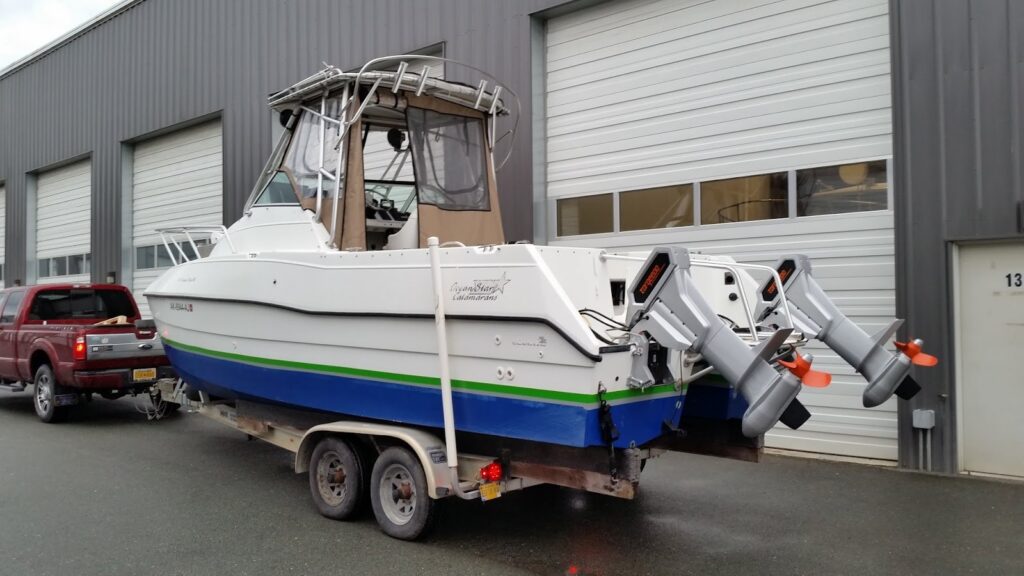
Photo Courtesy Tongass Rain Electric Cruise LLC
Varness now uses the boat for fishing, recreation, and tours in the Alaskan waters near Juneau, Douglas, and Auke Bay. The tourism industry presented a big opportunity, Varness reflected to the Professional Mariner: “There used to be about 12 whale-watching boats in Juneau. Now it’s an industry. They use 70-footers. When the whale-watching ships come back in at the end of a day, there’s a haze on the water.” Net-zero vessels would make these trips more efficient and less detrimental to the environment.
The industry will still need more of these vessels, though, John Neary, the Director of the Mendenhall Glacier Visitor Center, explained to KTOO, noting that before mid-century, the glacier might not be visible from the visitor center, and that electric boats are an option to give tourists a better view. He described, “We’re thinking it might be easier, cleaner, quieter to have a slow engine doing just a few knots that would be electric-powered. Because the technology is there now, and it will soon be there as people push the technology forward.” By 2021, electric boats were beginning to break through in Juneau. Varness estimated that there were about fifteen electric-powered boats in the area at the time.
In addition to supporting the tourism industry, electrifying boats also presents a workforce opportunity, Varness said. “Who is there to do these conversions? This isn’t just a local opportunity, it is a global business opportunity.”
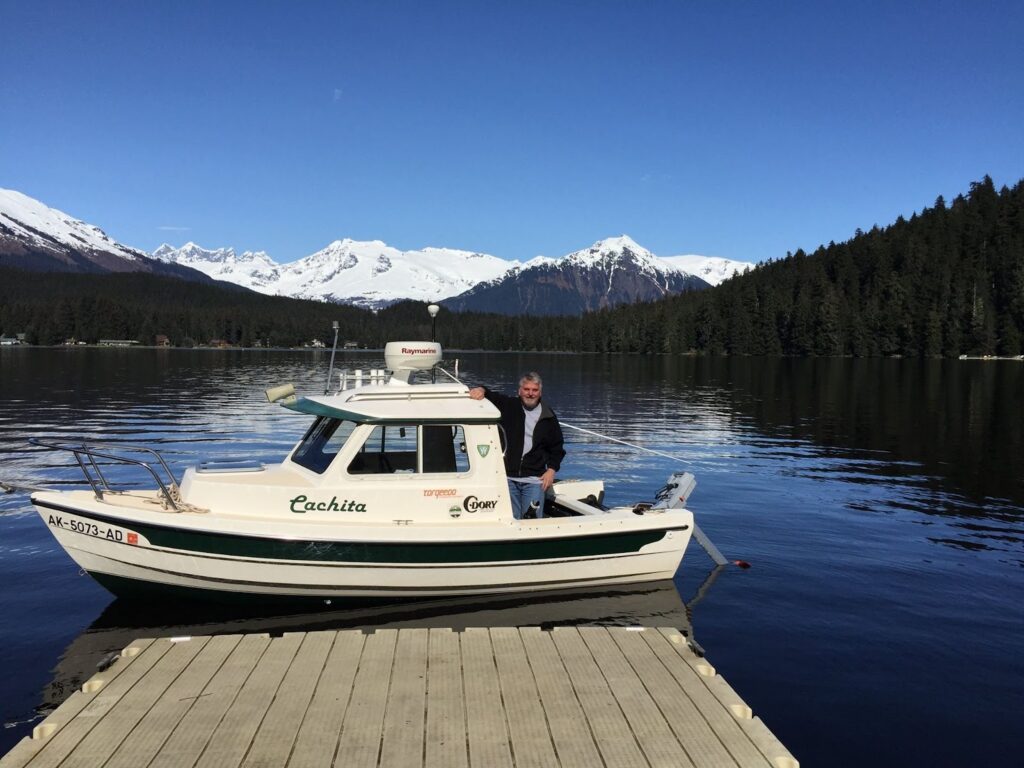
Photo Courtesy Tongass Rain Electric Cruise LLC