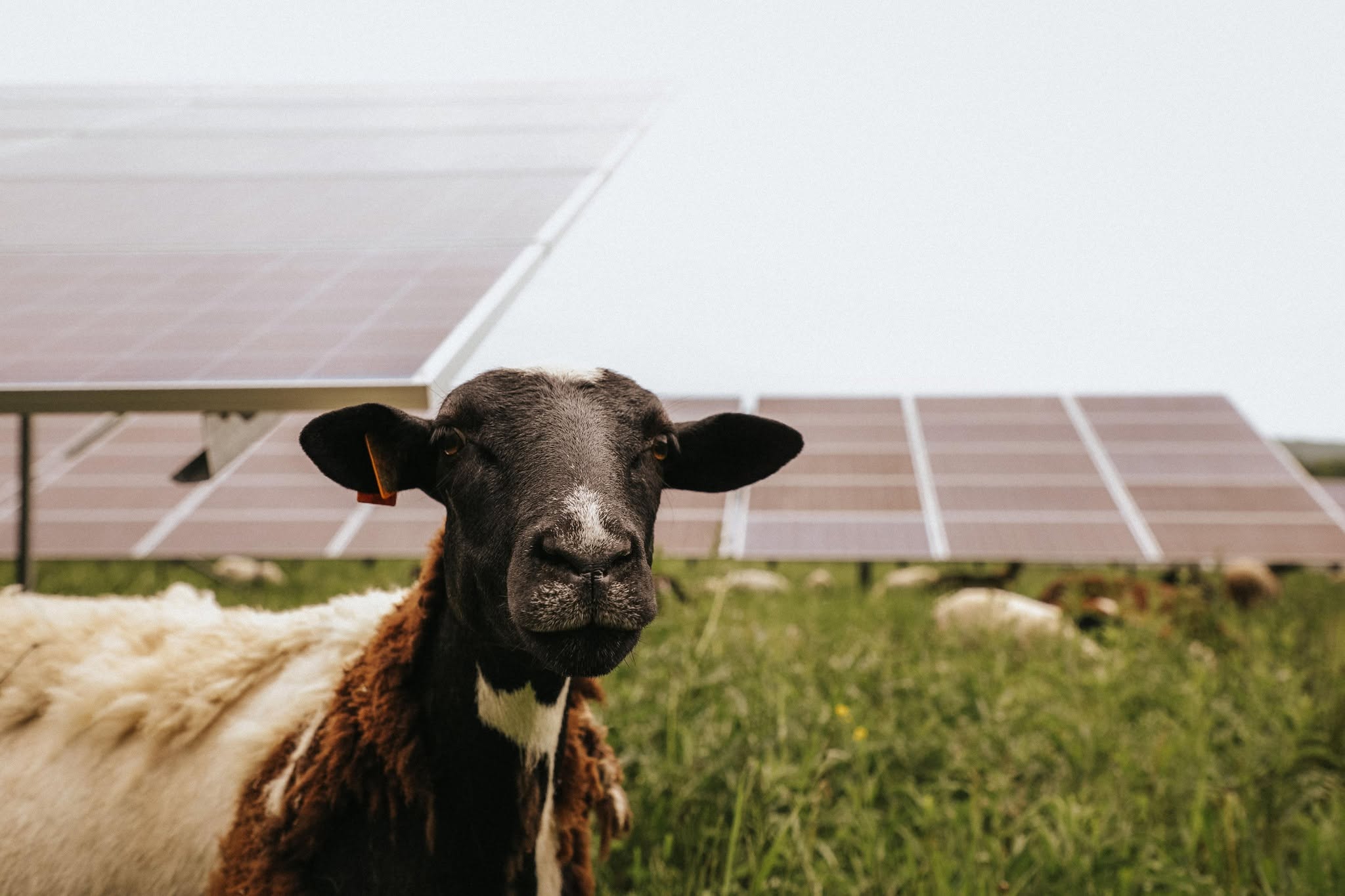
On a solar farm along Felts Brook in Brewer, Maine, the grounds crew has four legs. “We have a couple hundred sheep that we are grazing in different groups across the state,” shepherd Matt Kovarik of Black Earth Grazing told WABI-TV in August 2026. His flock keeps the grass short beneath panels at Nexamp’s 2.6-megawatt Felts Brook Solar farm.
Nexamp’s grazing program has run since 2018; most of the company’s Maine farms use it, and, according to communications manager Keith Hevenor, “For us, cost-wise, it’s about the same cost as hiring a landscaping crew.” Sheep also avoid a risk that mowers carry. “You run the risk of kicking up rocks or debris, damaging the panels,” Hevenor said. For Kovarik, the work pays. “Having that opportunity, it makes it into a job, and we are not just grazing our sheep here. We are getting paid to do it. I think that having that opportunity is really awesome for us,” he said.
Felts Brook is one of many community solar farms Nexamp, a company founded in 2007 by two U.S. Army veterans, has built. Co-founder Will Thompson returned from active service in Iraq with the U.S. Army in 2005 and launched the company with Dan Leary, a lifelong friend and fellow Army veteran. “Without Daniel Leary, I would not be the co-founder of Nexamp today. He welcomed me into this industry and made it easy for me to say ‘yes’ to the opportunity of a lifetime,” Thompson wrote in 2022.
Nexamp has since deployed more than 1 gigawatt of clean energy nationwide, framing its mission as an effort to “democratize clean energy and support U.S. energy independence.” In October 2025, the company said it operates “more than three dozen projects across Maine, contributing to a diverse mix of energy resources that strengthen local infrastructure and support the state’s evolving power needs.” Mainers subscribe to a share of a nearby farm and receive credits on their electric bills, saving up to 30% on electricity costs. In July 2026, Solar Power World named it the No. 1 community solar company in the United States for the fourth consecutive year.
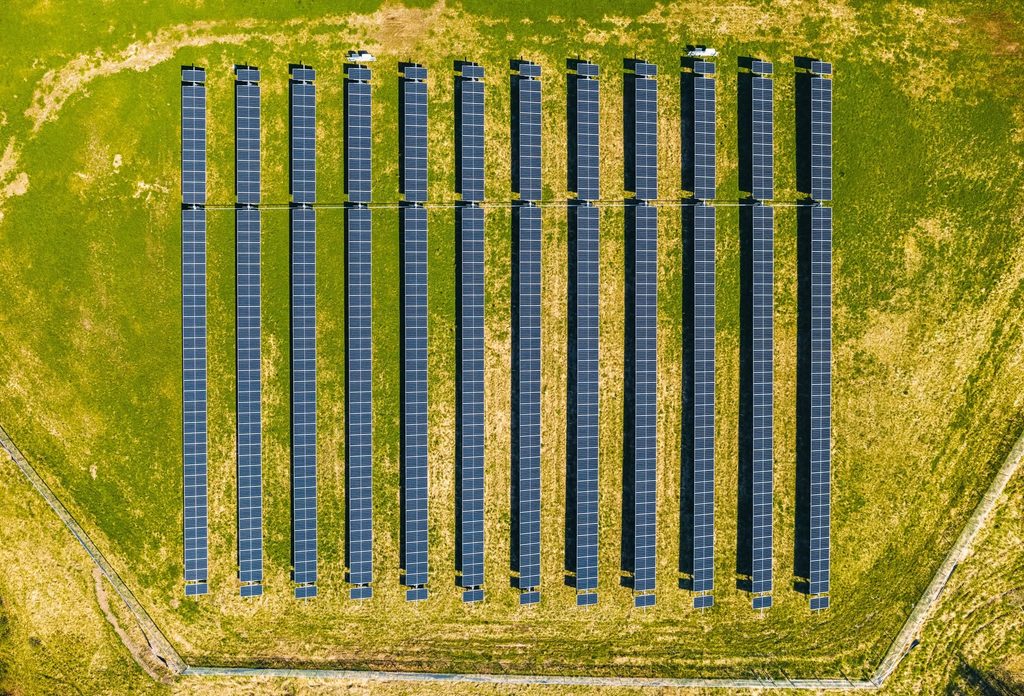
Photo Courtesy Nexamp
Nexamp’s Maine farms reach into nearly every corner of the state. Pembroke Solar, one of Nexamp’s northernmost projects, has more than 8,000 solar modules near the Canadian border and eliminates 6,853,230 pounds of carbon emissions annually. In Rumford, Old Route 2 Solar occupies town land behind the municipal garage. West of the Kennebec River, Richmond Renewables uses 2,400 American-made bifacial modules on trackers that follow the sun. Farms such as Gorham Solar and Philips Way Solar in Dedham each serve residents in the service territory of the state’s two major utilities, Central Maine Power and Versant Power. Down East, Nexamp bought the Cutler and Pembroke projects from Kittery-based Loki Solar and hired Sargent Corporation to build them.
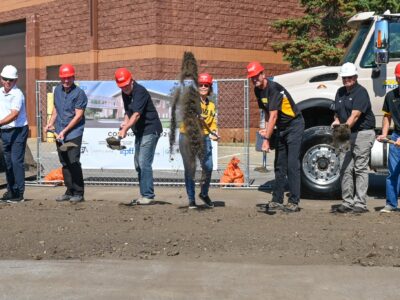
Nexamp completed the 5.9-megawatt Ellsworth Renewables farm in October 2025 with more than 10,000 U.S.-made modules, enough to power about 1,000 Maine homes, and said it “contributed to the local economy during construction and will provide enhanced tax revenue to the city of Ellsworth.” The ribbon cutting included a demonstration of the sheep-grazing program. “As communities across Maine continue to experience higher energy demand, projects like Ellsworth Renewables are an important part of keeping the grid strong and adaptable,” said Henry Barrett, Nexamp’s business development director.
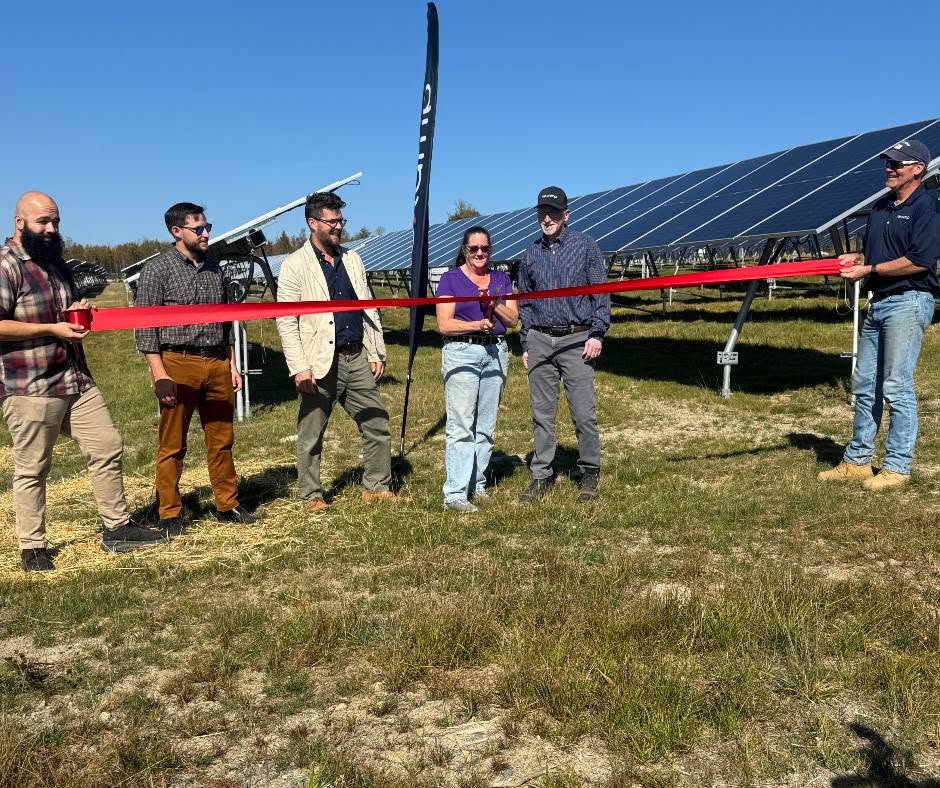
Photo Courtesy Nexamp
Subscribers install nothing. Their share of a farm’s output appears as a credit on a Central Maine Power or Versant Power bill, and they pay Nexamp for those credits at a discount. Nexamp’s Maine sign-up page lists a 15% discount for standard subscribers and 20% for income-eligible households enrolled in programs such as the Home Energy Assistance Program or MaineCare. Enrollment is free, and subscribers can cancel without penalty on 90 days’ written notice.
However, supply prices still shift from year to year. The Maine Department of Energy Resources lists a 2026 residential standard offer supply rate of about 12.7 cents per kilowatt-hour for Central Maine Power customers, up from 10.6 cents in 2025, and attributes much of the recent volatility in electricity prices to fluctuating natural gas prices.
Nonprofits and towns can subscribe too. York County Shelter Programs in Alfred subscribed to about 400 kilowatts in 2021. “Our leaders have always wanted to do more to make our operation green, and this was a simple way to make real progress,” housing director Lori Theriault told Solar Power World. “Community solar provides us with a way to increase our sustainability program without having to spend any money up front or install any equipment at our facilities.”
The Town of Bowdoinham signed up for a share of Nexamp’s Madison farm in 2022 to cover five municipal buildings. Wendy Rose, Chairperson of the Community Development Advisory Committee, told Solar Builder Magazine, “The Committee is happy to see that Bowdoinham will be getting its electricity from a solar source. This is a critical moment to be making this move and to be saving the town some money.”
Landowners can also host farms, giving them a new revenue stream. Nexamp offers leases that typically run 20 to 40 years, covers any property tax increase the farm causes, and restores the site at the end of the lease.
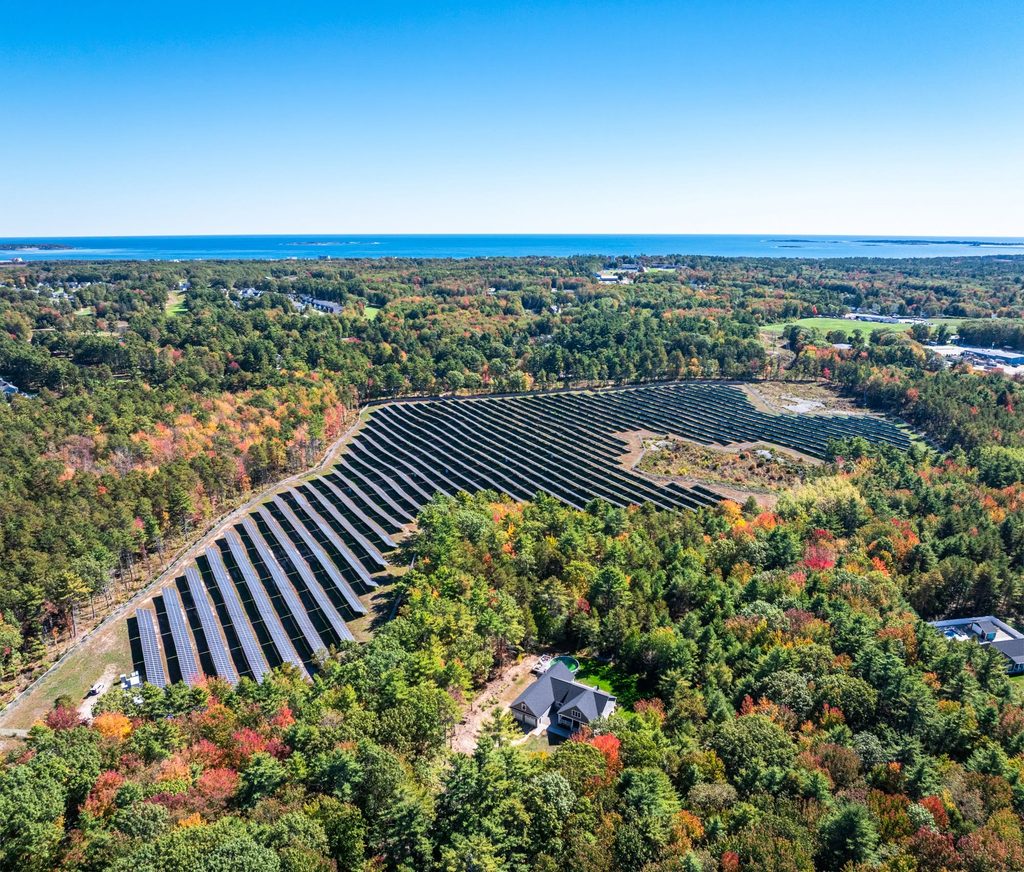
Photo Courtesy Nexamp
In Rangeley, Saddleback Mountain faced a cost problem. “Energy costs were a big drag on the economics of the ski area,” general counsel Tom Federle told the Bangor Daily News in 2021, as the resort leaned more on snowmaking. After the resort closed in 2015, Arctaris Impact Investors bought it in 2020 for $6.5 million and partnered with Nexamp on a solar farm.
The farm connected to the Central Maine Power grid in 2023, built with contractors Sargent and CLT and using local workers. Its nearly 14,000 panels follow the sun on trackers, and the array uses less than 1% of the resort’s land. The project did not “just revive a mountain,” the company wrote. “It revitalizes a community, making Saddleback a beacon of year-round enjoyment and economic resurgence.”
The company has also committed to move production of all major components to the U.S. to support domestic jobs and manufacturing.
Video Courtesy Nexamp
In 2025, at Hartland Solar, a 1.2-megawatt farm in central Maine, Nexamp performed grid upgrades a utility typically handles, as part of three pilots in a self-performance approach. “Self-performance allows us to take much greater control over the interconnection procurement and construction, enabling us to bring projects online faster and closer to budget,” said Daniel Passarello, Nexamp’s lead consulting engineer for grid integration.
Nexamp also designs, builds, owns, and operates battery storage for businesses, campuses, and municipalities, and it sells solar power to commercial customers through long-term agreements that run 15 to 20 years. It manages more than 400 megawatts of distributed generation for other owners.
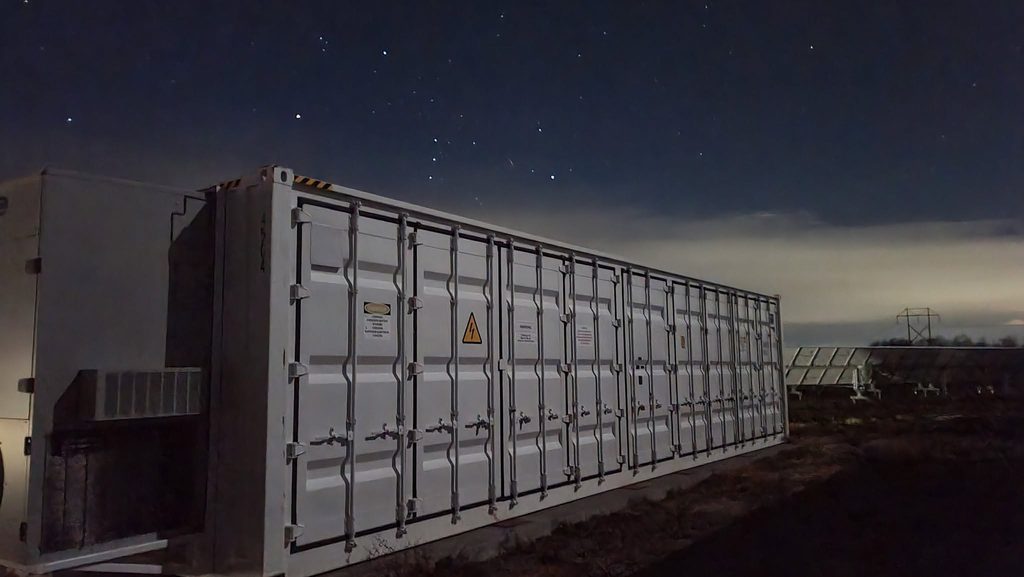
Photo Courtesy Nexamp
After the state changed its net energy billing program in 2025, Nexamp told Solar Power World in April 2026 that it is not pursuing new community solar development in Maine. “As long as there are Nexamp assets in Maine, we’ll continue to operate them,” said Jake Springer, the company’s East Coast policy director. Lenders and investors still back the existing farms. In June 2026, Nexamp secured a $106 million financing facility led by First Citizens Bank for 20 operating community solar projects in Maine, Massachusetts, New York, and Illinois. In October 2026, Captona closed a preferred equity investment in a 10-project Nexamp portfolio spanning the same four states.
The company is also dedicated to preserving nature across these sites. “Did you know that 200,000 to 350,000 different animal species support pollination, and together they contribute $235 to $577 billion in economic value?” Nexamp asked on social media. “More than two-thirds of our world’s crops rely on these hummers and buzzers, and Nexamp is proud to be hosting them on farms in Illinois, Minnesota, Massachusetts, and Maine.”
Back in Brewer, the sheep have their own view of the panels. “We kind of laugh about it, but they have a very easy job. They get to hang out and eat grass all day,” Kovarik said.
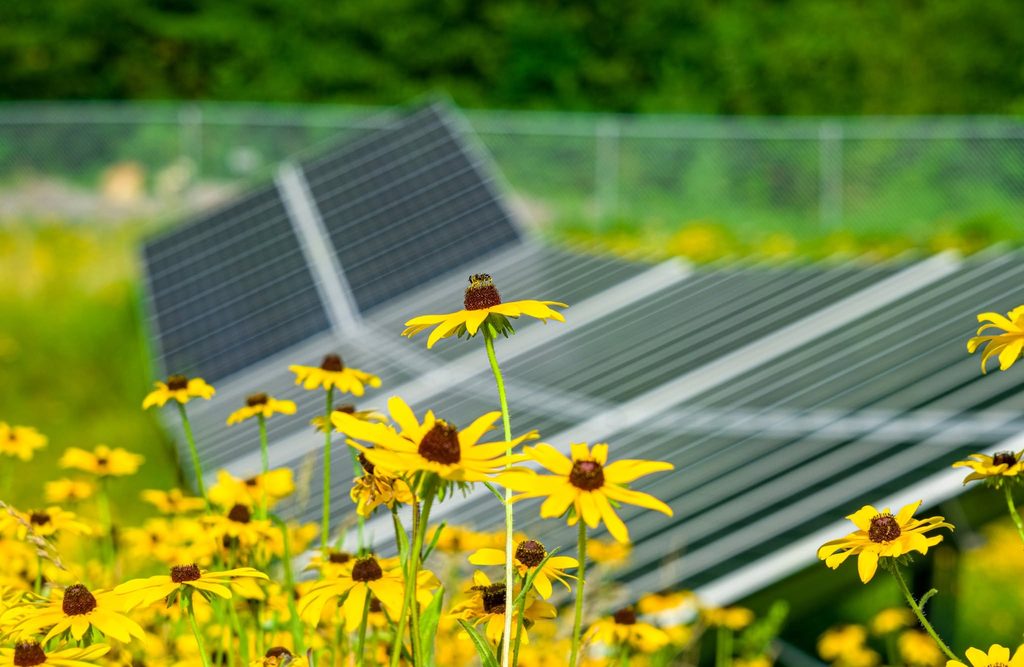
Photo Courtesy Nexamp