
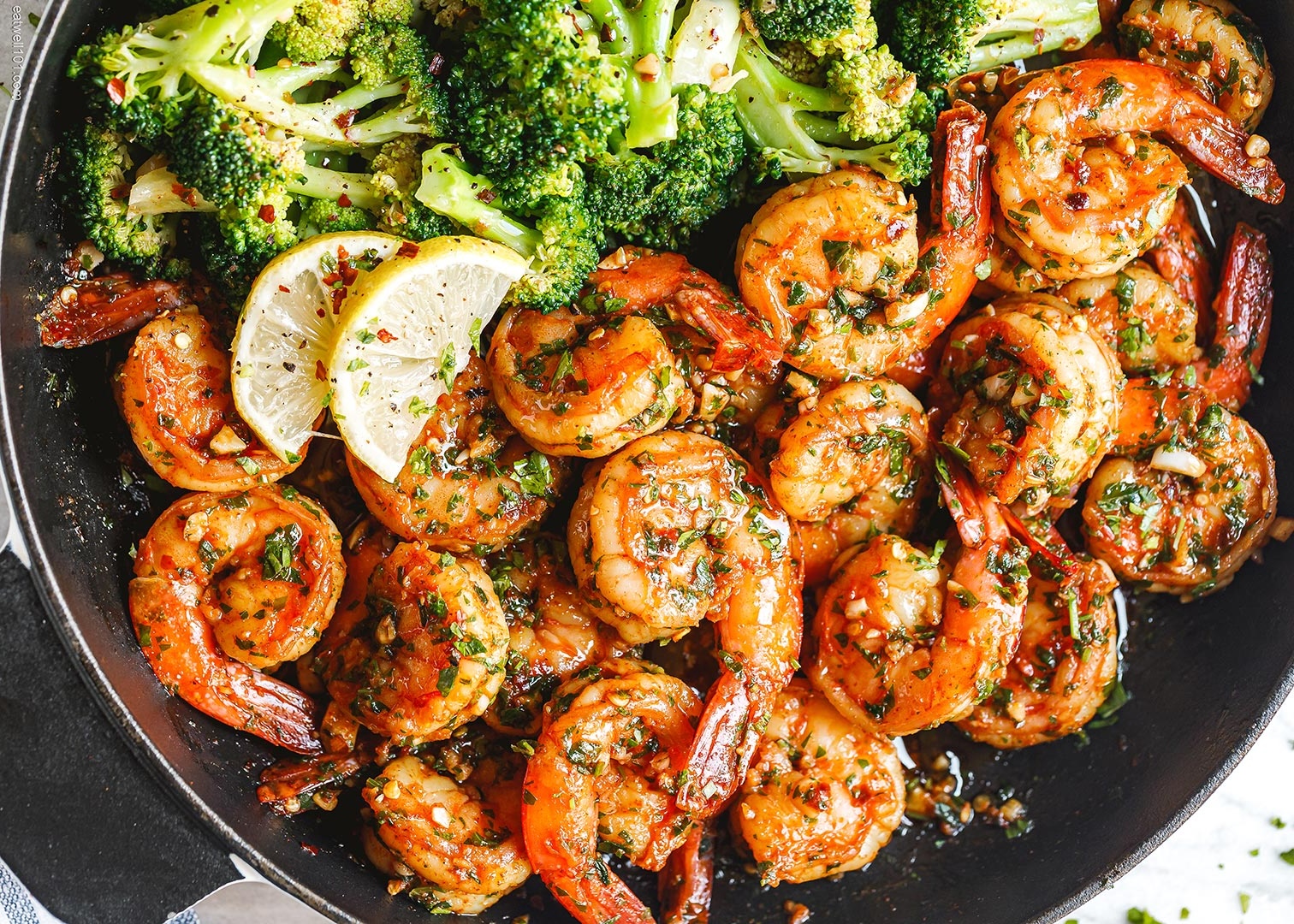
Midland Co., a land-based seafood technology company, uses a recirculating aquaculture system (RAS) to raise Pacific white shrimp in land-locked Iowa. Founder and President Jackson Kimle told the Ames Tribune, “People are certainly interested when you tell them you’re raising shrimp in an old mall in the middle of Iowa. Rather than buying Wrangler jeans or something like that, you’re buying shrimp.” Kimle grew up in Ames in a sheep-farming family, a business he helped manage during high school and while studying agricultural business at Iowa State University. After an initial venture into salmon production in Harlan, Iowa, in 2014 that did not pan out, he began brainstorming other concepts for sustainable seafood production in the Midwest. In 2018, he launched the company in partnership with Chief Technology Officer Matthew Ellis.
Benefiting from four years of research and development, Midland’s one-step wastewater treatment system uses algae to capture nutrients and carbon, keeping tanks clean and producing purified, oxygenated water. The process also results in excess algae, which adds to the shrimp’s food supply.
“The algae-based concept was built off past experiences and challenges that RAS facilities still have – mainly coming from the nitrates and phosphates that have to be blown down from these systems as they accumulate. While [RAS] has been the answer to water-usage issues and producing closer to markets, there’s still a discharge product that adds complexity through wastewater systems or has an effect on the environment around them,” Kimle explained to SeafoodSource. In addition to being able to reuse all the salt water, Midland’s process never discharges any pollutants, so it is “one of the most sustainable forms of aquaculture today,” the company claimed. Instead, at the end of the process, the company sends the algae, full of the nitrogen, phosphorus, and carbon excreted by the shrimp, to be used as a regenerative fertilizer for local Iowan farmland. The shrimp, meanwhile, are guaranteed to be pollutant-, contaminant-, and chemical-free.
The shrimp are responsibly raised in 50-feet-long, 15-feet-wide, and four-feet-deep tanks, containing approximately 22,000 gallons of water. They address some of the issues involved with sourcing from the wild, an industry that Midland says is “unable to meet growing demand while protecting ocean habitats that are finite and fragile.” As a land-based and domestic operation, Midland’s goal is to be “the future of seafood production in America.”
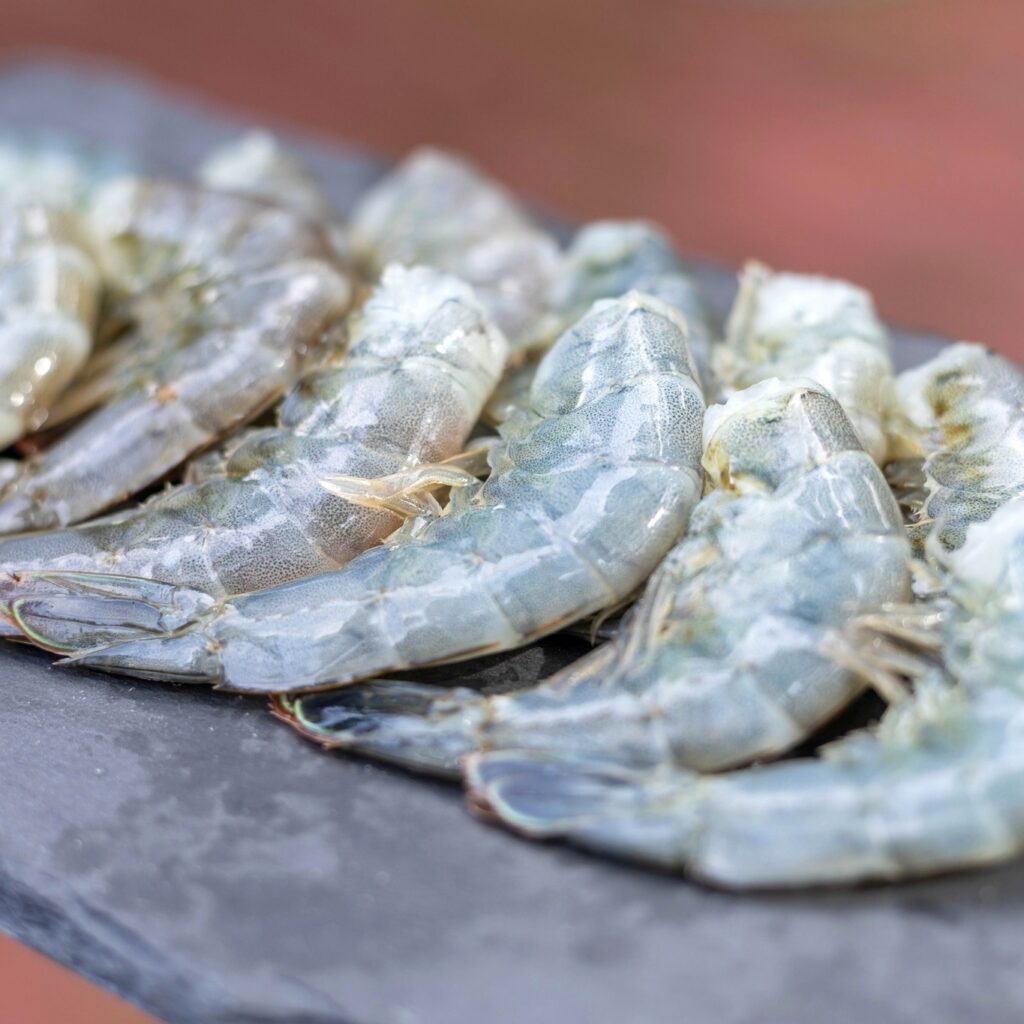
Photo Courtesy Midland Co.
Through its aquaculture system, Midland can provide locally produced seafood to consumers who do not live on the coasts. Midland partnered with a local university on small pilot projects involving both trout and shrimp before focusing on shrimp. Fresh, local shrimp is usually only available to those living near the Gulf or the southern Atlantic coast, while “99.9% is frozen and shipped around the country,” the company wrote. “That is, until now- Iowans too can experience the transformative flavor of fresh shrimp.” Freshness is key compared to frozen options. “It will be OK, but you’re not going to get the flavor profile, the freshness, the richness you get from fresh shrimp. It doesn’t even taste like the same product. Shrimp is supposed to taste sweet, and no one knows that until they have it,” Kimle told the Business Record. “Our shrimp and other fresh shrimp really can ruin the frozen imports for you,” he promised NPR Illinois.
After sourcing 12-day-old shrimp from hatcheries in Texas and Florida, Midland deploys a contract-growing model, providing one-gram juvenile shrimp to local growers who currently grow other commodities such as corn or beans. They then sell the shrimp back to the company when they reach market size. In November, the company announced an expansion of three new partner farms in Hampton, Redfield, and Washington, with three more slated for 2026 in Bell Plaine, Jordan, and Washington. In combination with its 20,000-square-foot facility in the old mall in Story City, Midland says, “Our product comes straight from our tank to be served to your table,” within 24 hours. The company has teamed up with local grocers and markets in locations including Ames, Ankeny, Des Moines, Guthrie Center, Hampton, and Urbandale for distribution, including through a partnership with Fareway Meat Markets, meaning “fresh, Iowa-raised shrimp are closer than you think!” Transporting the product within the state is also more sustainable than sourcing from Asia or Central America.
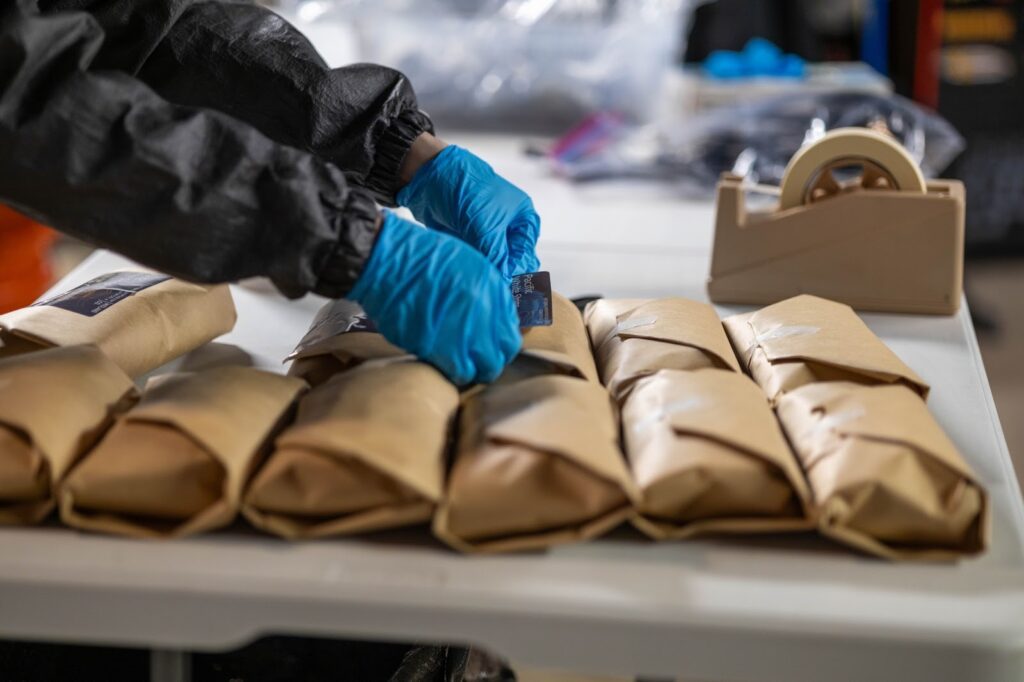
Photo Courtesy Midland Co.
These family farms benefit from the opportunity to diversify their operations, obtain a new source of income, and ultimately get good returns on their investments. Kimle hopes that the contract-growing model will breathe new life into Iowa’s agricultural scene. He aims to reach 400 contract growers over 15 years and expand reach into all the Midwest’s metropolitan hubs. “Our vision is to take something that’s worked quite well for family farms in the poultry and swine space here in Iowa,” Kimle told the Ames Tribune. “Potentially, it will help bring kids back home to the farm. We see a lot of opportunity for that, and the Midwestern market for shrimp is a lot bigger than this facility that we’re building here can accommodate.”
For Ken Reed and his family in Washington, Iowa, getting out of the swine industry and into shrimp came at the perfect time, as 2023 saw a dramatic drop in pork prices. Reed spoke highly of Midland to the Southeast Iowa Union, noting that the company helped them convert their former sow barn for shrimp production and that he talks to Kimle multiple times per week. “Everybody can learn together,” Kimle said in an interview with the Des Moines Business Record.
The future of aquaculture in Iowa is bright. Matthew Eddy, then-director of agriculture education at the Iowa Department of Education, told the Ames Tribune, “Somewhere in the neighborhood of 90% of our shrimp is imported from outside the United States. So the ability to grow it here is awesome and so is the ability to have a fresh protein supply.” Kimle estimated to SeafoodSource that “there’s 30 million pounds of ultra-premium fresh shrimp demand that’s sitting there untapped.” He surmised to the Business Record that aquaculture will also benefit from low energy prices, thanks to Iowa’s wind energy generation. Iowa Secretary of Agriculture Mike Naig added that the state is the perfect place for this industry to grow: “When you look at it from a cost competitive standpoint, when you look at the cost of land, the availability of good, clean water, the availability of feed for aquaculture, we have a great advantage here just like we do in all those other categories, so aquaculture can be — and I believe it will be — a growing part of our value-added agriculture well into the future.”
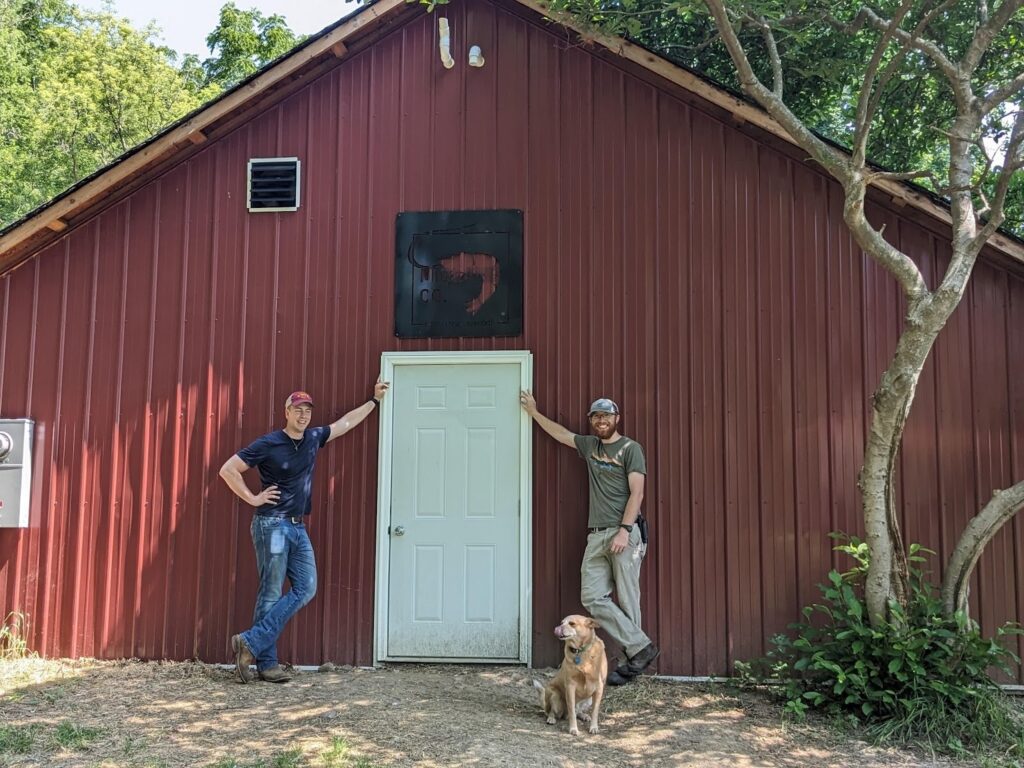
Photo Courtesy Midland Co.