Tom Opper did not set out to run a T-shirt company. As a Connecticut transplant who came to Maine in the early 1970s, he made a living however the season allowed: “I dug graves, did a little carpentry, hayed in the summer. I was a longshoreman,” he recounted to the Bangor Daily News. When neighbors asked him to run a craft fair in the town of Liberty, he went looking for someone to print shirts for it, found no one, and “decided to do it myself.” One of the first shirts he ever made, which reads “150 Years of Liberty and Still Going Strong” in honor of the town’s sesquicentennial, still hangs in his office. Nearly five decades later, that same town remains the home of Liberty Organics, which sells blank and printed T-shirts made from cotton that was grown, spun, and sewn in the United States.
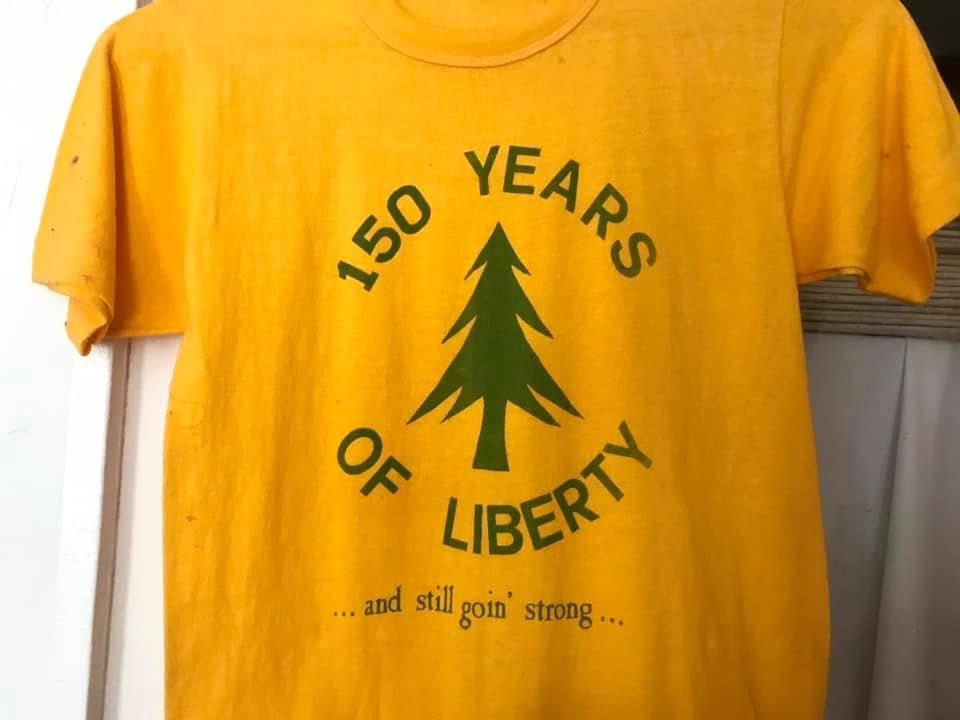
Photo Courtesy Liberty Graphics Nature T-shirts
Liberty Organics began as the in-house shirt supplier for Liberty Graphics, Opper and Beverly Kocenko’s T-shirt screen-printing shop, which bought American-grown organic blanks from the line Patagonia built after committing in 1996 to cotton grown with organic practices. When that production moved offshore, Opper would not follow it, and instead worked with Chipper Bro Bell, Patagonia’s representative for the organic line, to keep an American version of it alive. “For many years, these shirts were exclusively produced for Liberty Graphics T-shirt Printing Company’s use,” the company described.
The company’s t-shirts showcased the best of Maine, for events including the Common Ground Country Fair, and with brightly colored designs featuring everything from kayaks and canoes to turtles and salamanders. A key feature of their products is that they use only water-based inks, so the process does not involve any plastics or solvents and is better for the environment. “With design emphasis on the wonders of the natural world and production methods that meet rigid ecological standards, our concern for the environment has always been reflected in everything we do,” Liberty Graphics explained.
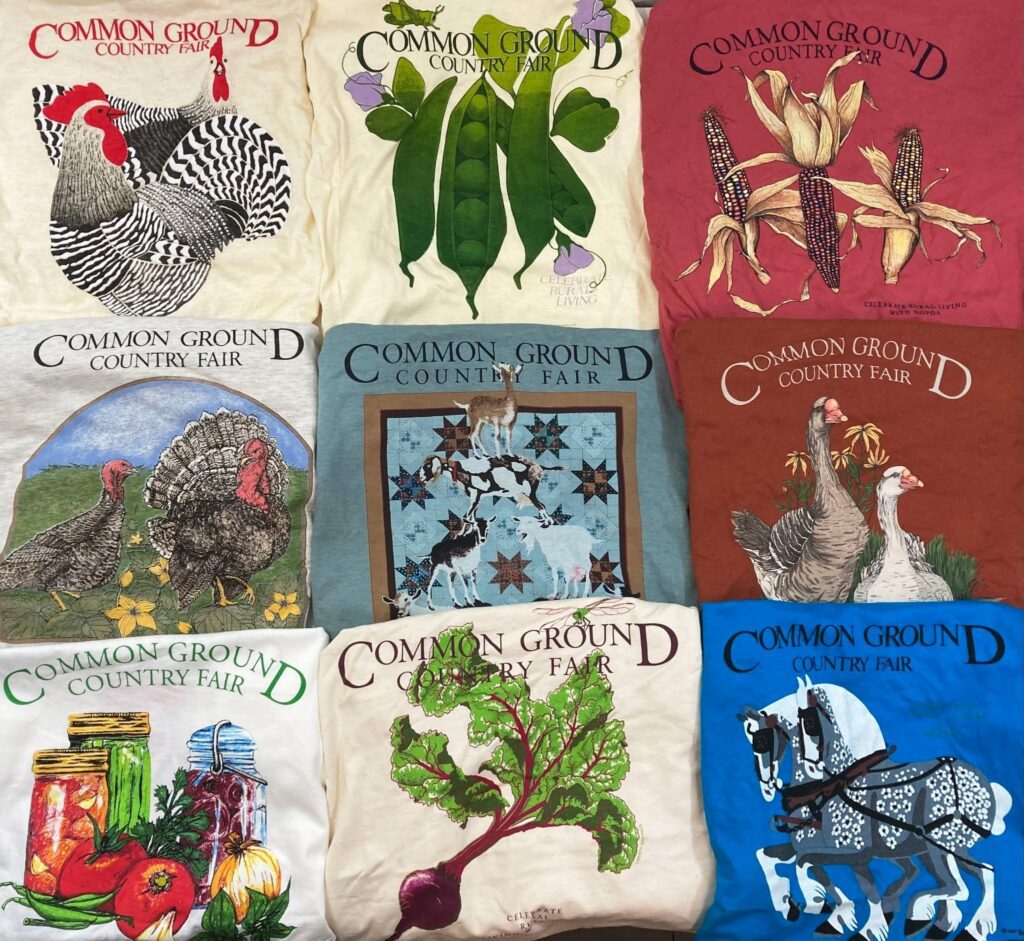
Photo Courtesy Liberty Graphics Nature T-shirts
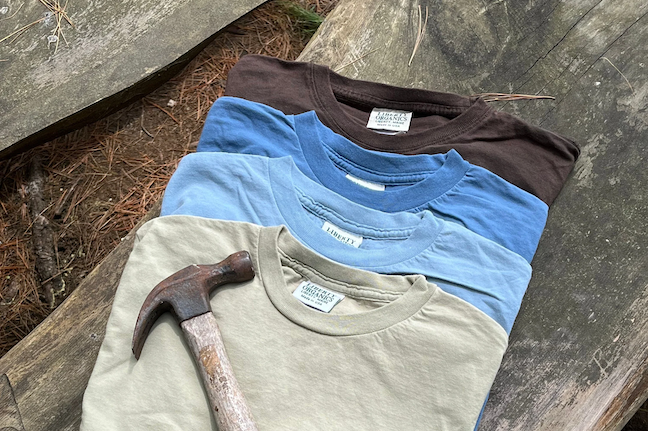
Opper sold Liberty Graphics to its 25 employees in May 2021, forming a worker cooperative, which he said was “a great opportunity to have such an iconic business with a national reputation remain here in the region.” He kept the blank t-shirt business for himself, though, with the products created using organic, American-grown cotton.
Its Original Natural tee is a short-sleeve, vintage-cut shirt that is still made with water-based, non-toxic ink and is still spun, sewn, and shipped domestically. A printed version sells for $45, well above the mass-market price for a cotton shirt.
The argument for the premium is longevity. By skipping harsh chemical processing, the company contends the fabric is stronger and longer-wearing. Without synthetic pesticides, toxic dyes, and finishing chemicals such as formaldehyde, it is “kind to your skin.” The supply chain supports farm families, “supporting American jobs and craftsmanship,” while keeping them safe from carcinogenic chemicals. The product is also better for the environment. Liberty Organics further credits the organic crop with 46 percent lower carbon dioxide emissions than conventional cotton, as well as an absence of microplastics and runoff that could contaminate rivers and soil. “When you choose Liberty Organics, you’re making a real difference, not just for yourself, but for the farmers, the environment, and future generations,” the company wrote.
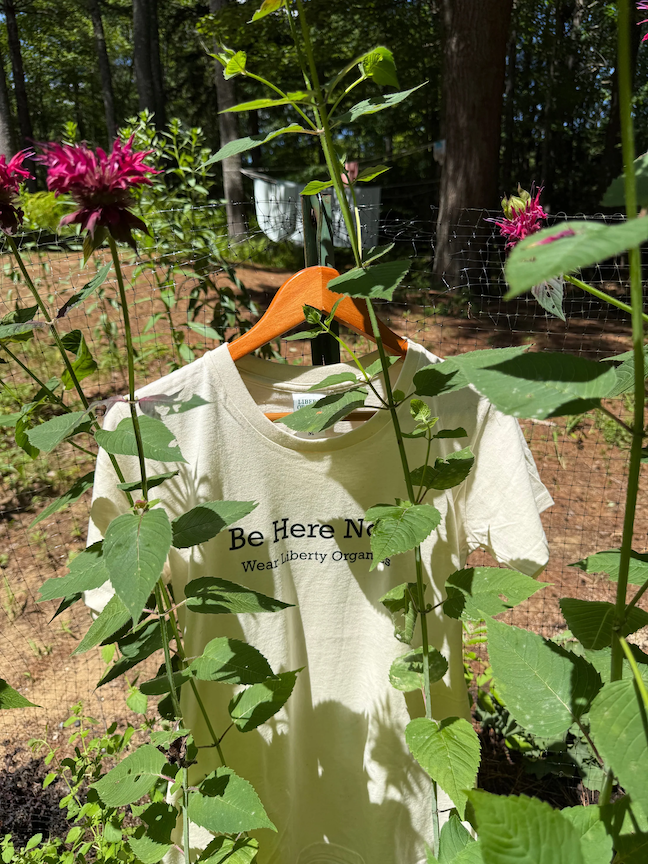
Photo Courtesy Liberty Organics
The fiber originates with an organic cotton cooperative in northwestern Texas, where, Liberty Organics notes, growers practice natural defoliation and harvesting, and where the company says it knows the families raising its crop.
West Texas is the center of American organic cotton. The Texas Organic Cotton Marketing Cooperative, formed in Lubbock in 1993, reports roughly 35 producer members planting 17,000 to 20,000 acres of organic and transitional cotton annually, certified under the U.S. Department of Agriculture (USDA) National Organic Program and to the Global Organic Textile Standard (GOTS). Very little American cotton qualifies for these standards. The Organic Trade Association (OTA) puts the organic share of U.S. cotton at roughly 0.3% for 2024, even as organic textile sales in the country reached $2.7 billion in 2025. The cooperative tracks every bale from field to customer, so “buyers can know the producer’s name and farm for each bale purchased.”
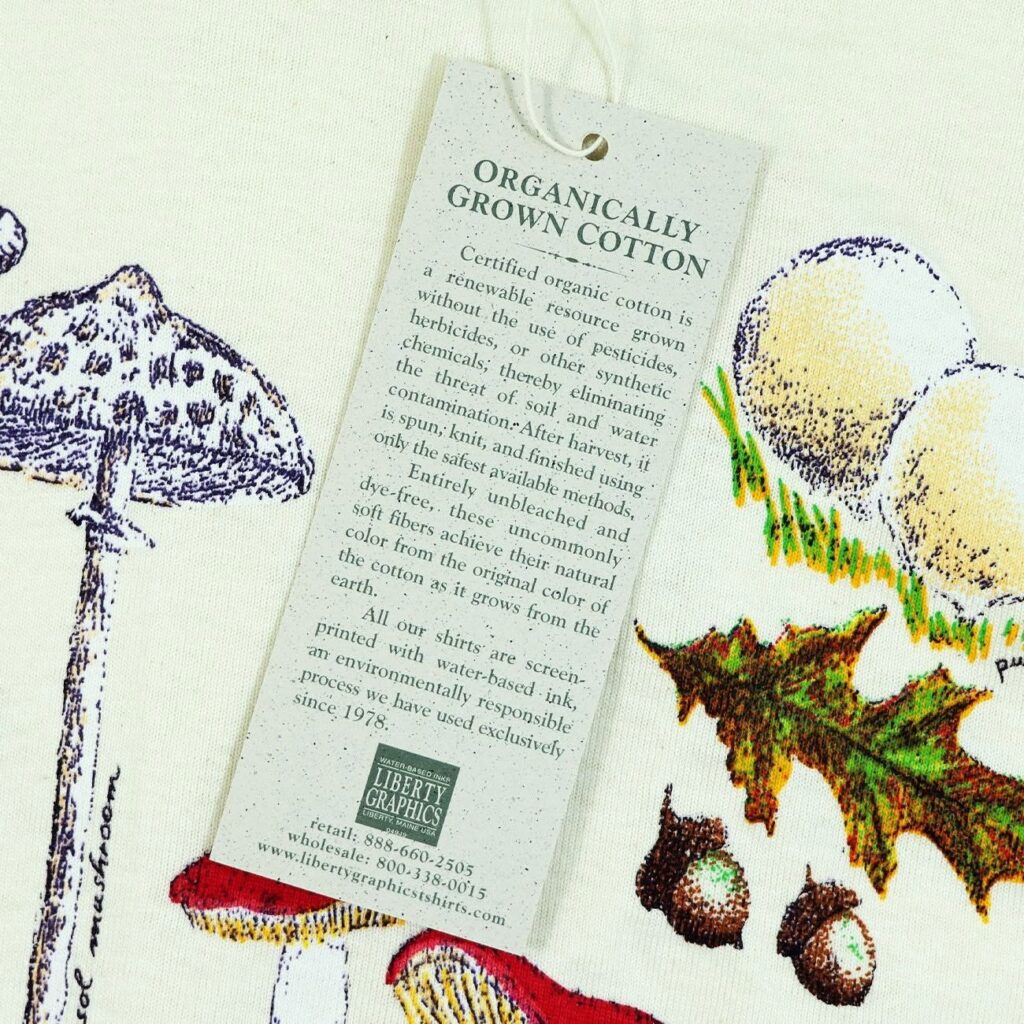
Photo Courtesy Liberty Graphics Nature T-shirts
Selling beyond Liberty Graphics has produced more than wholesale volume. Royal Peasantry, a Maine clothing studio, sells Liberty Graphics designs printed on Liberty Organics tees, and has built a second line entirely from shirts that did not pass inspection, patching holes with “mini nature-inspired embroidered patches” and making kerchiefs from leftover scraps rather than sending them to a landfill.
Both halves of the old arrangement are still standing. Liberty Graphics expanded outside of Liberty to stores in Portland, Camden, and Freeport. And Opper, asked in 2021 what he would be doing instead of retiring, told WABI that making American-grown organic cotton shirts would keep him occupied. “I believe it’s a trend into the future,” he said.