In 1837, blacksmith John Deere founded a company that would become the largest domestic manufacturer of agricultural machinery. “We’re proud to have helped build America over the past two centuries by supporting farmers, ranchers, and construction crews — equipping them to feed, clothe, pave, plant, grow, harvest, and build our country from the ground up,” the company wrote.
John Deere operates 60 facilities in more than 16 states. Since 2019, the company has invested $2.5 billion in its U.S. factories, including $100 million in 2025 alone. Last summer, the company announced plans to invest an additional $20 million in its U.S. manufacturing operations over the next decade. Chairman and CEO John May explained, “Our commitment to delivering value for our customers includes ongoing investment in advanced products, solutions, and manufacturing capabilities. Over the next decade, we will continue to make significant investments in our core U.S. market. This underscores our dedication to innovation and growth while staying cost-competitive in a global market.”
John Deere estimates its domestic economic impact at $25 billion, reflecting the equipment produced, the employees’ impact on the places where they live and work, and the supplies sourced from American companies. More than three-quarters of the products sold domestically were manufactured in the U.S., and over the past five years alone, John Deere invested nearly $80 billion in its U.S. suppliers.“The vast majority” of the steel used in its factories comes from such domestic suppliers.
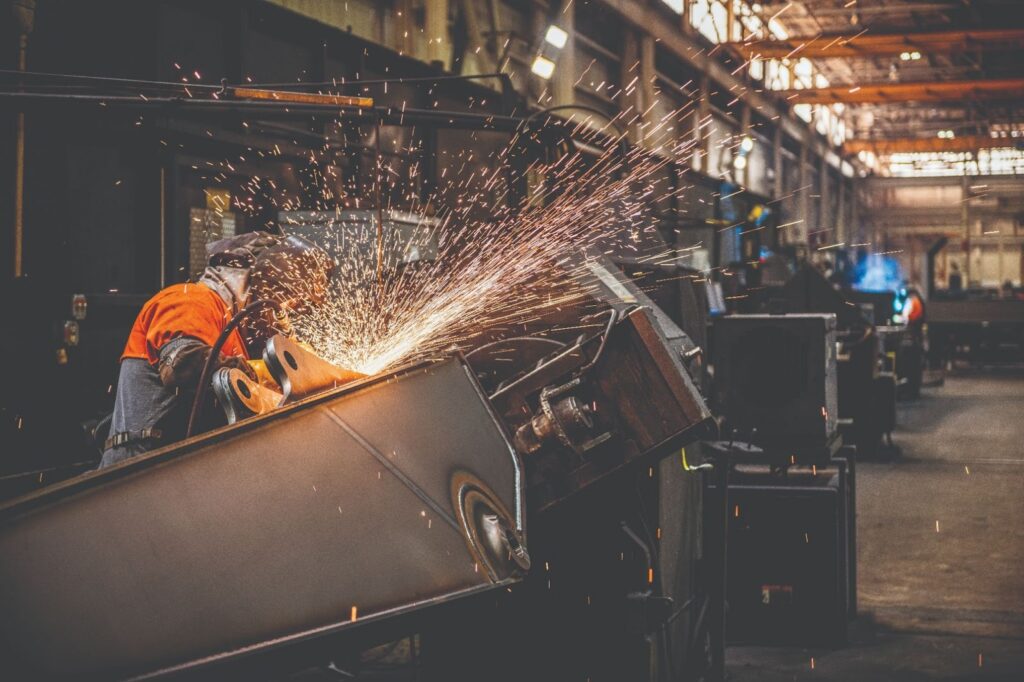
Photo Courtesy John Deere
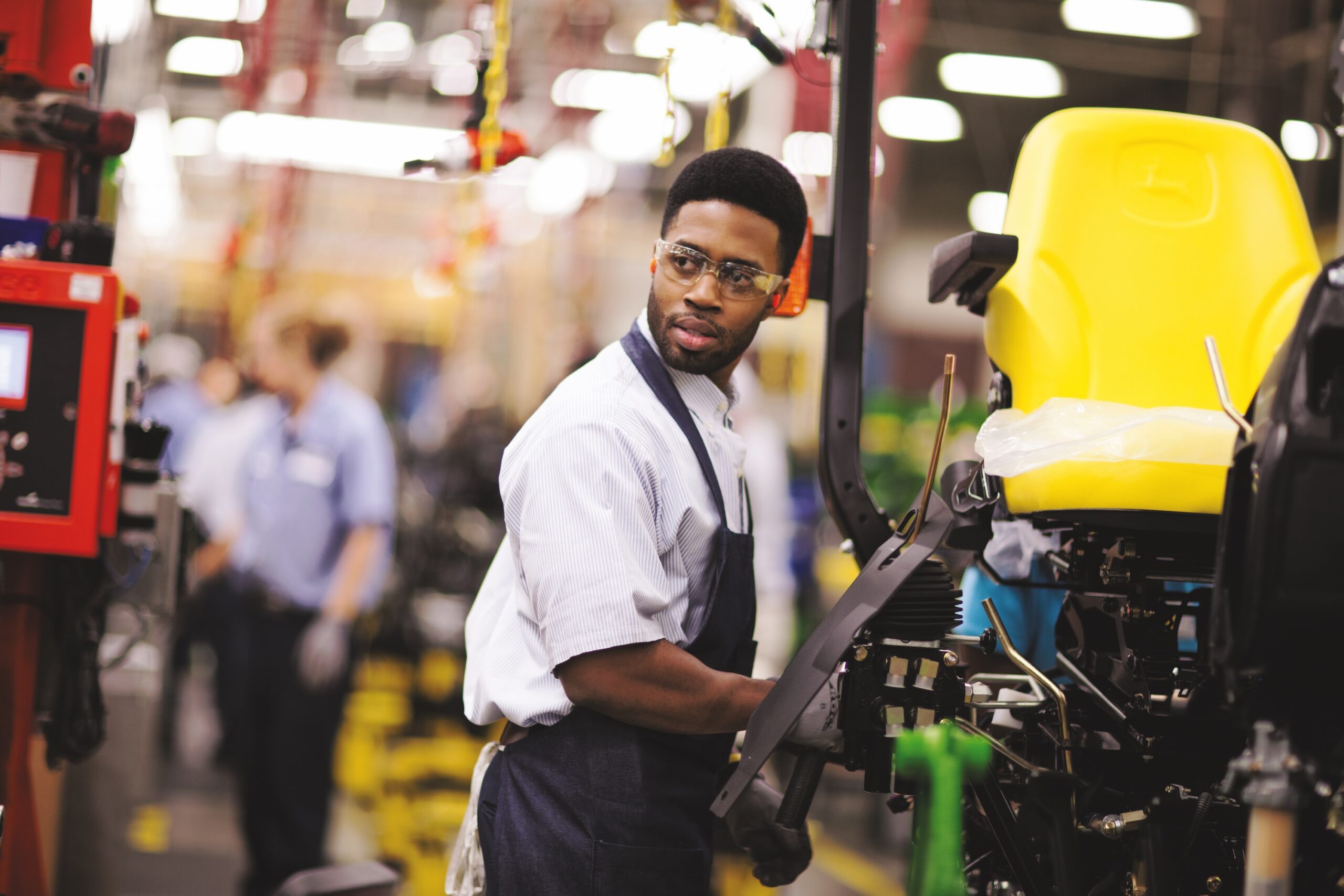
In Iowa, in particular, John Deere has long been a leader. In 1918, John Deere bought the Waterloo Gasoline Engine Company in Waterloo, Iowa, and began producing its Waterloo Boy line of tractors and engines. By 1923, the Waterloo Tractor Operations facility produced the first green and yellow tractor to bear the company’s name, the Model D. Now, the facility is John Deere’s biggest manufacturing complex around the world, with 7.2 million square feet of manufacturing floor space spanning five sites, including a foundry where the company crafts castings specifically for each machine. After comprehensive design and engineering, employees manage more than 12,000 unique supplier part numbers, build the tractor on chassis assembly lines, and conduct rigorous inspections and testing. “Waterloo Works stands on hallowed grounds for John Deere’s US manufacturing legacy, driving agricultural innovation and excellence for over 100 years,” Factory Manager Fabio Castro described. “Our commitment to quality makes Waterloo Works a true symbol of American manufacturing pride, and our support for the local community makes this factory our home.”
Among the investments of the past decade was the addition of new lines in Waterloo to assemble the new 9RX tractor. “We’re proud to call Waterloo Works home for this tractor. It’s thrilling to see these tractors rolling off the line and into fields, ready to make a difference for farmers this spring,” Castro reacted.
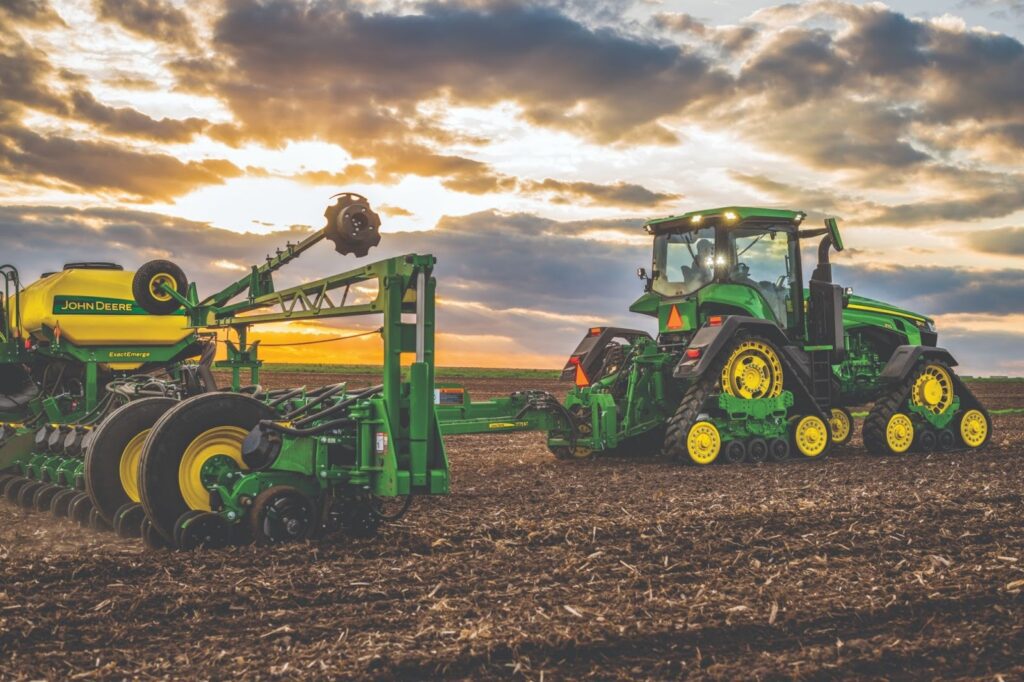
Photo Courtesy John Deere
The company opened John Deere Dubuque Works in Dubuque, Iowa, in 1946 and began producing the Model “M” tractor. The 3.9 million square-foot plant now produces backhoes, cabs, crawlers, compact track loaders, skid steers, and forestry equipment. The facility also serves as John Deere’s global Construction & Forestry Engineering, Product Validation, and Verification center, where it designs and tests products. On an annual basis, employees at the facility cut 145,000 sheets of steel, use more than 3.2 million pounds of weld wire, “enough to go around the moon 3 times,” use about 110,000 gallons of paint, and assemble thousands of machines. Since its one millionth machine rolled off the assembly line in 2009, the site has also produced the first hybrid E-Drive dozer, the 850 X-Tier.
In 1947, John Deere purchased a factory in Ankeny, Iowa, from the U.S. Department of Defense, where 19,000 employees produced critical supplies during World War II. Spanning more than 450 acres, the facility is two times the size of the U.S. Capitol complex. Since the facility’s first corn picker rolled off the assembly line in 1948, John Deere Des Moines Works has expanded to produce a wide variety of agricultural equipment, including cotton harvesters, grain drillers, self-propelled sprayers, and tillage tools. The process begins with design and engineering, then proceeds to the cutting of steel plates. Every day, eight to ten truck drivers deliver 333,000 pounds of steel to the facility. The facility has 34 precision machines to churn out product components, and four assembly lines, armed with smart systems “giving immediate feedback that every turn of the wrench meets a precise specification.”
John Deere recently invested $40 million in a 138,000-square-foot expansion of its sprayer assembly operations at John Deere Des Moines Works, advancing the testing and production of its See & Spray technology, which uses artificial intelligence to make decisions. “This investment will boost operational efficiency, streamline processes, and support our future product portfolio, ensuring continued excellence for our customers,” explained factory manager Rosalind Fox. In fact, the technology’s ability to target weeds enables customers to reduce herbicide use by 77%. Additionally, the company invested $17 million in a new 20,000 square-foot facility for precision measurements.
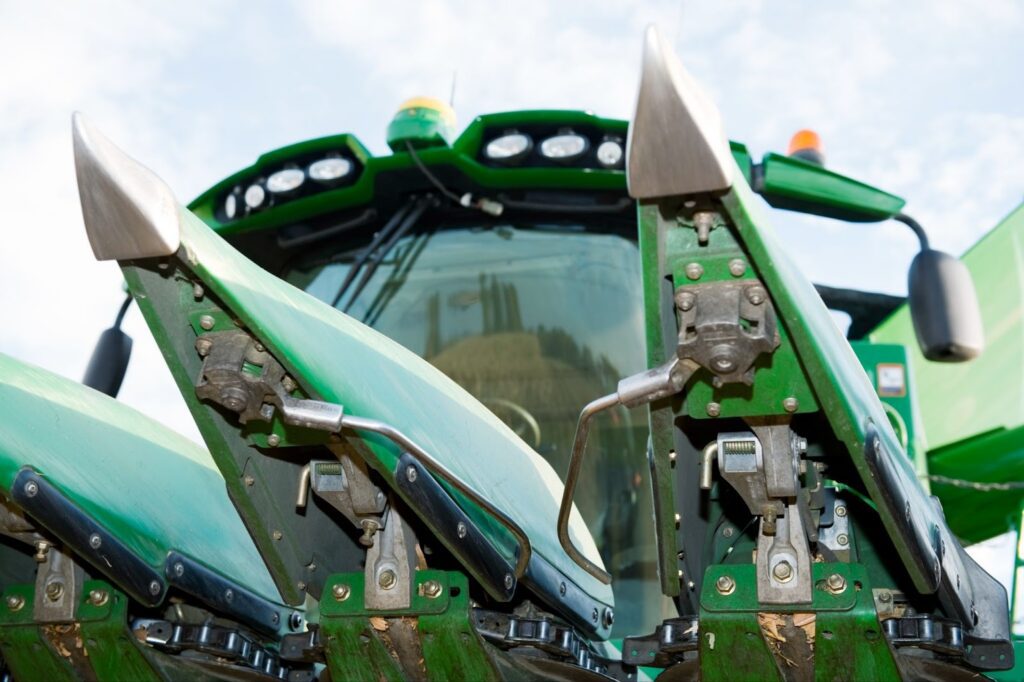
Photo Courtesy John Deere
In 1974, John Deere began producing four-wheel drive end loaders and excavators in Davenport, Iowa, before expanding into additional construction and forestry equipment in the 1990s. Davenport Works’ six product lines now include 4WD Loaders, Articulated Dump Trucks, Motor Graders, Skidders, and Wheeled Feller Bunchers. Daily, Davenport Works receives 195 tons of plate steel for cutting, uses more than 10,000 tons of weld wire, and moves 75,000 parts across the factory. In 2024, employees built the 250,000th machine at the facility, a 544 P-Tier loader. All of John Deere’s equipment benefits its customers, particularly in the agricultural community.
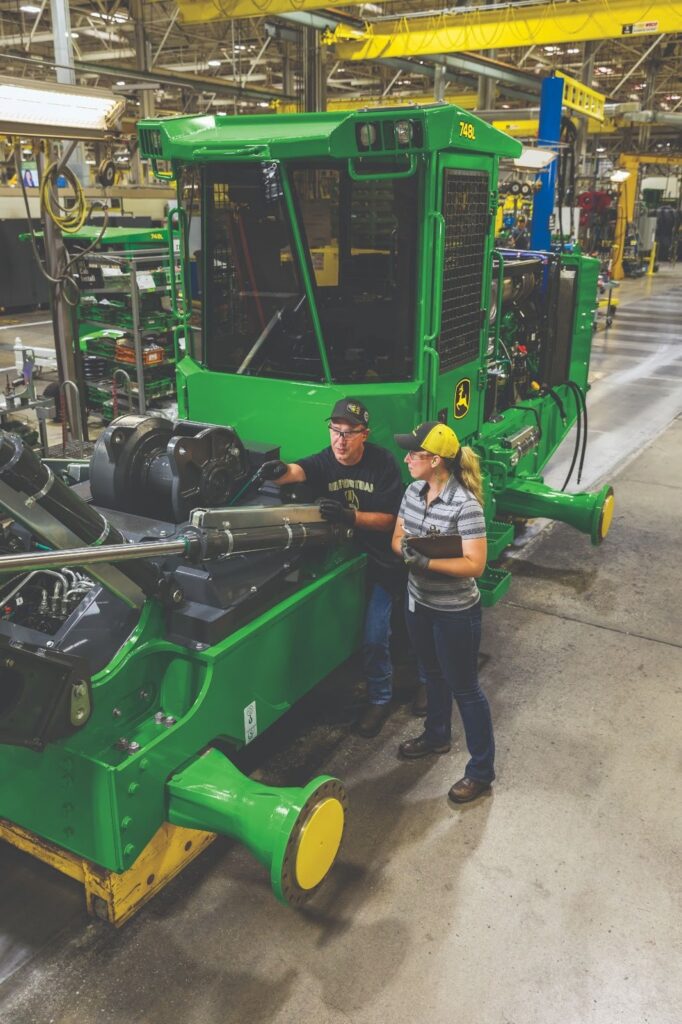
Photo Courtesy John Deere
John Deere employs 30,000 Americans and has connected 450 U.S. military veterans with jobs. Although John Deere had to lay off some employees in Iowa over the past two years due to a challenging business environment, the company is already bringing many of them back. The company is restoring 24 roles at Dubuque Works this month, encompassing fabrication, assembly, and material handling, as well as production-class dozer assembly. Also this month, John Deere is restoring 75 roles at Davenport Works, spanning fabrication, machining, welding, painting, and material handling; production and utility-class assembly; and articulated dump truck assembly. “As demand increases, these callbacks help ensure we have skilled teams in place to support production across our construction and forestry operations,” said Mark Dickson, vice president of construction and forestry manufacturing operations. Next month, the company will bring back 146 team members to support the production of the 8R tractor series at John Deere Waterloo Tractor Operations, as well. “We’re excited to recall experienced employees to support our factories,” said Castro. Since the beginning of the year, about 275 workers have been called back to Iowa facilities.
“John Deere has called Iowa home for over a century. It’s where we’ve built many of our most iconic machines, from tractors to engines, cotton pickers to construction and forestry equipment. No other state is home to more John Deere employees, factories, and financial investments. Iowa helped John Deere build America, and together, we are forging its future,” the company stated.
John Deere also invests in future employees. The company’s High School Registered Apprenticeship Program at the Waterloo Career Center, for example, lets high school students try working at local facilities before deciding whether to become full-time employees after graduation. Saheed Pryce, who participated in the program as a high school senior, reflected, “This apprenticeship has given me a career path and ideas about what I want to do with my career. This summer I have been able to put in quality work and I can say ‘I did that.’ Then I see that work being used for a higher purpose.”