Frank Knauer is a millwright at Irving Forest Products‘ Dixfield Sawmill—the man who keeps the machinery running on a western Maine mill floor that turns wood like eastern white pine into lumber—and he’s also the cook several weekends a year. When veterans and their families gather on the ice in Oxford County each winter for the Welcome Home Oxford County Ice Fishing Derby, Knauer prepares the food, and his cooking has become popular enough that people show up asking for him by name, the company said.
The derby raises money for Operation ReBoot Outdoors, a nonprofit founded by United States Army veteran Dan Waite in 2019 to help veterans heal through hunting, fishing and time outdoors. Knauer’s employer, the Dixfield Sawmill, has supplied the food every year since 2020, and Operation ReBoot Outdoors President Nicole Waite explained that the impact goes far beyond the meals: “Donations allow us to keep events affordable or free for participants, invest in adaptive equipment, expand programming and reach more individuals and families who can benefit from our services. Corporate and employee involvement also sends a powerful message to our participants — that their service is valued and supported by the communities they call home.” This mill is one of three that Irving Forest Products runs in Maine, and the company it belongs to is in the middle of one of the largest bets on Maine lumber in a generation.
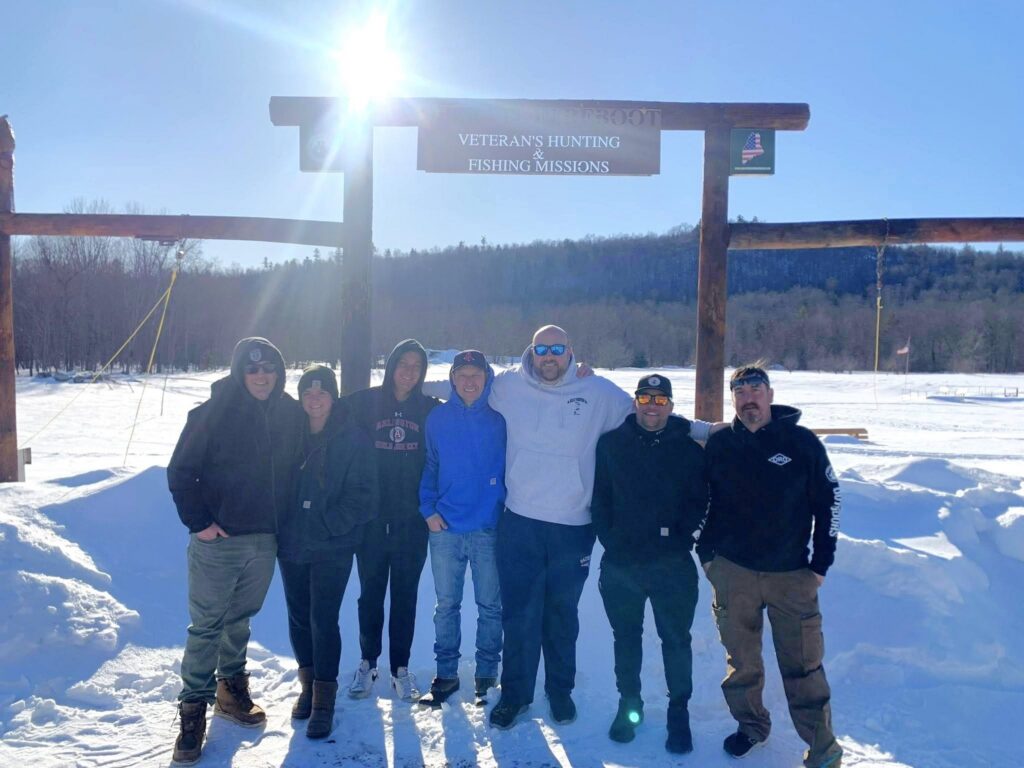
Photo Courtesy J.D. Irving, Limited
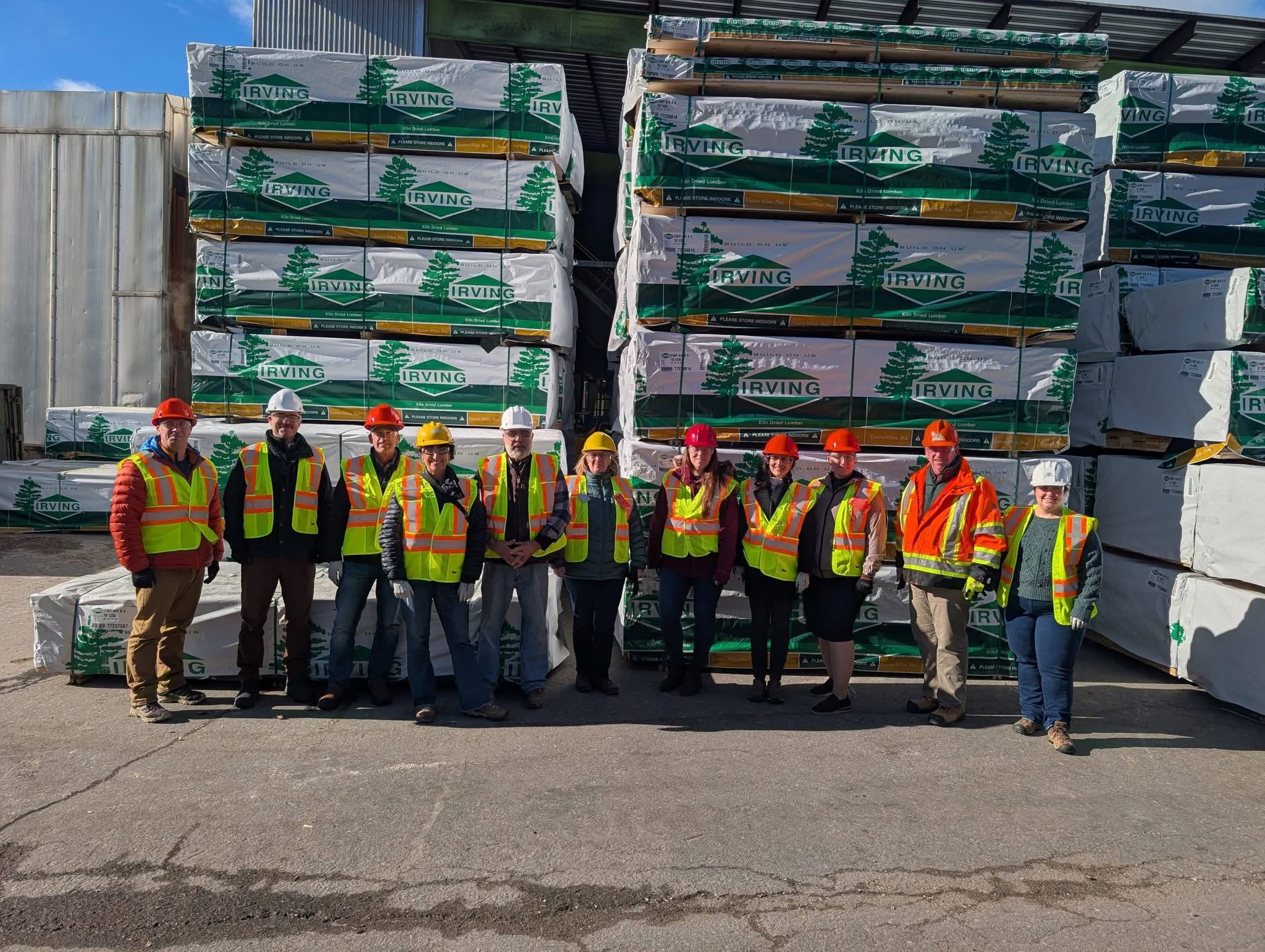
Irving Forest Products is the U.S. sawmill arm of J.D. Irving, Limited, a family-owned company whose first sawmill began operating in 1882 as one of a handful of original holdings that also included a gristmill and a farm. Today, it runs sawmill and woodland operations across New Brunswick, Nova Scotia and Maine. Beyond mills in the Maine communities of Dixfield, Ashland and Masardis, it is also Maine’s largest landowner, with 1.3 million acres of timberland, the Bangor Daily News reported. The timing of its investment is notable because Maine’s forest economy is shifting away from paper and toward exactly the kind of lumber these mills produce.
The clearest sign of that bet sits in Aroostook County. In June 2026, the Finance Authority of Maine (FAME) approved $16.5 million in tax credits to five community development groups that together put $42 million toward modernizing and expanding Irving’s Ashland sawmill, which sits across the town line in the Nashville Plantation. As the mill expands from 68,500 square feet to 136,500 square feet, the project will double the mill’s annual production from 130 million to 250 million board feet and increase its workforce from about 140 full-time positions to roughly 220, adding about 80 jobs. “The expansion will add a second sawline and 68,000 square feet to the mill,” Anne McInerney, J.D. Irving’s vice president of communications, told Bangor Daily News. “The new sawline is designed to process larger and longer logs.”
The money came through the state’s New Markets Capital Investment Program, which aims to draw investment into low-income areas. Bill Norbert, FAME governmental affairs manager, told Maine Public that the program “is one of the few that Maine offers to attract investment in Maine’s low-income areas and it helps spur millions of out-of-state and in-state investment in Maine companies.” Renee Ouellette, chair of the FAME board, said the expanded mill “is expected to remain a top employer and economic engine in Aroostook County.” Jerome Pelletier of Irving called it a “long-term commitment to the region” that “will help us support good jobs and continue contributing to the Aroostook community.”
The Ashland project is the newest chapter, but the pattern is decades old at Dixfield, which Irving purchased in December 1998 from the Stowell family, which owns Highland Lumber. The mill then employed 150 people and produced 50 million board feet a year. After 25 years of operation by Irving and more than $40 million in optimization and efficiency investments, the company reported in 2023 that those numbers had risen to 250 employees and, for 2024, 100 million board feet.
In October 2025, for example, Irving announced that Dixfield had become the first pine board mill in North America to install a lumber shrink-wrap system, a machine that seals a package on all six sides in an average of 45 seconds and protects the lumber from the elements as it travels to the customer. Irving describes the site as the largest and most modern producer of eastern white pine in North America. Weeks later, the mill met a setback. On November 8, 2025, a fire caused extensive damage at the sawmill, though it was contained to the northwest side of the building. No one was hurt, and mill personnel were assessing the damage and planning repairs, the fire company said at the time. That did not stop its forward momentum, though. In May 2026, the company produced the first bags of packaged wood shavings for the animal bedding market using a new robotic shavings-bagging system that can fill and seal up to five bags per minute.
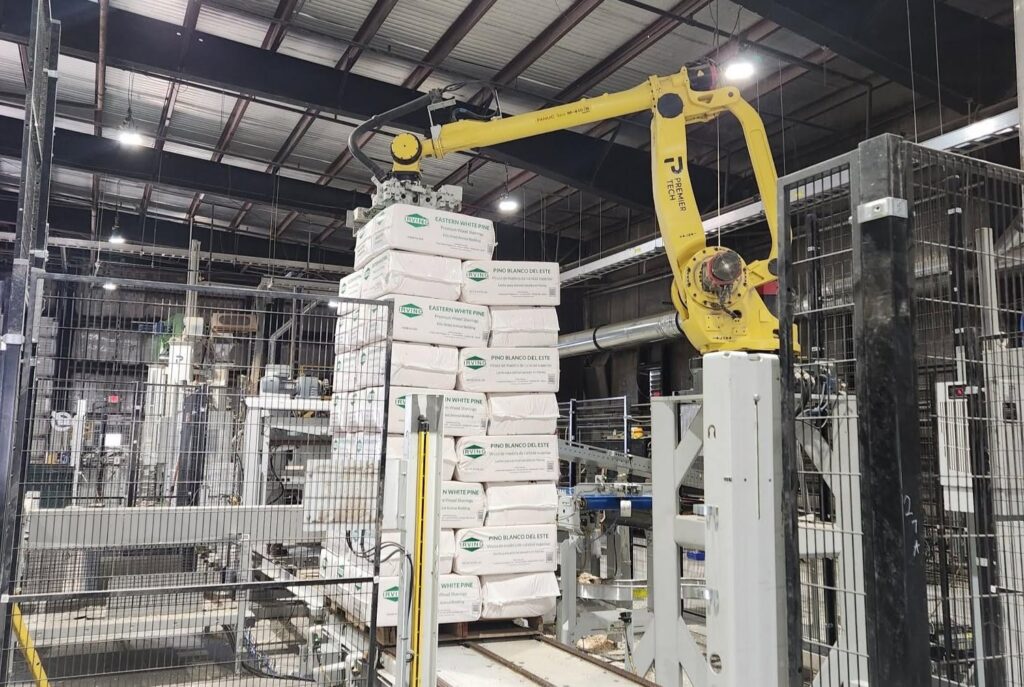
Photo Courtesy J.D. Irving, Limited
The third Maine mill joined the group in January 2025, when Irving completed its purchase of the Masardis sawmill, Aroostook’s largest, from Groupe Lebel. The operation employs about 80 people, can produce 115 million board feet of spruce and fir lumber a year, sits close to Irving’s Maine timberlands and is served by the Maine Northern Railway. “We are excited to grow our lumber production capacity in the state of Maine,” Pelletier said at the time. He added that the mill “benefits from having a team of highly skilled and dedicated employees who have worked together for decades to ensure the success of their operation.” With Masardis, J.D. Irving operates 10 sawmills across its solid-wood operations in Maine and New York, with a total annual capacity of 1.3 billion board feet.
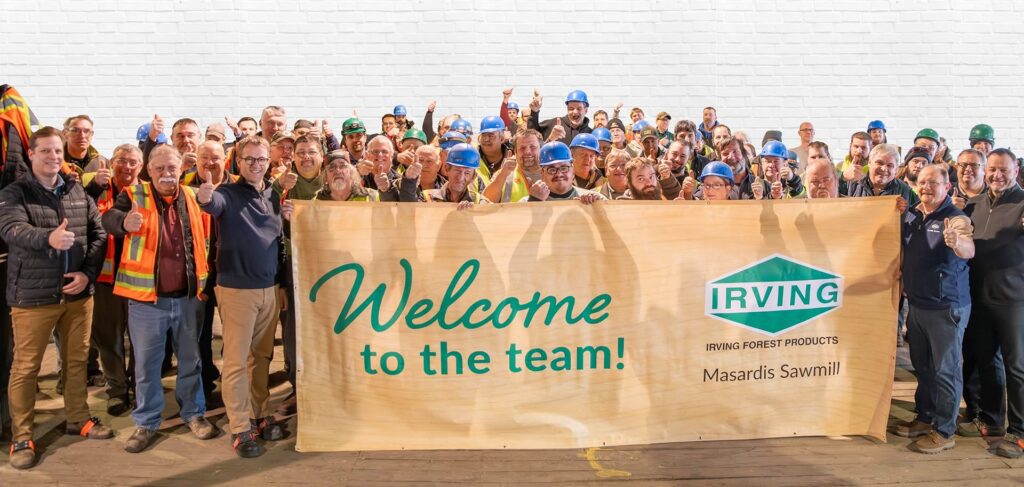
Photo Courtesy J.D. Irving, Limited
What ties the mills together is a philosophy of using the whole tree. Chips and sawdust from the sawmills become raw material at other mills, shavings are kiln-dried and repurposed as animal bedding, sawdust and shavings feed the company’s wood-pellet plant, and hardwood and pine move to value-added centers that turn them into decorative panels, fencing, painted lumber and components for cabinetry and windows.
The company also heavily invests in the future of healthy forests. In 2024 alone, Irving planted more than 18.5 million seedlings across Maine, New Brunswick, and Nova Scotia, totaling 1.1 billion trees planted since 1957. 100% of its lands are certified by the Sustainable Forestry Initiative or the Forest Stewardship Council, and the company has invested more than $42 million into the work of its Forest Research Advisory Committee. Overall, very little of the log is wasted, and the forest is always conserved and invested in for the future, which is both an environmental practice and a business one.
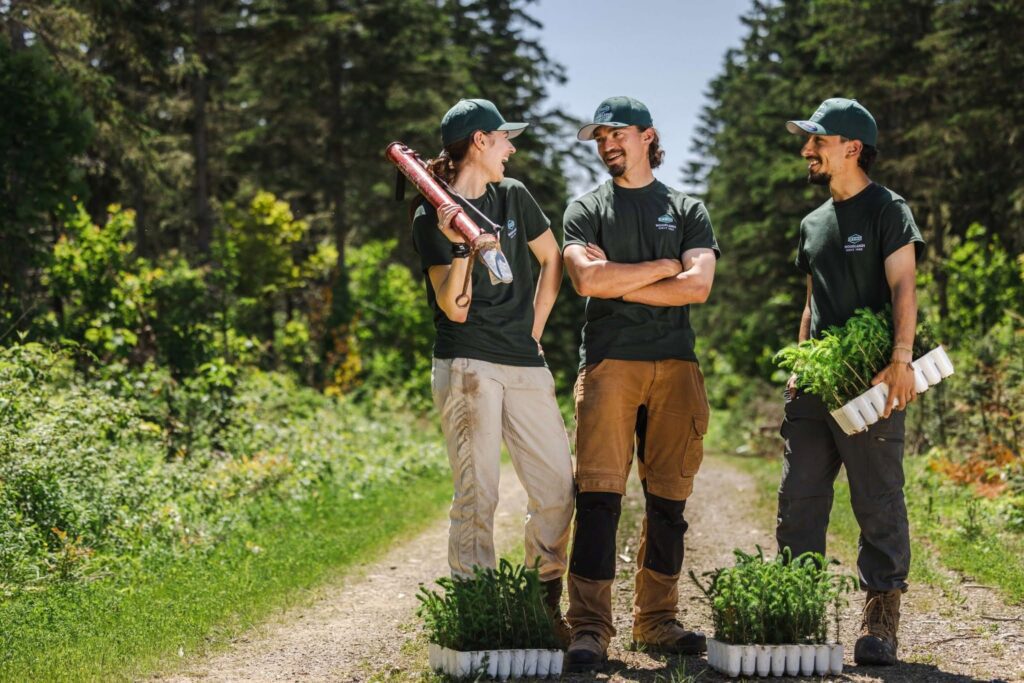
Photo Courtesy J.D. Irving, Limited
That business is a large part of Maine’s economy. The state’s forest-products industry contributed $8.3 billion to Maine in 2024 and supported 29,000 jobs spread across all 16 counties, accounting for 3.45% of state gross domestic product, according to a report the Maine Forest Products Council released with the Maine Department of Economic and Community Development in October 2025. The sector is also shifting toward Irving. Between 2019 and 2024, the council found, paper manufacturing sales fell 41% while wood product manufacturing sales rose 45%, and the industry drew $1.5 billion in investment.
“Considering the number of once-in-a-lifetime type events that occurred during this period of time, it is truly impressive that this industry remains an $8.3 billion powerhouse in the state of Maine,” said Krysta West, executive director of the Maine Forest Products Council. “Even during the chaos, significant investments in our industry have continued.” Governor Janet Mills said the forest products industry “is the foundation for rural communities around our state and supporting the livelihoods of rural Maine families.”
In 2024, through its Woodlot Purchase Program, Irving procured more than 1 million cubic meters of forest from more than 400 private wood suppliers. “That’s a win for private landowners and the economy,” the company wrote. It also employed more than 800 small-business contractors over the course of the year, performing activities such as harvesting, silviculture, road building, and product transportation.

Photo Courtesy J.D. Irving, Limited
Keeping those mills running takes people, and Irving has been trying to grow them at home. Last year, the company created two Maine scholarships for local students in engineering and skilled trades, covering half of tuition, up to $6,000 for engineering students and up to $4,000 for those in skilled trades, renewable based on performance. Each comes with a paid summer internship at the Ashland, Dixfield or Masardis sawmill and guaranteed full-time employment after graduation. The scholarships are “a key initiative to ensure that we have a strong local talent pipeline for years to come,” Pelletier said. “Attracting and retaining engineers and skilled tradespeople in local jobs is important, not just from a business perspective, but also for supporting local economies, communities and families.”
A mill is a place that cuts lumber. In three Maine towns, it is also a place where the people who run the machines keep showing up for their neighbors. Bruce Goddard, who celebrates 50 years with the company this month, reflected on his positive experiences with Irving: “The different people I worked with were the key. There was a period of time where there was, I think, 30 or 40 of us that worked for at least 25, 30 years together. We’re more a family than just people, which made a difference.”
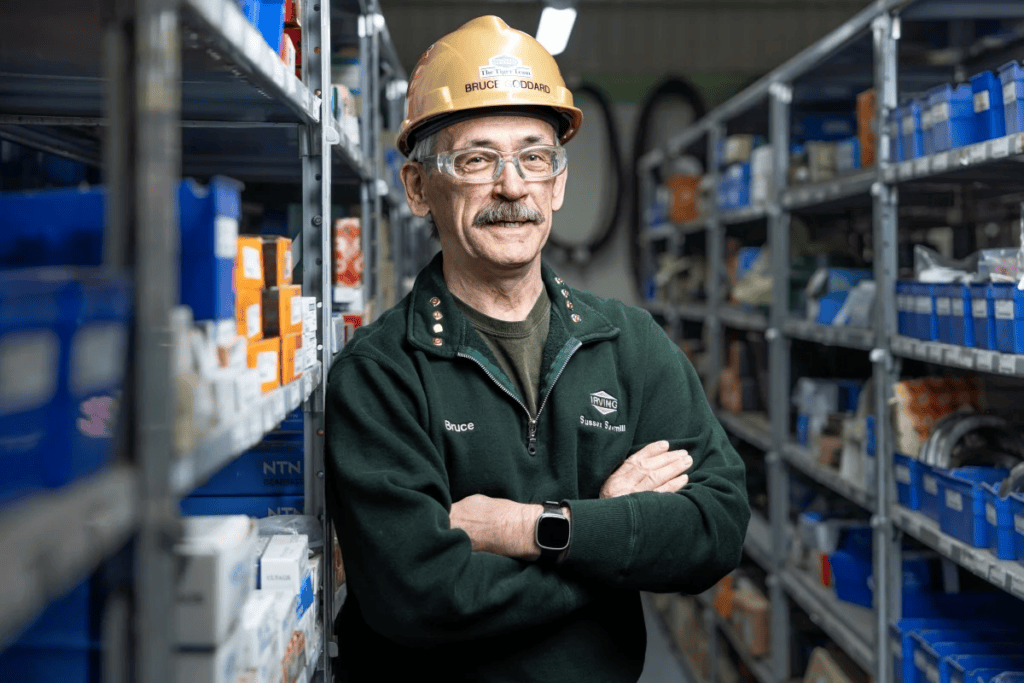
Photo Courtesy J.D. Irving Lumber