
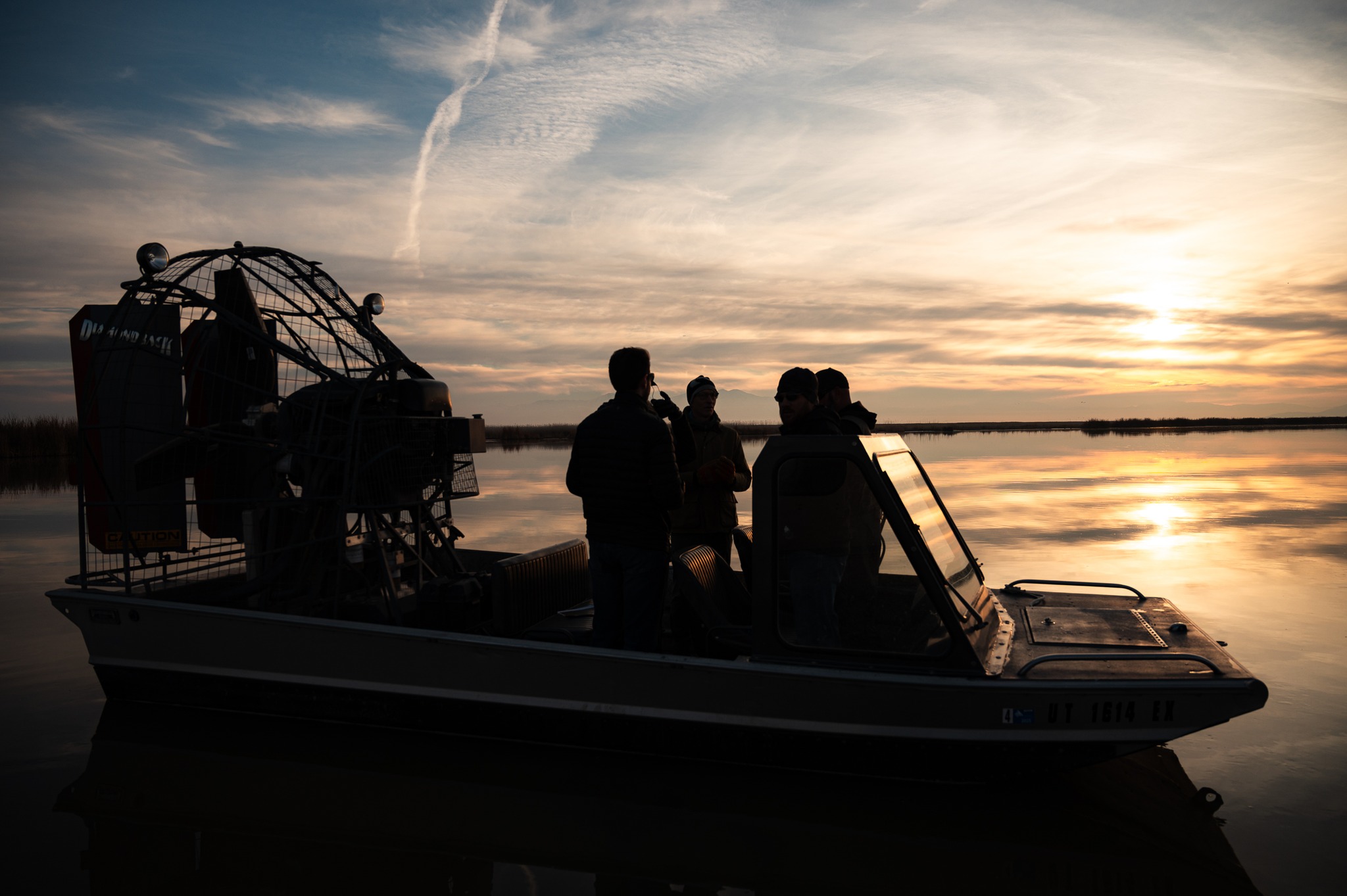
In December, Camille Calimlim Touton, reclamation commissioner for the U.S. Department of the Interior’s Bureau of Reclamation, announced a $50 million award to the Office of the Great Salt Lake Commissioner and the Utah Department of Natural Resources. This funding, from the Inflation Reduction Act, will enable the state to create a water delivery program that aims to deposit more of the vital resource in the Great Salt Lake. Even though the funding is the biggest federal investment in the Great Salt Lake and far more than the state’s original ask of $10 million, Joel Ferry, Executive Director of the Utah Department of Natural Resources, declared that the state would also match the gift with a $50 million investment of its own.
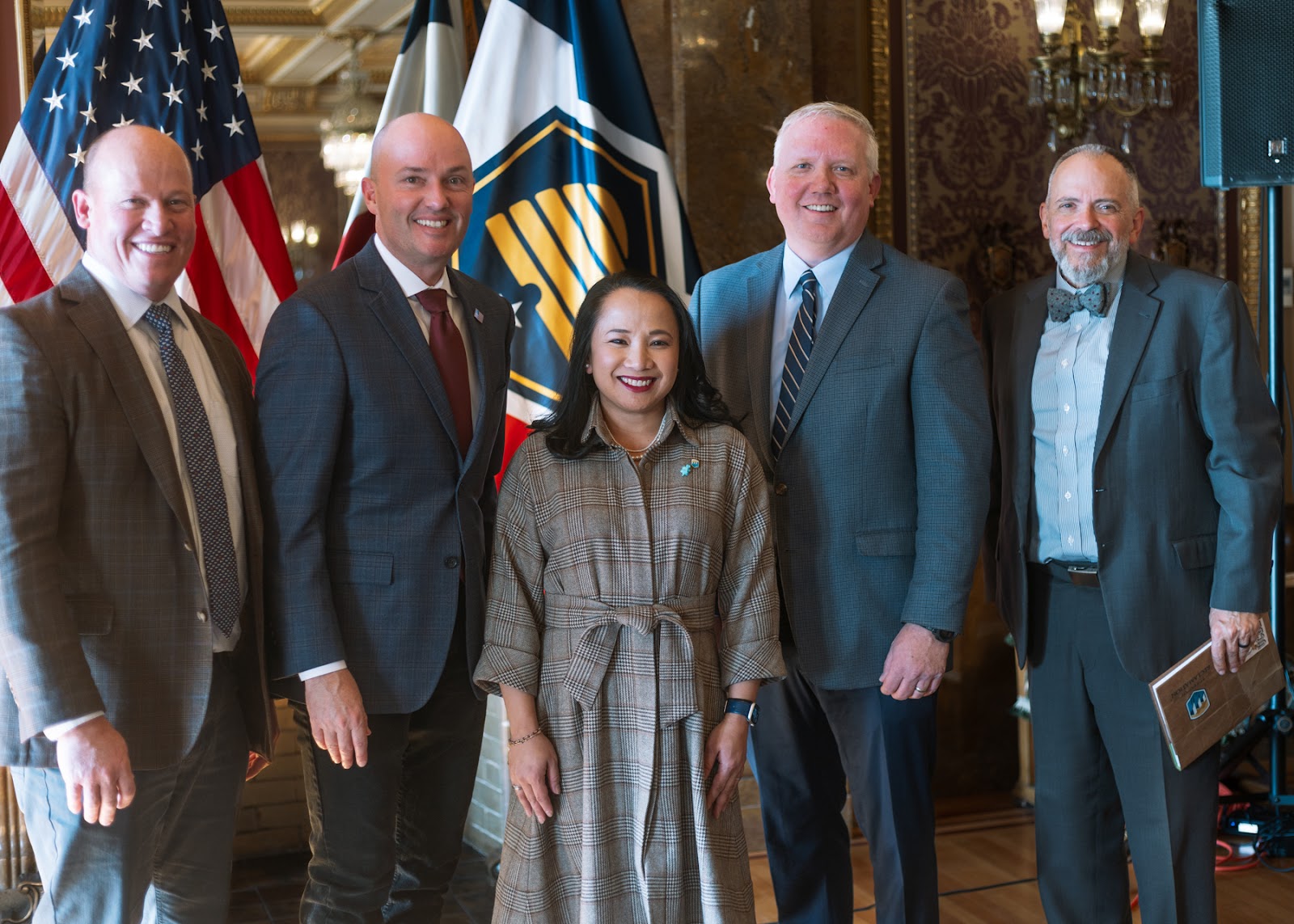
Photo Courtesy Utah Department of Natural Resources
The Inflation Reduction Act earmarked over $4 billion for Western water conservation projects in basins battling drought and $550 million for water supply projects. At the time of the award for the Great Salt Lake, the Bureau of Reclamation had announced over $3.2 billion in projects aimed at mitigating drought.
This award will help Utah execute its Great Salt Lake Strategic Plan, which originated with HB 491 from the 2023 Legislative General Session. The bill created the Office of the Great Salt Lake Commissioner and required it to prepare a plan that balances multiple stakeholders’ interests regarding the lake. In particular, the funding will help meet four goals laid out in the plan:
- Increase flows to the lake
- Invest in infrastructure to reduce water depletion and deliver conserved water to the lake
- Restore wetlands around the lake
- Remove invasive, non-native species from around the lake and its tributaries
Brian Steed, Great Salt Lake Commissioner, explained, “This program helps deliver conserved water to the lake and deplete less water within the Great Salt Lake Basin.” In the Utah Capitol Gold Room, Touton elaborated that the funding will enable the government of Utah’s partners “to enhance ongoing agricultural and municipal conservation efforts in the Great Salt Lake Basin. This investment will help slow the decline of the very valuable resource that is the Great Salt Lake.” Of the $50 million provided by the Bureau of Reclamation, $10 million is reserved for leasing water rights from residents, businesses, and farmers in the Great Salt Lake Basin.
$40 million will be divided among the Utah Division of Water Resources, the Utah Division of Wildlife Resources, and the Utah Division of Forestry, Fire and State Lands. They will use it to restore ecosystems, improve habitats, and remove invasive species like reeds called phragmites. Waterfowl management areas will receive much benefit as well, supporting the 10 to 12 million birds that depend on the lake. Some of the resources will also be directed toward renovating systems for water delivery, such as dams, many of which are over 100 years old.
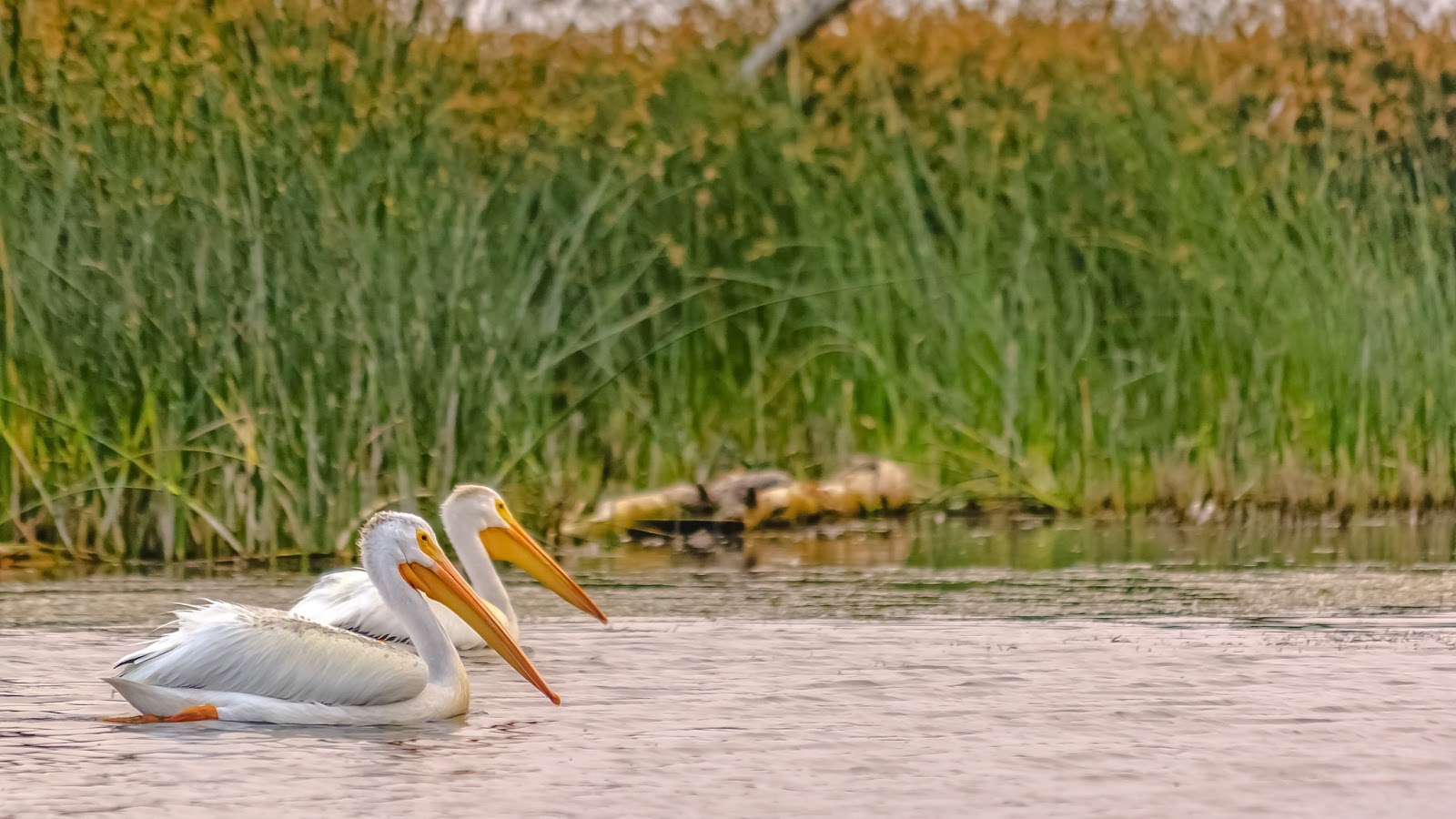
Photo Courtesy Utah Department of Natural Resources
Funding was desperately needed to address the Great Salt Lake’s plight. Between the summers of 2020 and 2021, approximately 80% of the watershed experienced ‘exceptional drought.’ It was so bad that Brigham Young University published a 2023 report warning that “if this rate of water loss continues, the lake would be on track to disappear in the next five years.” Although the region has come back from the brink due to record snowfalls, having risen 6.5 feet since 2022’s low, its future is not guaranteed. It remains at approximately one-third of its normal size. According to the state, the lake still needs over 400,000 acre-feet of water per year, or approximately 266,000 Olympic swimming pools, to reach healthy levels.
Steed reflected, “This is a type of investment that we’ve so desperately needed. While we’re no longer in crisis, we are a long ways from where we want to be on the Great Salt Lake in terms of those numbers, but this is the type of contribution that will really help get us to where we need to be on the Great Salt Lake.”
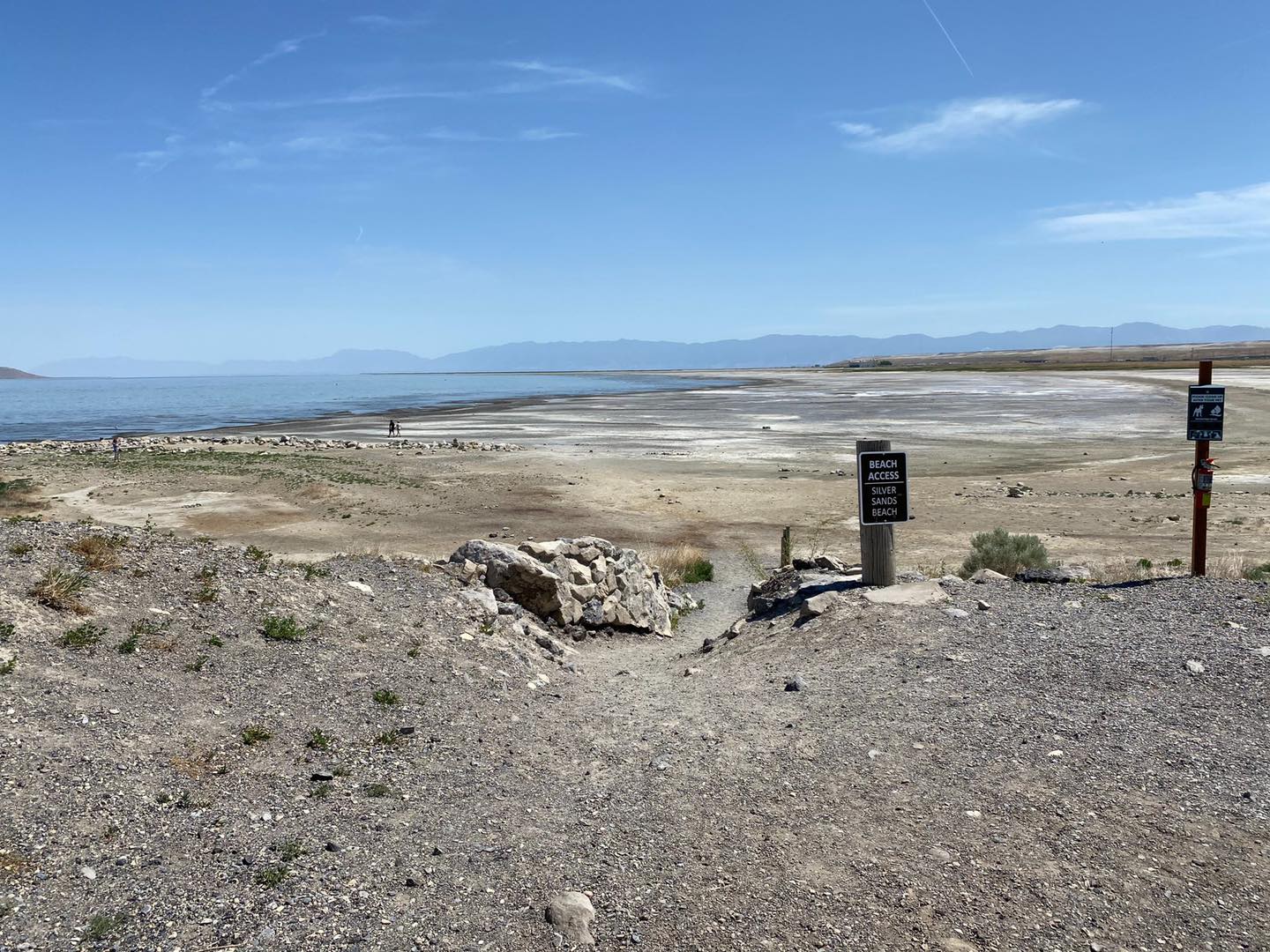
Photo Courtesy Utah Department of Natural Resources
Although the Trump administration temporarily paused the funding earlier this year, state officials were notified in late March that the funding would again be available. The state’s regained access to these funds is essential for its economy. According to a resource document prepared for the 2025 General Legislative Session, the Great Salt Lake is a significant economic hub. The extraction and processing of minerals, harvesting and processing of brine shrimp, and recreational activities provide $1.85 billion per year for the state’s economy, in 2023 dollar amounts, and 7,700 jobs.
The report shows that in worst-case scenarios, water level declines could cost the state between $1.69 billion and $2.17 billion annually, in 2019 dollar amounts, eliminating more than 6,500 jobs. Most of these losses would come from hits to the mineral extraction industry, totalling $19.3 billion over the next 20 years. Over the next two decades, the elimination of the brine shrimp industry would lead to $1.3 billion in costs, while the loss of lake recreation would lead to $1.2 billion in costs.
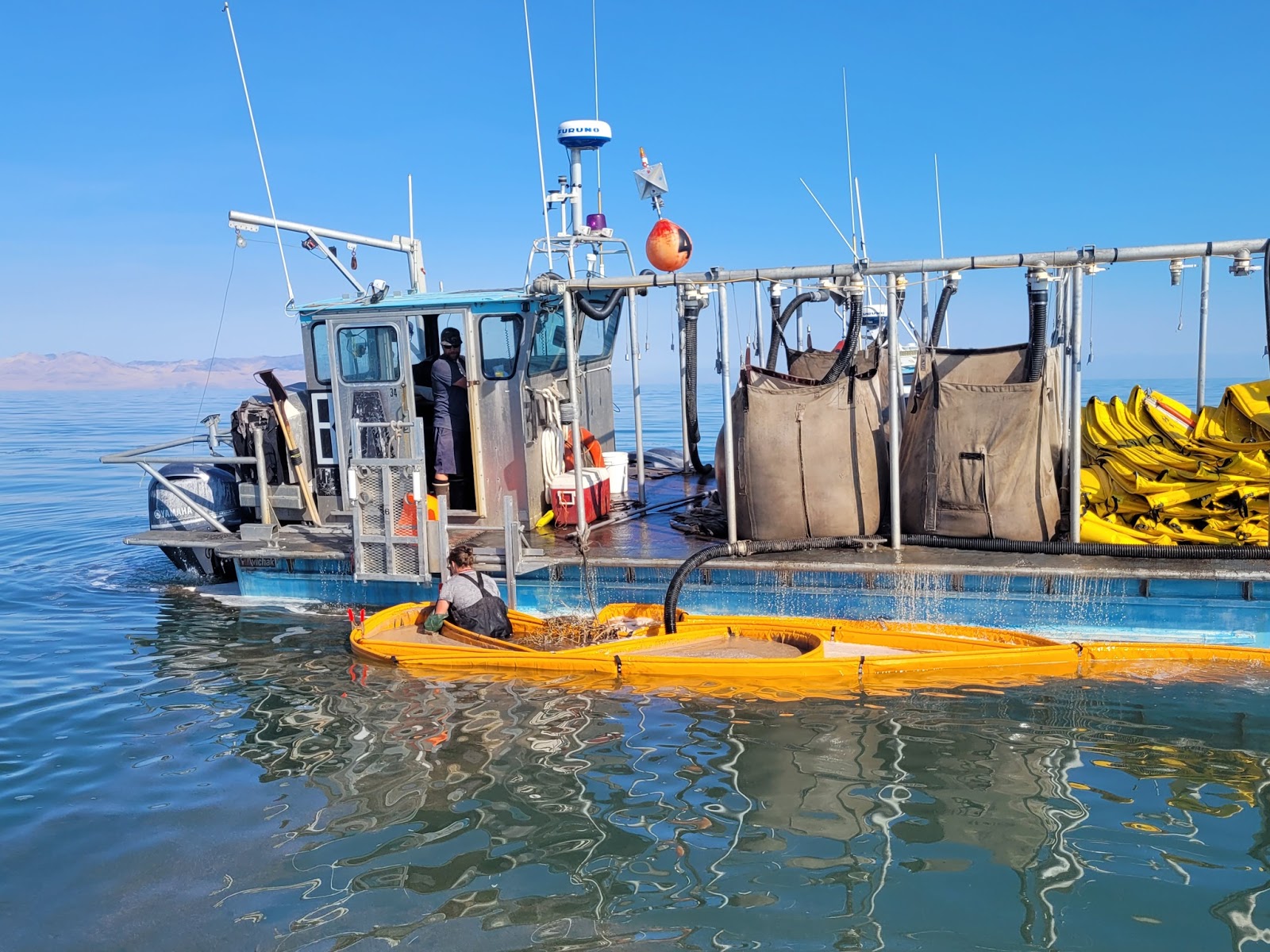
Photo Courtesy INVE Aquaculture
In the press release, Touton said, “We recognize the local commitment to conservation of the Great Salt Lake and make this investment in an effort to slow the long-term decline of the water level. The impacts of drought to the area are evident and we must work with the state and local community to conserve this important water body to stop negative impacts to the local environment and wildlife habitat, the agriculture ecosystem services, recreation, and industry.”
The Great Salt Lake’s problems are not just a problem for Utah to deal with alone. In a press conference, Gov. Spencer Cox elaborated, “We know that the impacts of the lake drying up will be far greater than just the greater salt lake area. It is a regional problem, and it is a United States problem. This is an issue affecting drought resiliency, it is affecting all of the country, especially the western United States.”