In 1976, President Ford signed the Resource Conservation and Recovery Act, which ended open dumping and led to the closure of substandard landfills. This prompted state and local governments to determine the best way to handle their municipal solid waste. In Maine, the municipalities of Cape Elizabeth, Portland, Scarborough, and South Portland solved this by joining to form Regional Waste Systems, now ecomaine, and opening a local landfill. By 1985, in what it calls “The Great Expansion,” its number of participating municipalities increased to more than 20, and over the years, the organization introduced even more innovative waste management processes.
In 1988, it built its waste-to-energy facility, which produces clean energy by generating steam from the combustion of waste in two boilers at temperatures exceeding 2,000 degrees. Every year, this results in the facility turning 175,000 tons of commercial and municipal trash into about 100,000 megawatt-hours of electricity, enough to power 15,000 residences, as well as the organization’s facilities and electric vehicles. Last year, net revenue exceeded $5 million, an all-time high.
By landfilling ash rather than unprocessed waste, the facility reduces the amount of trash sent to the landfill by 90%. Mike Shaw, former Public Works Director for the Town of Scarborough, reflected, “The 274 acres ecomaine has set aside for the ash from the waste-to-energy process would have been full long ago if we didn’t have this technology. Since our process reduces the volume of raw trash by 90%, we still have decades left to go. This is a best practice, simply put.”
According to a 2021 report, the waste-to-energy process and resulting ash generate greenhouse gas emissions that are 53% to 267% better than the carbon emitted by landfills. Plus, while unprocessed waste releases contaminants into the ground and surface water as it decomposes, the ash stabilizes heavy metals in hydroxides and sulfates, which are less likely to be released into the environment.
Video Courtesy ecomaine
In 2020, ecomaine became the first company in the country to purchase two electric trucks powered entirely by waste-to-energy. The organization bought them from The Lion Electric Co. with a joint grant from the U.S. Environmental Protection Agency (EPA) and the State of Maine Department of Environmental Protection. Using the trucks to move waste helped the company save about 75% on fuel costs over six years. In the words of CEO Kevin Roche, “The fact that we are using trucks to haul waste that are also powered by waste really closes the loop on the story of Maine’s trash. And since waste-to-energy generates ten times more electricity than a landfill, our role as both the supplier and the user of this power is magnified even more.”
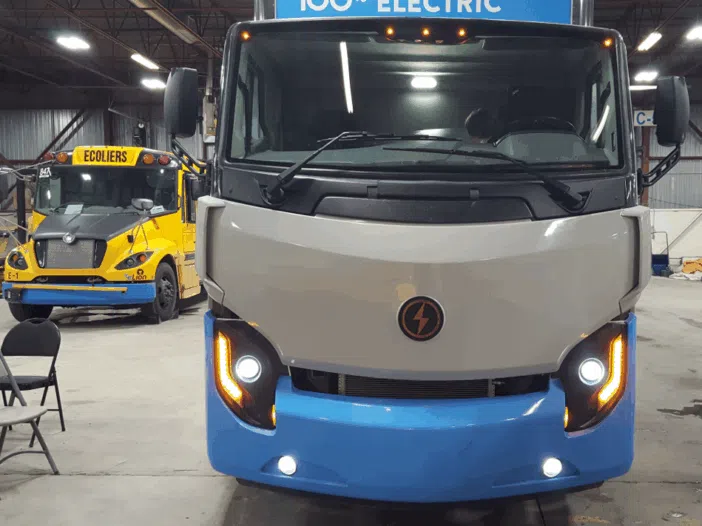
Photo Courtesy ecomaine
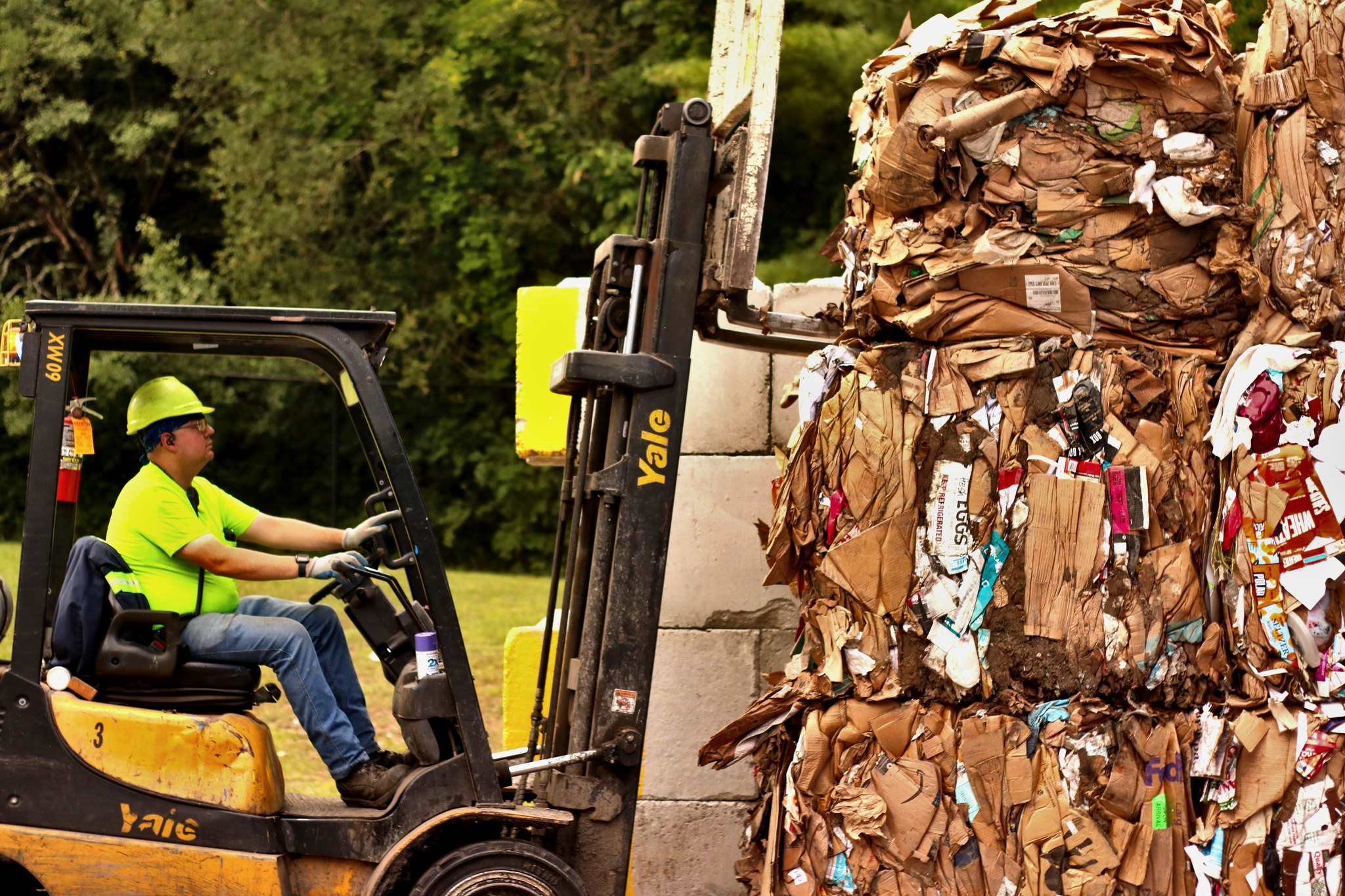
In 1990, Regional Waste Systems turned an old waste-processing building into a new recycling facility, and in 2006, it debuted its single-sort recycling technology under its current name. The plant processes around 40,000 tons of materials every year, including paper, cardboard, newsprint, aluminum, tin, steel, glass, and rigid plastic containers. The facility sorts materials into separate streams and sells them to businesses and manufacturers, who turn them into new products ranging from bottles and cans to fleece blankets. About three years ago, ecomaine partnered with a metals recycler in Massachusetts to help it recover secondary post-burn metals. Once per year, the recycler even comes to ecomaine’s facilities with an excavator and magnet to recover any metals missed earlier.
Although the current recycling facility is now more than 50% larger than it was in 2006, thanks to the addition of space for equipment, offices, and education initiatives, more was needed. Having realized that “over nearly twenty years, the recycling industry – the markets, the composition of the stream, and the technology for processing – have evolved substantially,” ecomaine is currently building a new recycling facility right across the road from its old one. It aims for more efficient processes with greater capacity for cleaner output, “in a commitment to staying at the forefront of the industry.” In fact, capable of processing 25 tons per hour, the plant will have 66% more capacity than the old one. “Boosting ecomaine’s processing capabilities means we’re ready to welcome new communities and accept more tons,” ecomaine wrote in its annual report.
Moreover, in 2016, ecomaine announced a new food waste recovery service. It partnered with Exeter, Maine-based Exeter Agri-Energy and Agri-Cycle Energy, which picked up food scraps from ecomaine and brought them to its anaerobic digester, contributing to the production of clean biogas. The process also yields a liquid byproduct used as fertilizer for local farmland, while the solid byproducts are used as compost or animal bedding. Then-board chair of ecomaine, Troy Moon, said, “Recent studies have shown that organic materials make up about percent of our waste stream. Half of that is food scraps. Providing towns and businesses with an easy way to divert this material from the waste stream will help our communities be more sustainable and may save them money.”

Photo Courtesy ecomaine
ecomaine is also working to expand access to recycling, particularly for disadvantaged communities. At the end of 2023, the EPA awarded ecomaine a $2 million Recycling Education and Outreach grant to make recycling more accessible to Mainers living in multi-family dwelling units. Although more than one-fifth of Maine’s housing population lives in multi-family buildings, only 8% of those buildings have on-site recycling. “Recycling programs in apartment buildings and multi-family dwellings have always been the most challenging to implement. However, there’s a lot of recyclable materials that are generated from these sources, and they often end up in our landfills,” board member Caleb Hemphill explained about the opportunity. The initiative, ecomaine added, is also “a testament to ecomaine’s mission to reduce waste and protect Maine’s natural beauty.”
The free pilot program aimed to combine educational outreach with single-sort recycling strategies in member communities, with on-site evaluation ahead of implementation and ongoing assistance and check-ins throughout the process. In its first year, the program diverted 7,434 pounds of recyclable materials from landfills across 331 units at three properties, including the retirement community Piper Shores, as well as the Sanford Housing Authority’s affordable housing facility, The Maples, and its assisted living facility, Mayflower Place. The program has enrolled 34 buildings and plans to continue adding new properties. The organization expects that “early insights help shape tools, resources, and approaches that reflect the realities of multi-family housing.”
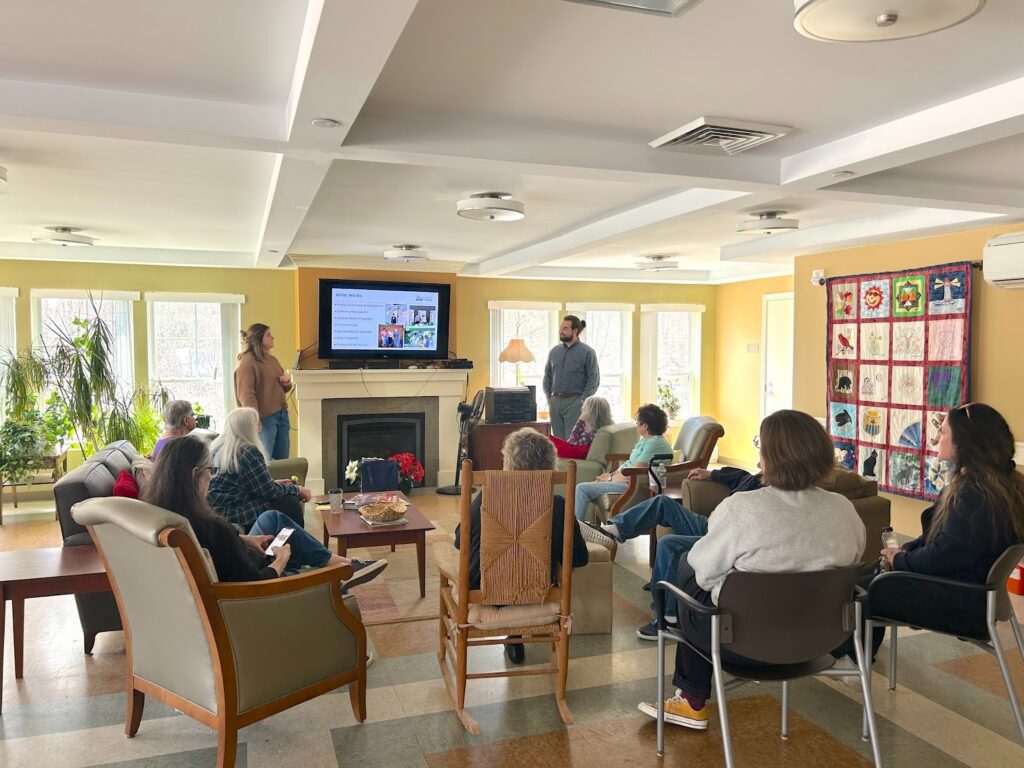
Photo Courtesy ecomaine
Multi-family dwellings are not the only buildings to benefit from ecomaine’s mission. Since 2013, ecomaine has also offered School Waste Diversion Grants of up to $5,000 each to help schools increase their recycling and composting initiatives and keep more waste out of landfills. Some of the grantees for the 2025-2026 program include Freeport High School, which is adopting reusable foodware and a cafeteria sorting station, and Greely Middle School, which is installing hand dryers in bathrooms to reduce paper towel use. A past success story is apparent at Wesbrook Middle School, where a composting and recycling project diverted 350 pounds of food waste and 100 pounds of paper per week.
Beyond offering such learning opportunities to students, ecomaine works to provide information to all Mainers. The organization’s Recyclopedia helps answer questions of all kinds, while the organization in 2021 introduced a ‘Master Recycler’ course, for which the hope was that “with each group of ‘certified ecomaineiacs,’ we will see more and better ambassadors all around Maine who will advocate for long-term, sustainable solid waste solutions,” according to Matt Grondin, former ecomaine communications manager.