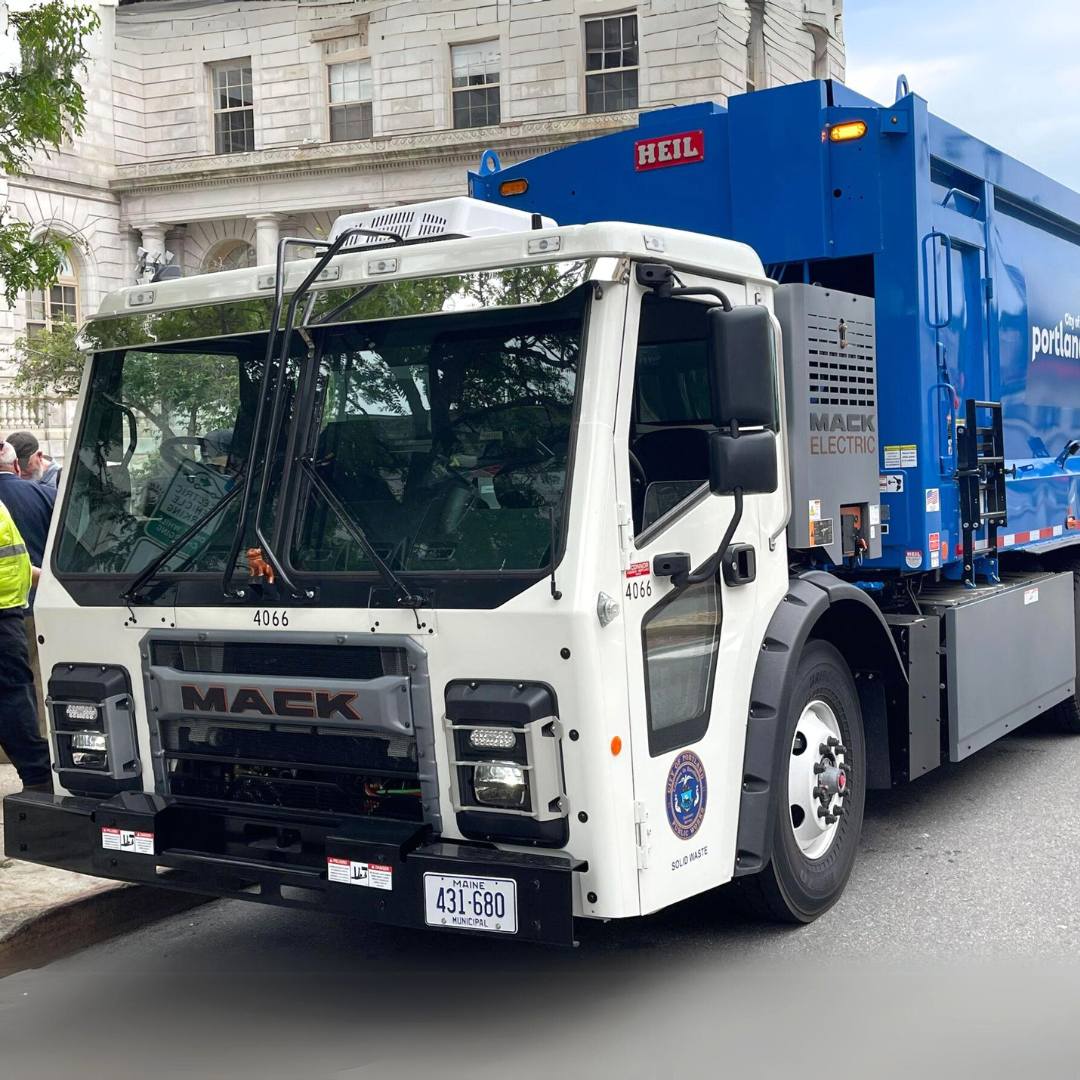
In June 2024, the City of Portland, Maine, unveiled the state’s first battery-electric (BEV) refuse vehicle, as well as the city’s first electric Class 8 vehicle. The city bought the Class 8 Mack LR Electric model using a combined grant from the U.S. Environmental Protection Agency’s (EPA) Diesel Emissions Reduction Act and the Maine Department of Environmental Protection. Through a vote, the public named the vehicle ‘Optimus Grime.”
The Mack LR Electric has four NMC (Nickel Manganese Cobalt Oxide) lithium-ion batteries with a total capacity of 376 kWh and fast-charge capability. Plus, the vehicle recaptures expended kinetic energy “from the hundreds of stops the vehicle makes each day with an increasing load,” through a two-stage regenerative braking system. Mack’s website currently states that this 66,000-pound truck can carry a payload of up to 25,500 pounds, has an operating range of up to 100 on-the-job miles, and charges in approximately 2 hours at 150kW. The company claims its “next-gen batteries have up to 42% more power than previous generations” and “increased range between vehicle charges.”
Jonathan Randall, president of Mack Trucks North America, reacted, “The City of Portland’s choice to purchase the Mack LR Electric refuse truck to help meet its sustainability goals speaks to the partnership approach that allowed Mack and the city to implement the needed ecosystem of service and support for electric vehicles.” Portland-based O’Connor Trucks will provide service and support for the Mack truck. Mike Murray, director of Public Works for the City of Portland, added, “Our familiarity with Mack through our previous vehicle purchases, along with our relationship with O’Connor makes this a great fit for the city of Portland.”
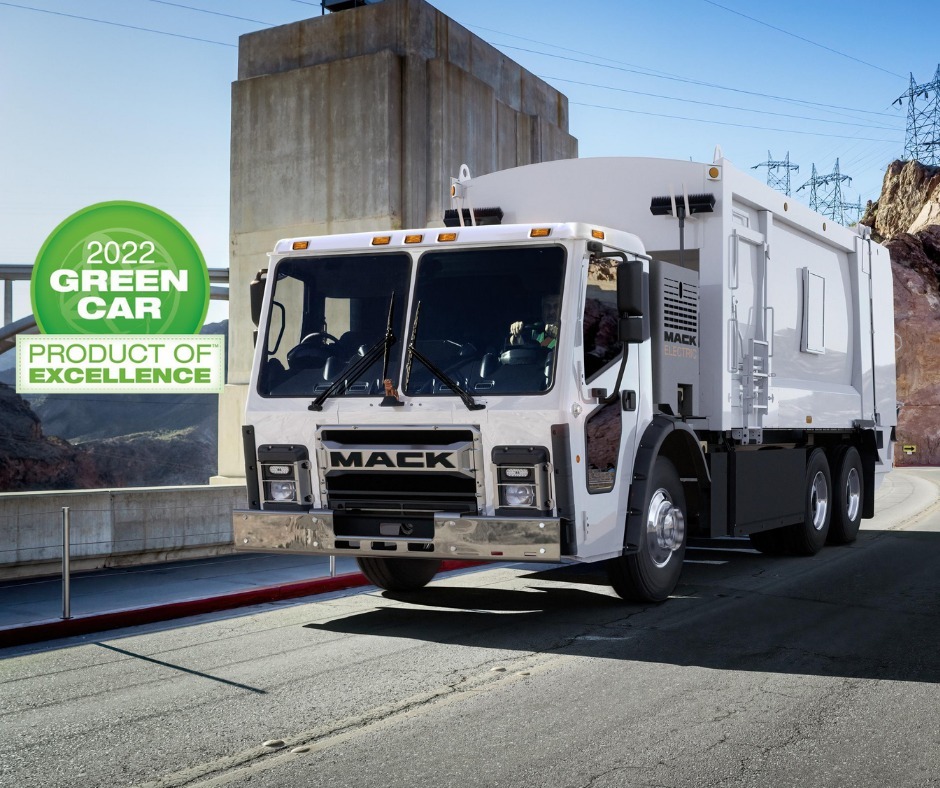
Photo Courtesy Mack Trucks
The city was also attracted to Mack Trucks because of the Mack Ultra Service Maintenance Agreement offering, a 5-year protection plan that comes with every Mack EV purchase or lease. The additional package offers specialized support for BEVs, including preventive and scheduled maintenance, 24/7 roadside assistance and towing, and all repairs outside of accidents, tires, and glass. The Mack GuardDog Connect solution will help the city reach peak operating conditions and maximize uptime by monitoring batteries and alerting to any fault codes or component defects. Plus, Mack Trucks promises durability, as the vehicle is “built with the same comfort, visibility, and reliability as the industry-leading Mack LR.”
Additionally, the 100% EV requires no diesel costs and no oil changes. Therefore, even though it costs more, the city told Maine Public Radio that it expects it to be cheaper to operate. Public Works Director Mike Murray specified, “With lower maintenance requirements and reduced fuel costs compared to traditional diesel counterparts, this refuse truck offers a compelling total cost of ownership proposition, delivering long-term savings for the municipality and the Portland taxpayer.”
The vehicle is also far quieter than gas-powered trucks. As it roams the Portland neighborhoods collecting household trash, all that can be heard is a low hum. At the truck’s reveal, Mayor Mark Dion joked, “Normally, on my own home street sometimes I hear the truck turning the corner, making its first pickups. That’s usually my signal to rush out. I don’t know if I’ll do it with this one, I’ll have to be more conscious of my time.” It has been equally transformative for the vehicle operators themselves. “Once they test drive it, they rave about the smooth, quiet ride and how alert and aware they are without all the noisy distraction,” said Mack Trucks’ director of eMobility sales, Tyler Ohlmansiek.
The decision was also a win for local sustainability. The City’s Sustainability Director, Troy Moon, reflected, “By choosing this Mack LRE Packer, the City of Portland has demonstrated a commitment to sustainability and environmental stewardship, contributing to a cleaner, greener future for generations to come.” City Manager Danielle West added, “This is a significant step forward in electrifying the City’s vehicle fleet. It represents a bold leap forward in sustainable transportation, offering an electric solution that significantly reduces carbon emissions and environmental impact.”
Mayor Mark Dion hoped to be an example for other local communities. He told Maine Public Radio, “I hope that as a city, this models what other communities in metro Portland should look at when they are making decisions to purchase new vehicles for their fleet. Electricity is the energy of the future, and this city stands ready to make that commitment on behalf of its citizens in terms of providing a cleaner environment and making Portland tangibly environmentally safe and a good steward of our resources.”
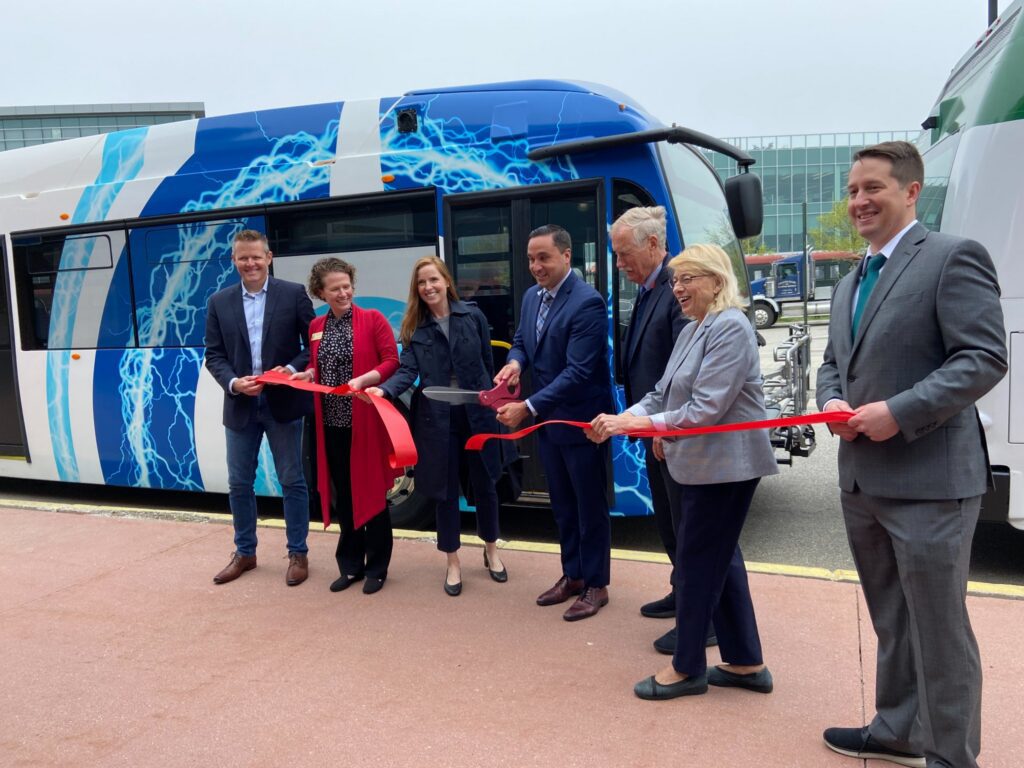
Photo Courtesy City of Portland, Maine
Indeed, Portland has aggressive environmental goals. Under One Climate Future, a joint plan for climate action, the cities of Portland and South Portland aim to transition their municipal operations to 100% clean energy by 2040. As of 2020, Portland had already installed Level 2 chargers at its Elm Street and Spring Street garages and was working to install them at 5 other locations.
Through One Climate Future, Portland and South Portland committed themselves to expand access to publicly accessible electric vehicle charging infrastructure; to encourage EV adoption by offering incentives like an excise tax purchase incentive; to develop electric vehicle capital transition programs for all public buses and transition all bus fleets to battery-electric vehicles (BEV) by 2040; and to develop an electric and alternative-fuel vehicle capital transition program for municipal light-duty vehicles and school buses. Like for the BEV trash vehicle, the report found that an electric bus “can save over $400,000 in fuel costs and $125,000 in averted maintenance costs over the life of the vehicle. The cities pointed out that electric school buses, in particular, can also support vehicle-to-grid (V2G) initiatives.
Additional electric vehicle charging stations now include locations such as Payson Park and in front of City Hall. The city has also begun adopting EV-ready requirements, including updating the Technical Manual to mandate EV charging for all new parking lots with 5 or more spaces. Greater Portland METRO and the Biddeford-Saco-Old Orchard Beach (BSOOB) Transit Committee won funding to add four Battery Electric Buses to replace 20-year old gas-powered versions. Portland has also added other electric vehicles to its fleet. As the city continues to plow ahead with its work, it will make it easier for municipal operations to transition and for residents to follow suit.