In May, the Aleut Corporation, one of the Native Regional Corporations in Alaska, announced that it is partnering with Oregon-based Pacific H2 Corporation to provide it with a 90-year lease for 3,500 acres of land on Adak Island: specifically, a 30-year lease with two 30-year extensions. Pacific H2 will deploy wind turbines and supporting infrastructure on the land, and the energy produced by the system will support the production of green ammonia locally.
The Aleut Corporation was founded in 1972, created under the Alaska Native Claims Settlement Act. It represents the descendants of Unangax̂ (Aleut) peoples from the Aleutian and Pribilof Islands of Alaska. Starting in 1741, the Unangax̂ were actually the first group in Alaska to interact with foreigners. Since then, the number of villages has decreased to less than a dozen, with only around 1,700 Unangax̂ people living in them. “Though much of the Unangax̂ heritage and language has been lost, the Unangax̂ people remain strong, resilient, and dedicated to preserving and revitalizing their language and culture,” the corporation explained on its website.
Video Courtesy Aleut Corporation
At the same time, the Aleut Corporation is looking to the future. Its mission is to maximize dividends and opportunities for its more than 5,000 Alaska Native shareholders. “Through the successful operation of our businesses, Aleut strives to make a meaningful economic impact in the Aleut Region and in the lives of our shareholders and descendants through dividends, employment, training, and cultural support,” the corporation wrote.
This desire for a positive economic impact is central to the agreement with Pacific H2. The project will create 150 jobs for a community of 50 residents, and it offers the prospect of upgrading Adak housing for these employees. Additionally, it will spur long-term economic and infrastructure investment in the region. Skoey Vergen, President and CEO of Aleut, said, “Pacific H2’s project brings global innovation to a local setting. Most importantly, it opens the door for sustainable economic growth in Adak and creates long-term opportunities for the region.” The partners plan to support local services, including a health clinic, a recreation center, and emergency response facilities. They also plan to invest in sustainable infrastructure, including clean heating systems and greenhouses.
It is not the only project that Aleut entered into over the summer. It also partnered with California-based SpinLaunch, agreeing to establish a kinetic satellite launch site on Adak Island. As SpinLaunch CEO David Wrenn summarized, “By leveraging Adak’s strategic location and infrastructure, we can accelerate the deployment of our launch system while contributing to the long-term prosperity of the region.”
There is no better location for a clean energy source than Adak Island, where the Bering Sea and the Pacific Ocean meet. It earned the title “Birthplace of the Winds,” the corporation explained, because “the Aleutian Islands are the birthplace of some of the wildest storms known to man with fierce winds and high waves continually challenging those who live, work, and travel in the region.” The collaboration with Pacific H2 presents an opportunity to transform a challenge into an advantage. As Vergen reflected, “This is a meaningful opportunity for Adak, for Alaska, and for the renewable energy industry.”
There is also potential to tap geothermal energy, as Pacific H2 has contracted for 1,000 acres of subsurface rights. The U.S. Navy drilled two geothermal test wells there in 1977, and it found that a 25MW geothermal power plant could also be based there. However, “Based on advances in technology in the last 48 years, we believe a plant of 100MW+ could be built,” Pacific H2 and H2Carrier described in a presentation.
The 200,000 tons of ammonia that Pacific H2 will produce and export annually, which the Aleut Corporation called a “carbon-free fuel critical to the future of the global shipping industry, and energy production,” also offers the corporation the opportunity to lead in clean energy. The partners will deploy P2XFloater, a production, storage, and offloading (FPSO) vessel developed by H2Carrier, which the company calls “the world’s first floating production unit for producing green ammonia at an industrial scale.” Using clean energy, the vessel purifies seawater, sends it through electrolyzers to produce green hydrogen, then combines it with nitrogen from the air and synthesizes it in a generator to produce green ammonia. Plus, the P2XFloater will be less carbon-intensive than an onshore production facility and easier to decommission and recycle at the end of its life.
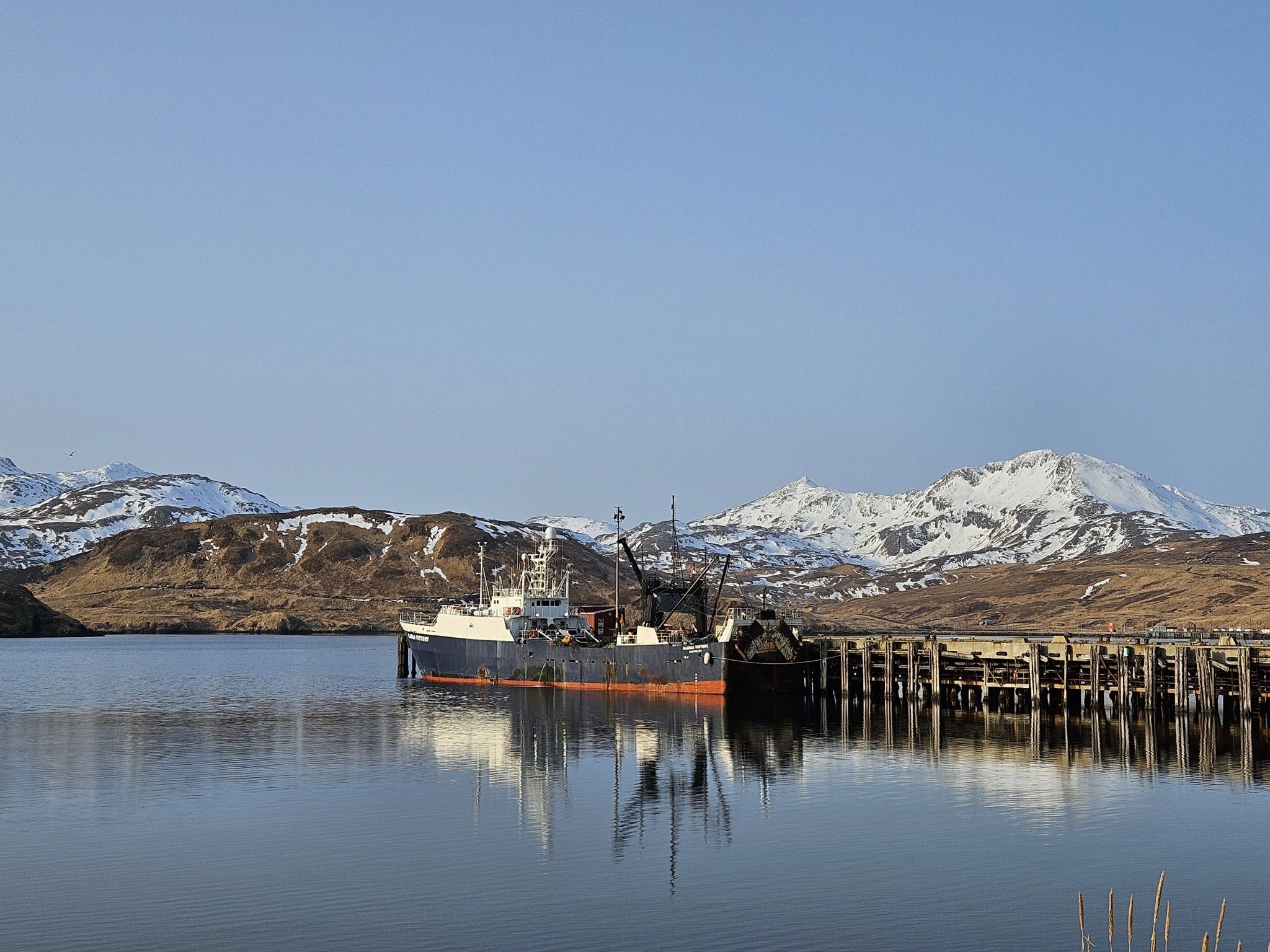
Because the P2XFloater uses Trelleborg’s KLAW liquid gas transfer solution, which enables it to use hoses to transfer ammonia to a visiting tanker every month, the vessel will act as its own export terminal with little need for onshore infrastructure beyond some hardpoints for mooring. The island served as a U.S. military base from World War II until 1998, so it features infrastructure that can be refurbished for these operations, including access roads and a pier that can serve as the mooring point.
Adak Island is also ideally suited for exporting the ammonia. As the country’s westernmost ice-free deepwater port, it offers the shortest and lowest cost routes to major Asian markets, such as eight days to Japan – or more than 1,000 nautical miles closer than Hawaii – and nine days to South Korea. “Adak is as far west as we can get. It reduces the shipping time to the lowest possible,” said Pacific H2 CEO Charles Deister. The partners can also use the Northwest Passage to reach European markets.
The partners will also ensure the environment is protected throughout the process. “We’ll have gas detection systems, emergency ventilation systems, there’ll be various alarms, automatic shutdown valves,” Deister noted.
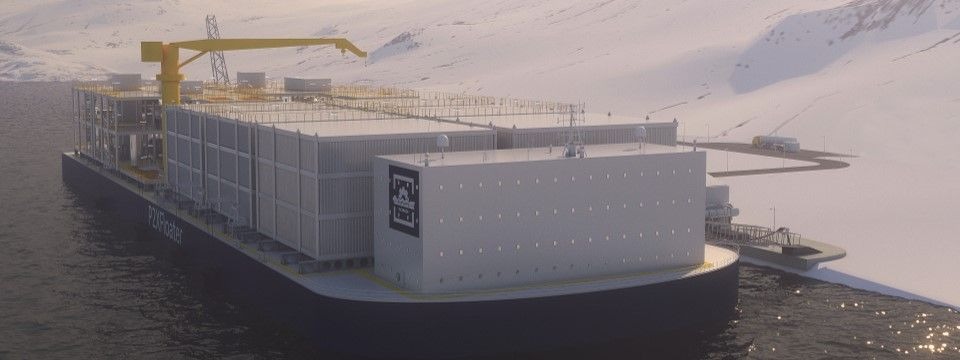
Photo Courtesy Karl Arthur Braein
Over the next year, Pacific H2 is collecting data from meteorological monitoring stations to determine the appropriate scale and model for the wind turbines. The company is also pursuing permitting for the project, which it expects to complete by 2031. Notably, the Alaska Department of Natural Resources informed the companies that it can issue state permits within 18 months, and the partners anticipate that federal permitting will take less than three years. When the project is completed, it can be expected to launch a new chapter for the Unangax̂ people.