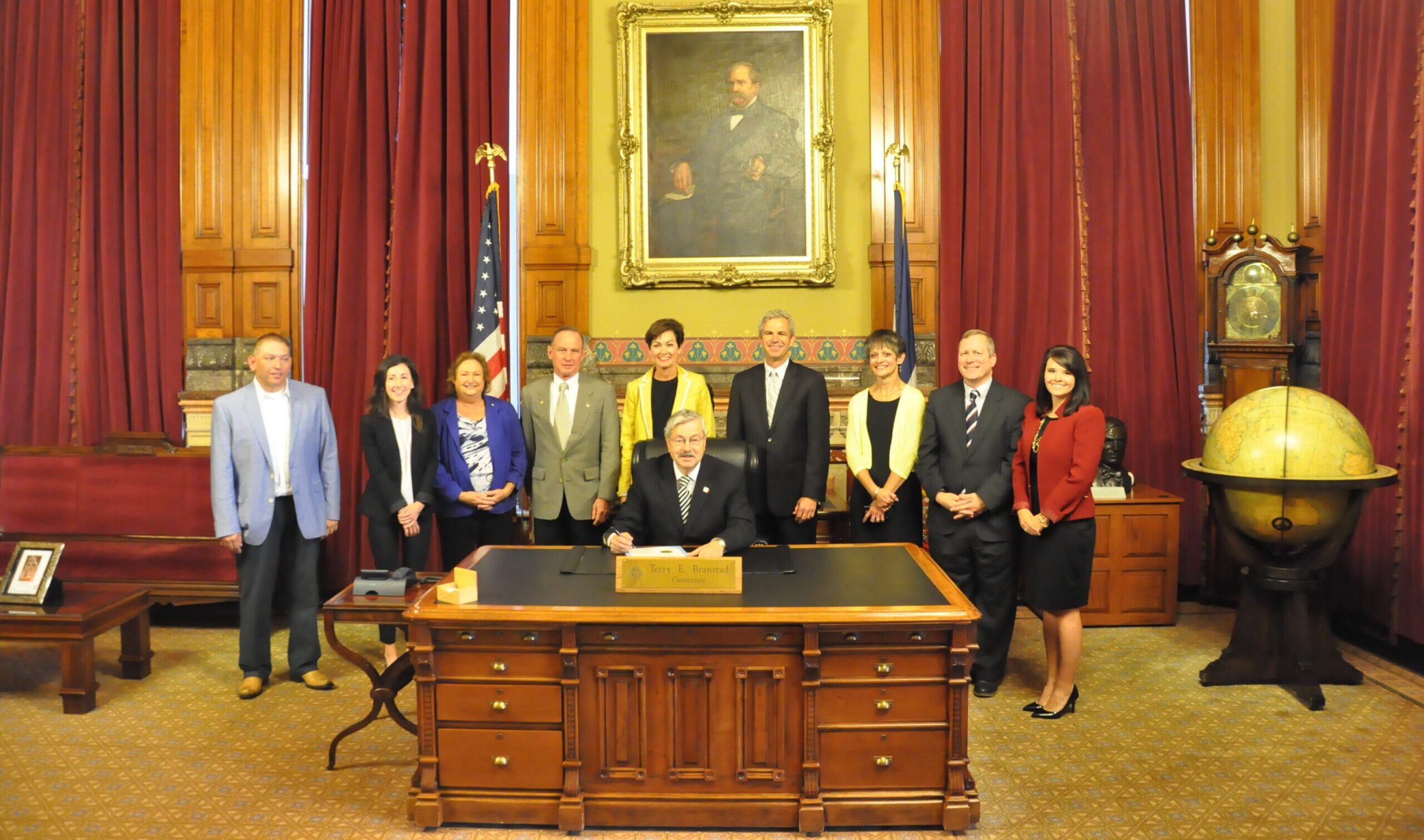
“Every wind turbine Iowans see while driving on our roads and highways means more income for Iowa farmers, revenue for local governments, and jobs and economic opportunities for Iowa workers and families,” Terry Branstad, former governor of Iowa and U.S. Ambassador to China, wrote in an op-ed published in the Sioux City Journal.
In the piece, Branstad recalled his long career that was favorable towards clean energy, with a cornerstone of his administration always including support for policies that advanced the state’s clean energy capabilities. That career included over 22 years of service as Iowa’s governor, making him the longest-serving governor in American history.
He reminisced in the op-ed, “I’ve always believed that Iowa should look to the future and push for increased production of renewable, reliable, and low-cost clean energy that will meet our growing needs. As governor, I was proud to advance bipartisan wind energy policies, including by creating the country’s first renewable electricity standard.”
Iowa has far surpassed the initial target of 105 megawatts (MW) of renewable generating capacity that it set out with the introduction of its renewable portfolio standard (RPS) in 1983. At the beginning of last year, the state was home to more than 13,000 MW, according to the U.S. Energy Information Administration. Since the 1980s, 29 other states and Washington, D.C., have adopted an RPS of their own.
Branstad added that increasing the production, transmission, and storage of clean energy in Iowa brought capital from important investors. “During my six terms in office, we welcomed companies like Facebook and Google, which flocked here to build new data centers capable of being powered by clean, low-cost, and reliable wind energy. Iowa would not be the economic or energy powerhouse it is today without clean energy,” he explained.
Meta’s data centers in Altoona alone represent a $2.5 billion investment that has employed 1,300 construction workers and 400 operations workers since it broke ground in 2013. It has also provided more than $4.2 million in direct funding to schools and nonprofits in Polk County. Meanwhile, Google’s data center in Council Bluffs represents an investment of more than $6.8 billion that since 2007 has provided digital training skills to more than 101,000 Iowans, generated $2.1 billion in economic activity benefitting local businesses, and provided $1.3 million to help improve the quality of water going into the likes of the Missouri River and the Mississippi River.
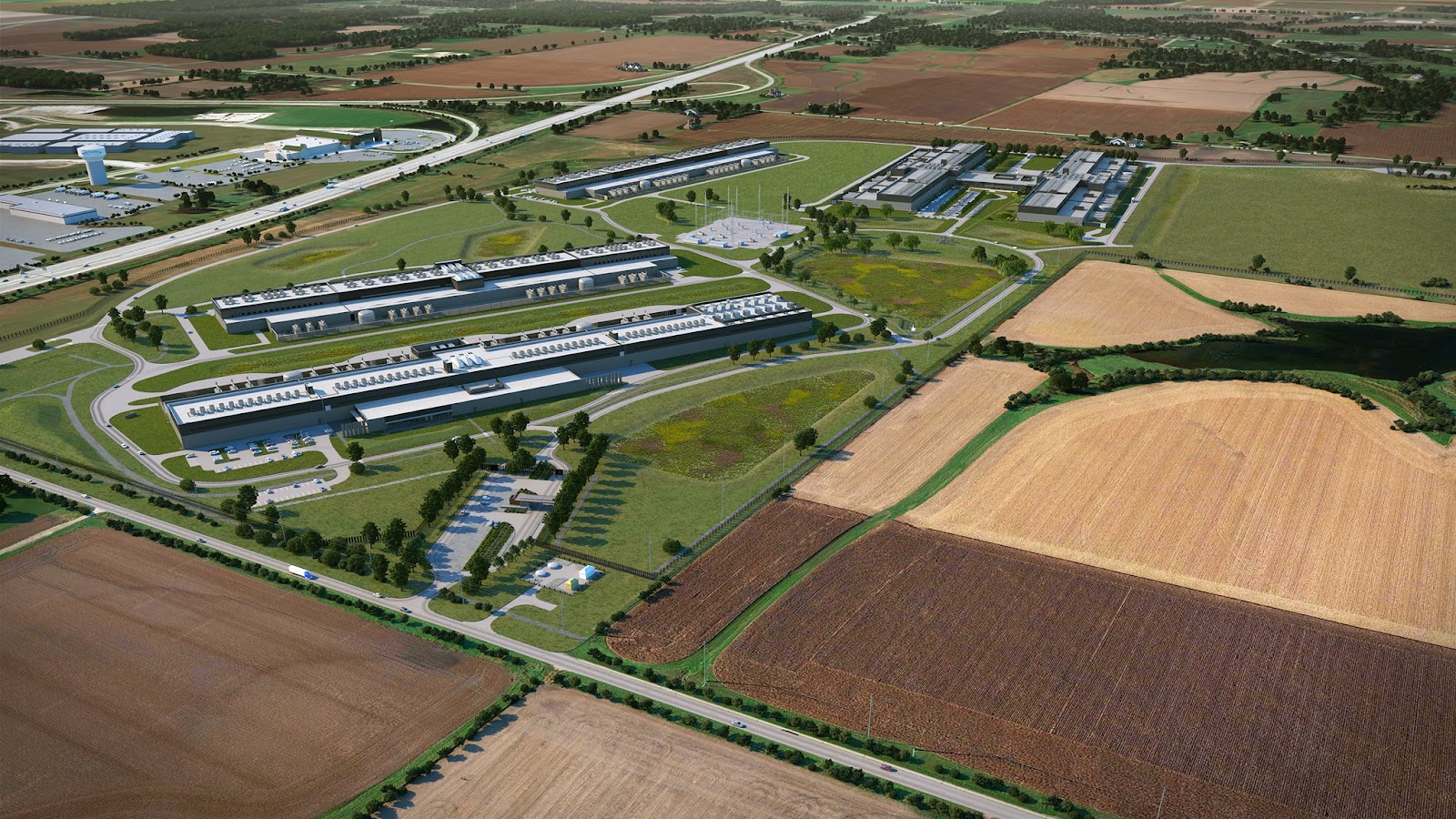
Photo Courtesy Altoona Data Center
As Branstad recounted, his support for clean energy was partially the result of the incredible economic impact of policies that are friendly to clean energy projects. As he said in the op-ed, he believes that his support for the industry “helped drive economic growth in rural communities, create tens of thousands of clean energy jobs, and support billions of dollars in economic contributions.” In 2016, for example, MidAmerican Energy invested $3.6 billion in a wind project that was then the biggest economic development project in Iowan history. He also credited renewables as a “steady source” of “good, high-paying jobs.”
He explained that the state’s farming families particularly feel the economic impact. Solar and wind projects often provide Iowan farmers with a secondary income source and financial security, and, he wrote, “I believe it’s more important than ever for our farming families and communities to be able to diversify their income streams to protect the future of Iowa’s multi-generational, family-owned farms.”
Branstad also cited clean energy as a bolster to national security: “Having a more diverse mix of energy resources will help keep electricity more reliable, improve the resilience of our energy grid, and reduce our reliance on foreign sources of oil, including potentially hostile nations, which Iowa was almost exclusively reliant on when I was first elected governor.”
It makes sense, then, that 84% of Iowans support incorporating renewables into the state’s energy mix, according to a poll that Branstad referenced throughout the piece.
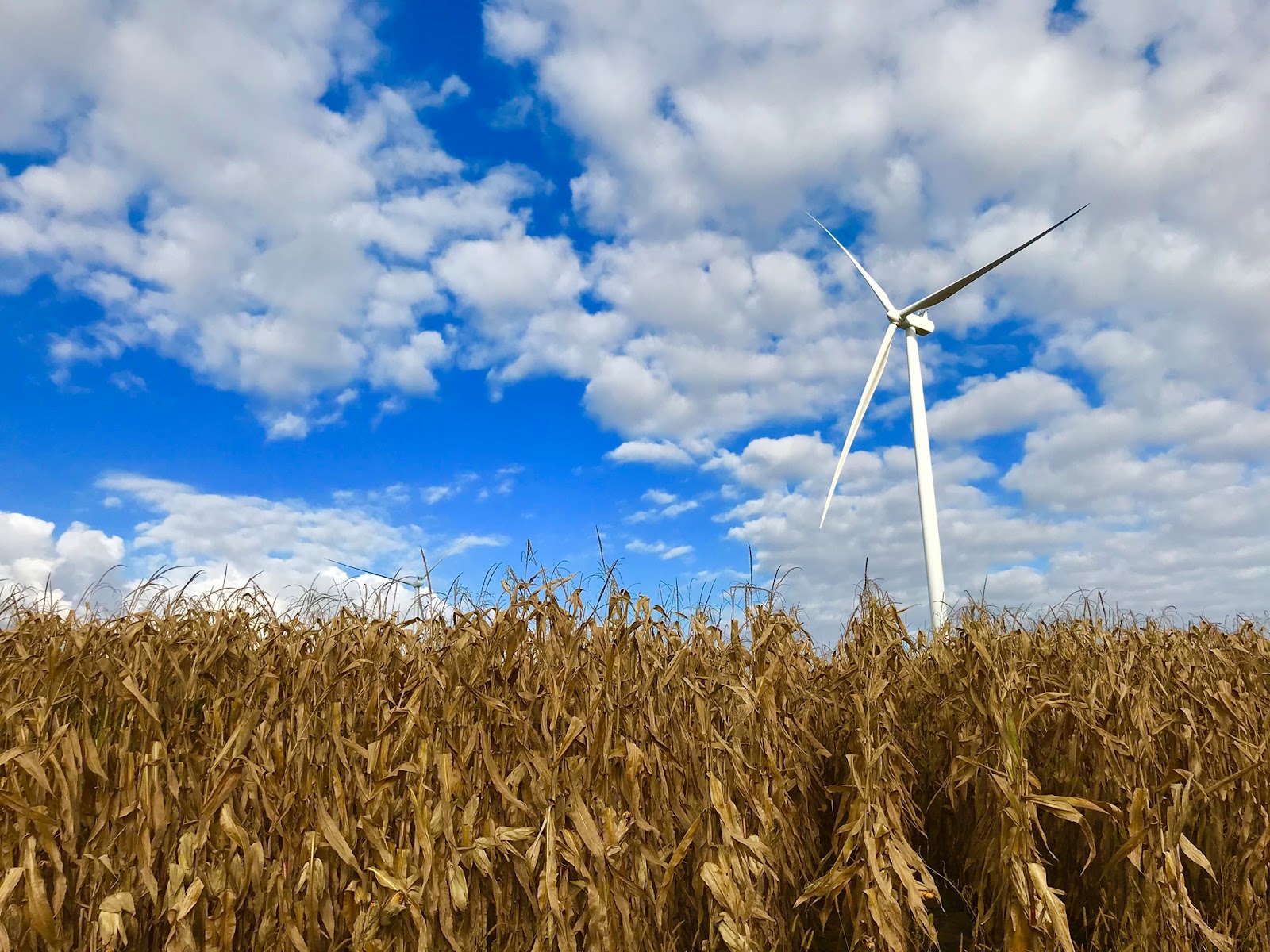
Photo Courtesy MidAmerican Energy
Despite all of the progress that has been made in Iowa and the U.S., the work is not done, though, Branstad commented, “From wind and solar to hydropower, geothermal, and biofuels, Iowa continues to be a leader when it comes to pursuing an all-of-the-above approach to energy that incorporates clean resources and technologies. But to build on the progress we’ve made, federal lawmakers must protect critical clean energy investments, tax credits, and rebates.”
Branstad noted that almost 70% of Iowans support tax breaks for renewable energy producers. He explained, “Iowans are smart, which means we know that to accomplish our energy goals—both as a state and as a nation—we need to invest more in updating our energy infrastructure and ensuring it can support and deliver renewable energy more effectively and efficiently.”
He added that Iowans are looking to their leaders in Washington, including Senator Chuck Grassley (R-IA), Senator Joni Ernst (R-IA), and Representative Mariannette Miller-Meeks (R-IA), to continue supporting policies that strengthen our clean energy future, which means protecting the tax incentives passed in 2022. Rep. Miller Meeks was one of the twenty-one Republicans who in March sent a letter to the Chairman of the House Ways and Means Committee, U.S. Representative Jason Smith (MO-8), advocating for those tax credits.
Branstad concluded, “These tax credits help provide stability and certainty for struggling small businesses and farmers. We cannot afford to lose out on the investments that these credits help support.”