
In prior pieces, we covered legislators’ comments during National Clean Energy Week about the importance of an all-of-the-above strategy and why renewables are so crucial for America’s energy future. In this piece, The Business Download highlights the thoughts of these leaders on the path forward for American energy affordability, reliability, and security.
First, innovation will be key to moving forward. Rep. Juan Ciscomani (R-AZ-06) described his mission of defending and protecting the American dream, and how innovating to create a diverse energy mix serves that dream, “A part of creating that American Dream is building. That’s what Americans do. We build. We expand. We innovate. We go out there and push the limits. We discover. We advance. We invest in research. And we have to make sure that we don’t forget why we are in this global position. And it is because we haven’t been afraid. We take risks. And this is what you all do here today.”
U.S. Rep. Marc Veasey (D-TX-33) agreed, “We have to accelerate the innovation that will unlock cleaner energy solutions of tomorrow.” He highlighted technologies such as hydrogen for industrial and transportation decarbonization, long-duration storage that can keep the grid running for days, and advanced nuclear reactors that can provide reliable power with a smaller footprint.
U.S. Rep. Jen Kiggans (R-VA-02) stressed the government’s role in supporting innovators, “We need to do some things to incentivize people to continue to invest in clean energy.” However, the onus will be on the private sector, according to Rep. Veasey: “That’s been the story of America, that the government has been a helper, but at the end of the day, it truly is going to come down to the private sector and industry leaders that are in this room today to make sure that we’re able to bring these technologies to scale, so they can be a part of America’s cleaner, reliable and more affordable energy deployment.”
In the words of U.S. Rep. Tim Walberg (R-MI-05), “Through innovation, innovation, innovation, we can succeed. That’s exciting.”
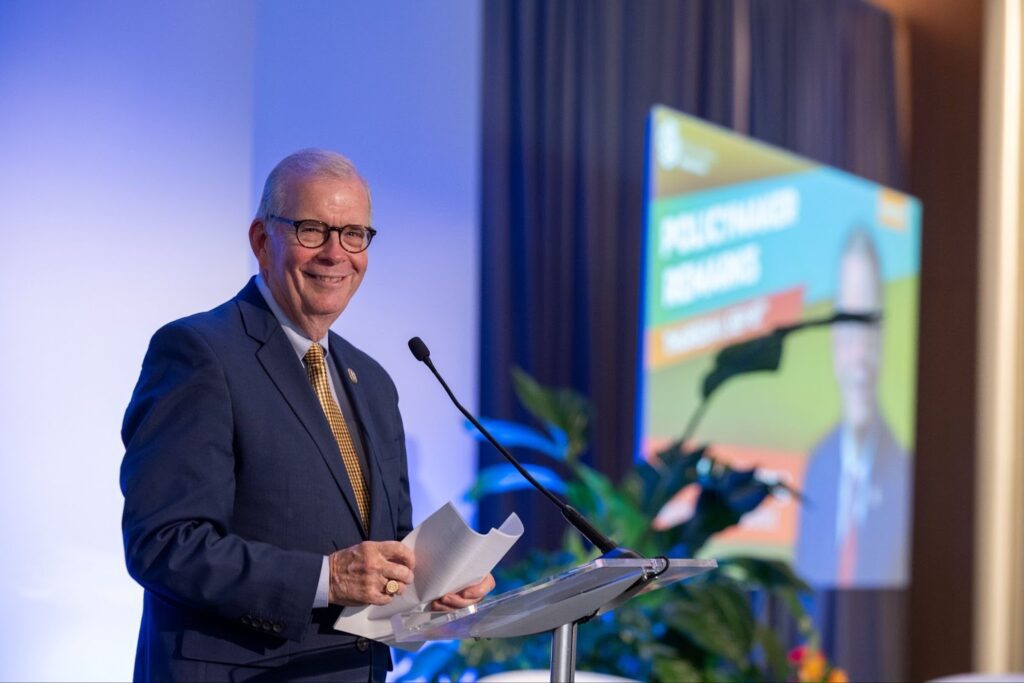
Photo Courtesy National Clean Energy Week
Support for domestic critical mineral supply chains is also a crucial component of this puzzle. Coming from the ‘Copper State,’ Rep. Ciscomani emphasized the importance of “enacting legislation that increases our critical minerals.” He introduced the Critical Mineral Consistency Act in the last Congress and the current Congress, which would “help secure our critical mineral supply chain, which is key for the clean energy sector, by aligning the Department of Energy critical minerals and critical materials and the U.S. Geological Survey (USGS) critical mineral lists, conferring the same benefits to both lists and eliminating confusion between the two lists.” Including them on the USGS list makes them eligible for benefits, such as participation in the FAST-41 expedited permitting process, for example. Rep. Susie Lee (D-NV-03), who introduced the Critical Mineral Consistency Act with Rep. Ciscomani this year, explained, “There should not be different definitions on what is a critical mineral depending on what department creates the list.” She emphasized the need for consistency and a level playing field for critical minerals across the U.S. government.
Rep. Lee also discussed the importance of this type of legislation for the critical minerals sector: “We need to work on reducing our dependence on foreign nations for these critical minerals by obtaining and processing them right here in our country. And this work will only be done with bipartisan support, not just in Congress, but across all of our states.” She summarized, “We cannot build out this clean energy future if projects remain tied up in uncertainty, in red tape.”
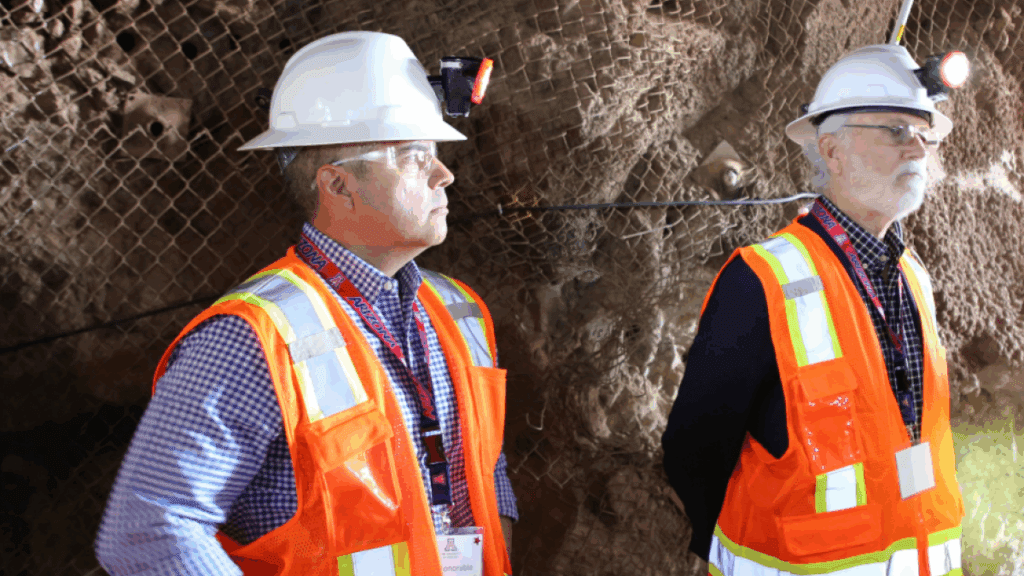
Photo Courtesy Congressman Juan Ciscomani
Passing permitting reform is also vital to advancing clean energy and critical minerals in America. Rep. Walberg laid out the problem facing the country, “The current bureaucratic maze of permitting is expensive, it’s inefficient, it’s dangerous to our futures. It threatens our ability to develop critical infrastructure, but also jeopardizes our national security.” Rep. Veasey reacted, “We need a common-sense, bipartisan approach to permitting reform that makes it faster and more predictable to build in America.”
U.S. Rep. Scott Peters (D-CA-50) discussed the buildout of large-scale inter-regional transmission as an example of the need for this type of reform. Even though expanded transmission is key to reliability and saves cost reduction for customers, he noted that North America has only produced seven gigawatts (GW) of such transmission since 2014, compared to 44 GW in Europe and 260 GW in China.
Rep. Buddy Carter (R-GA-01) also pointed to the Savannah Harbor Expansion Project, which took more than 20 years of planning to deepen the shipping channel from 42 feet to 47 feet. He reflected, “When people come into my office, they always tell me the same thing: ‘Permitting, regulations – it’s crushing us.’ We’ve got to address this in our country, and it’s one of the big priorities of this current administration, and it’s going to be one of the big priorities of ours in Congress.”
The solution, according to Rep. Walberg, will be in avoiding “costly, inefficient, and duplicative reviews to ensure that projects can be built in a reasonable and timely manner and ensure that we don’t cede our leadership in global AI and energy to China.” Rep. Carter emphasized that this does not equate to trampling on the environment: “They are not two distinct entities. They can be both. You can have both. You can have growth, you can have economic development, and you can protect our environment at the same time. I’m convinced we can do that.” Rep. Peters also emphasized the importance of certainty in the permitting and construction processes. He highlighted the federal government’s recent cancellation of projects that had already been permitted, as well as the cancellation of funding for projects that had already received state approvals. After an energy investor told him that his company now views investing in American energy as comparable to investing in Brazil or Vietnam, Rep. Peters reflected that a “dependable rule of law” is what makes America a safe place to invest.
Rep. Veasey expressed optimism about the chances for permitting reform in the near future: “I do think that there’s a bipartisan spirit on the Energy and Commerce Committee to be able to get something done.” One of the most promising pieces of legislation is the Standardizing Permitting and Expediting Economic Development (SPEED) Act, about which Rep. Carter expressed significant enthusiasm.
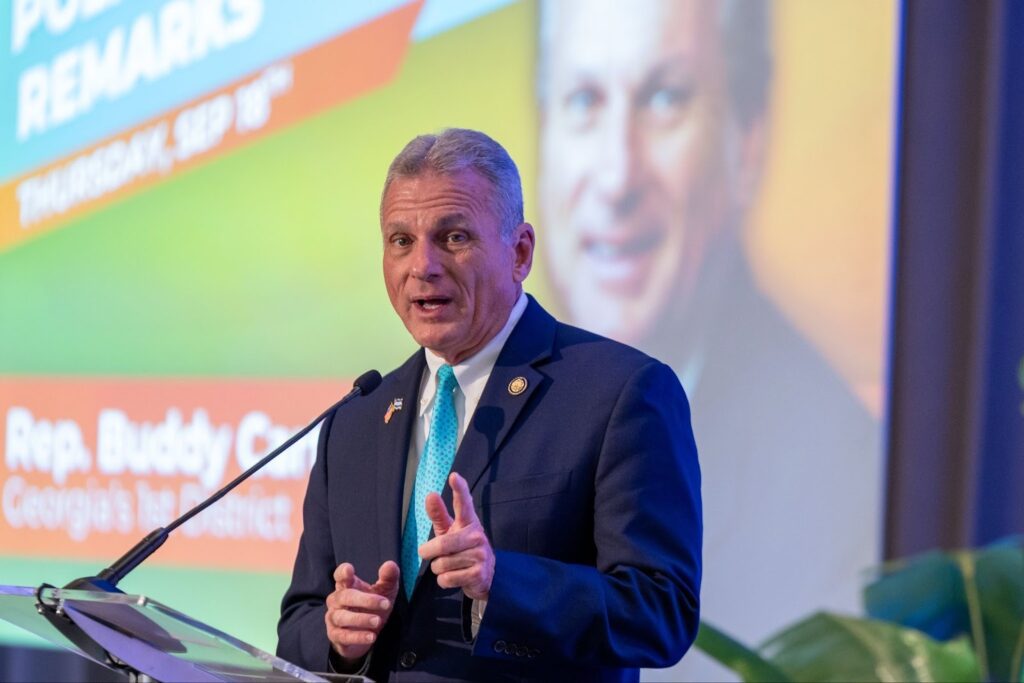
Photo Courtesy National Clean Energy Week
Rep. Walberg also stressed the importance of developing the workforce needed for America’s energy future. “We’ve got to find means by which we can develop the necessary workforce,” he reflected. “The fact of the matter is, there are people that can come straight from high school, with values in their own person and an attitude and an aptitude for entering in the field of energy and energy production and maintenance and all the rest, that we need to capture. And that’s part and parcel with education, with re-informing parents what their students can achieve.”
Rep. Kiggans accentuated the impact that the Coastal Virginia Offshore Wind project has had on employment in her state. Because the state initially lacked the ships required for the staging and construction, there were “a lot of people involved, a lot of jobs… It touches all kinds of different contractors, subcontractors, the shipbuilding effort. We’ve actually built 20 more ships to try to service the wind turbines offshore.” Such stories are essential to advancing the clean energy industry.
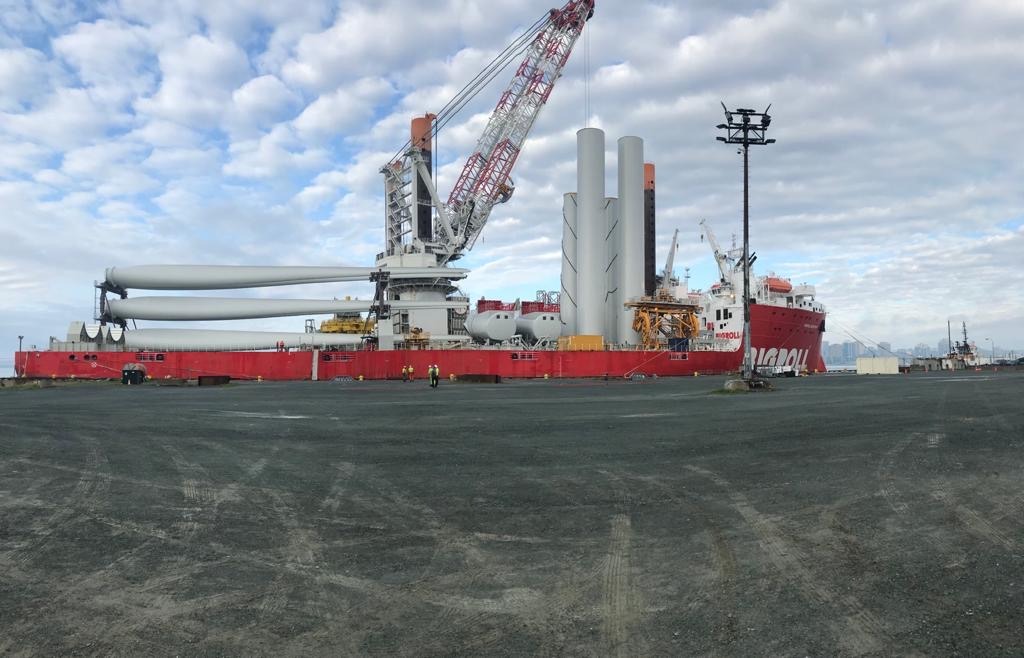
Photo Courtesy Dominion Energy
Rep. Veasey also noted the importance of messaging in advancing America’s energy interests: “We have to stop talking about energy like it’s ‘us’ versus ‘them.’” Rather than framing it as a moral issue, Americans need to “start talking about these things as advantages that all people in a larger universe of people in the United States can really get behind.”
Rep. Peters also highlighted how essential it is for industry experts to communicate with people about the issues at hand: “You’ve got to educate people about what’s happening on the ground, and you’ve got to also educate people about the erosion behind the scenes of confidence in the United States. You’ve got to talk to them about what’s going to happen with energy costs.” At the same time, it is equally crucial for constituents to communicate with their representatives about their concerns: “Don’t be shy about telling them what you’re worried about. Whether it’s job creation costs, AI, you all have information that members of Congress and senators need. So, it is really important that you’re here. It’s really important that you talk to them and educate them. You are the expert witnesses of your own experience.”