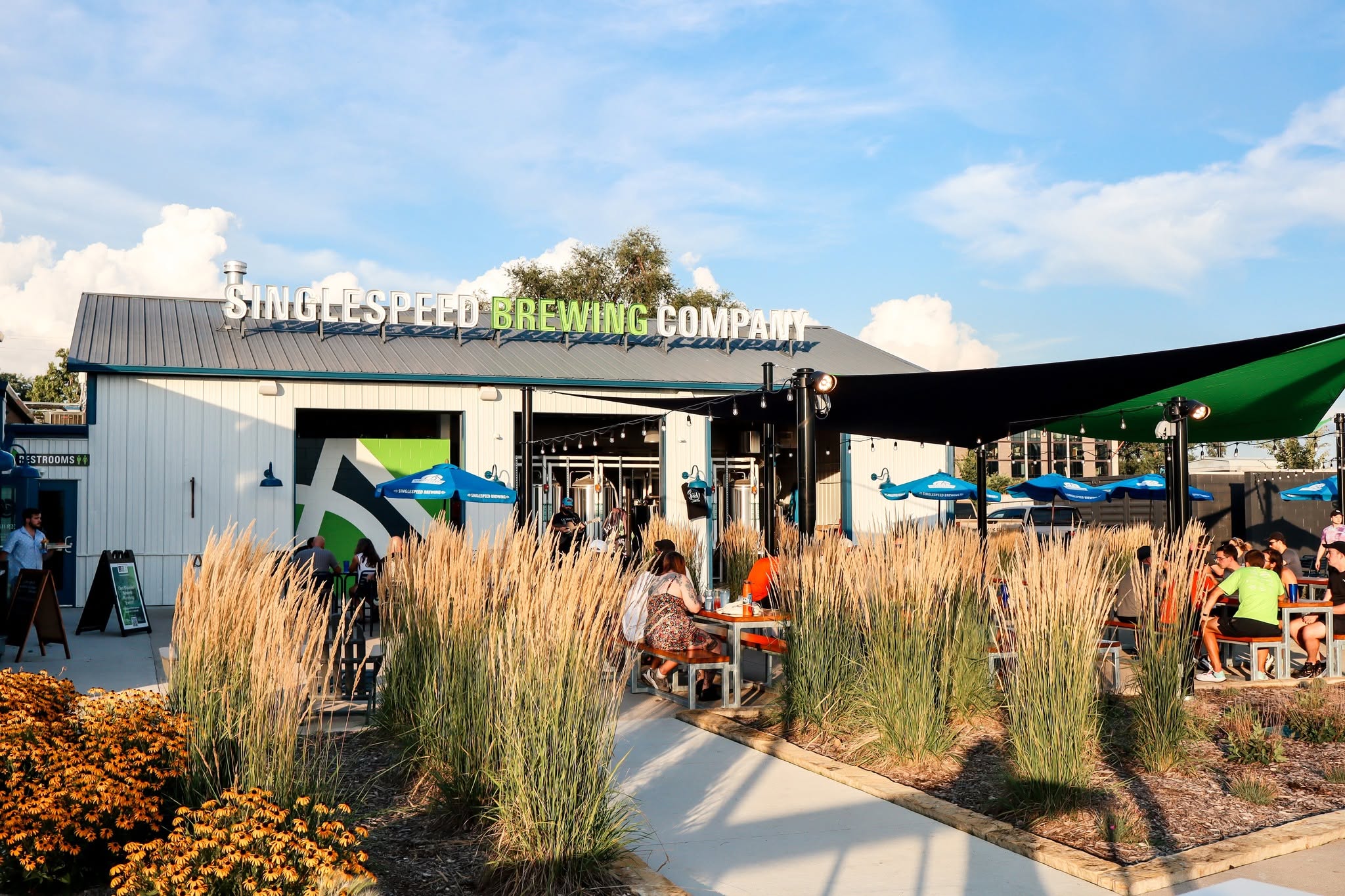
When SingleSpeed Brewing Co. opened its taproom in a former Wonder Bread bakery in Waterloo, Iowa, some of the first visitors already knew the building well. Former bakery employees stopped in to look around, and Rachel Beck, then the brewery’s sustainability coordinator, said that “they recognized their own workstations just from the spots in the floor, or they recognized some brick wall that they used to stand by. And it’s just really cool to see how much of the history of the building is still retained.”
The bakery operated from 1927 until 2012, when it closed during the Hostess bankruptcy. Afterward, it sat empty and was headed for demolition, but instead, today, the building houses a 20-barrel brewery, a beer hall, and a dining room. Since January 2026, it has also served as the shared production home of three Iowa beer brands.
Getting there took a series of practical choices: reuse a building instead of tearing it down, make it efficient enough to keep operating costs in check, and, when the beer market tightened, fill it with more beer.
SingleSpeed founder Dave Morgan developed the idea during Wednesday-night group bicycle rides, where he “brought up the rear. Plenty of time to think back there, apparently. With each ride, the vision for SingleSpeed became more clear.” He told BeerAdvocate, “Beer you could enjoy intrigued me, and it slowly broadened my horizons.”
Morgan founded SingleSpeed in 2012 as a Cedar Falls nanobrewery, and the original 1,700-square-foot space with its 3-barrel brewhouse still serves as the company’s research and development center.
Customer demand soon outpaced the small brewhouse. Meanwhile, in Waterloo, a citizen group called the Friends of the Waterloo Wonder Bread Building was looking for someone to take on the empty bakery. “They wanted to talk to me about potentially coming in, renovating the building, and using all or part of it for a brewery,” Morgan told KCRG.
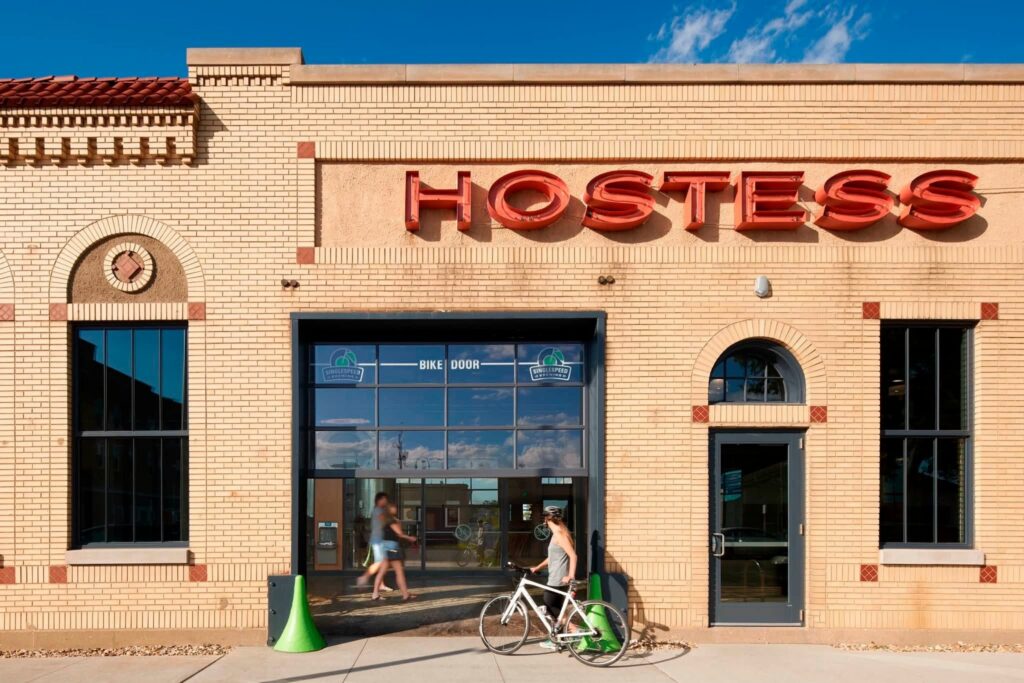
Photo Courtesy The TapRoom at WonderBread
The City of Waterloo donated the building and $160,000 to the company and agreed to rebate 70 percent of its property taxes for 15 years. In return, the brewery committed to renovate the property and maintain at least $3 million in assessed value. Federal historic rehabilitation tax credits covered 20 percent of qualifying repair costs, and a state program added another 25 percent.
Beck told the Environmental and Energy Study Institute (EESI), “I know that adding the National Park Service and the State Historic Preservation Society to a construction project didn’t necessarily simplify things. But at the end of the day, it was ultimately a better product, and the funding provided a lot for us to properly preserve the history of the building, while also creating a really awesome brewery and restaurant inside the building.”
More than 75 percent of the original building stayed in place, according to 1000 Friends of Iowa, which honored the project in 2017. Wood salvaged from the building lines the walls and bar fronts, and most of the original wood floors were resurfaced rather than replaced. The bakery’s old proofing doors even serve as restroom stall doors.
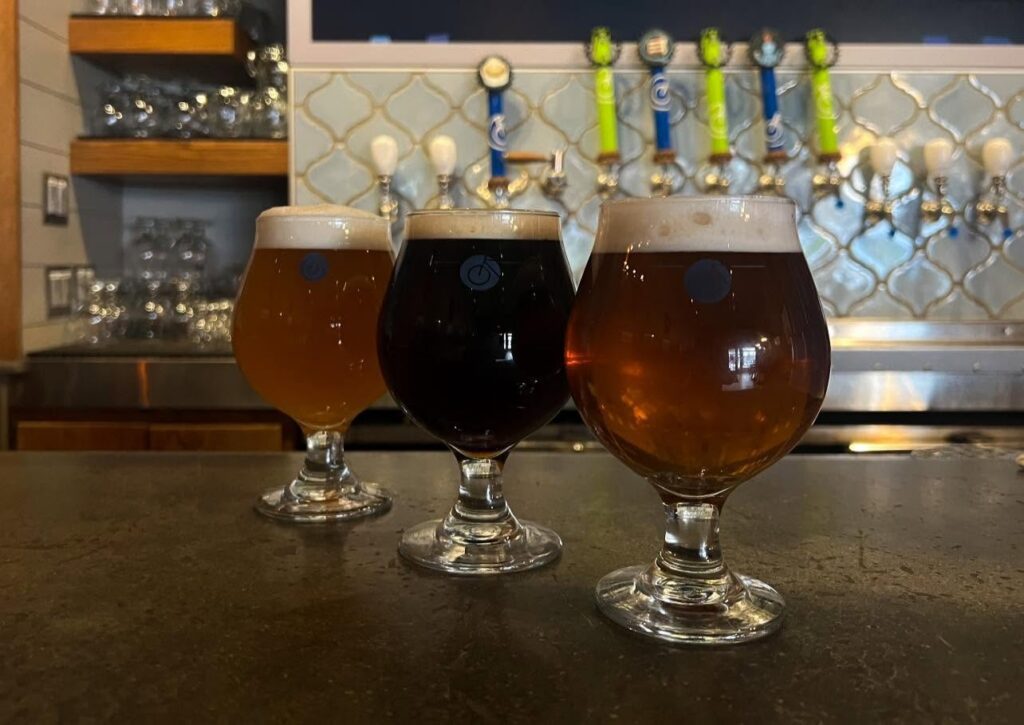
Photo Courtesy The TapRoom at WonderBread
From the start, SingleSpeed pursued Leadership in Energy and Environmental Design (LEED) certification, the company says, even though sustainable design and historic preservation “can at times be in conflict with one another.” The company brought in LEED, energy, and preservation experts to plan a restoration that met federal historic standards while cutting water and energy use.
The roof shows the tradeoff. Historic preservation rules limited how many solar panels SingleSpeed could install, according to a case study by the Iowa Waste Reduction Center (IWRC). “If we had a bigger roof we would have more solar panels,” the company says of the array of roughly 100 kilowatts that it installed in 2016, “but like many, we make do with what we have.”
The panels cover nearly all of the power used for brewing. Brewing accounts for about 16 percent of the building’s daily energy use, so the array offsets roughly 16 percent of the total, the IWRC case study found. On strong summer days, the brewery has occasionally sold surplus power back to the grid.
The rest of the savings come from upgrades any business owner would recognize. SingleSpeed credits variable-speed drives on motors and pumps, LED lighting, motion sensors and timers, and abundant natural light. The building was projected to perform 32 percent better than the energy code, and it earned LEED Gold in October 2017. “Watch us as we continue striving to lower our reliance on any non-renewable energy source,” the company urged consumers.
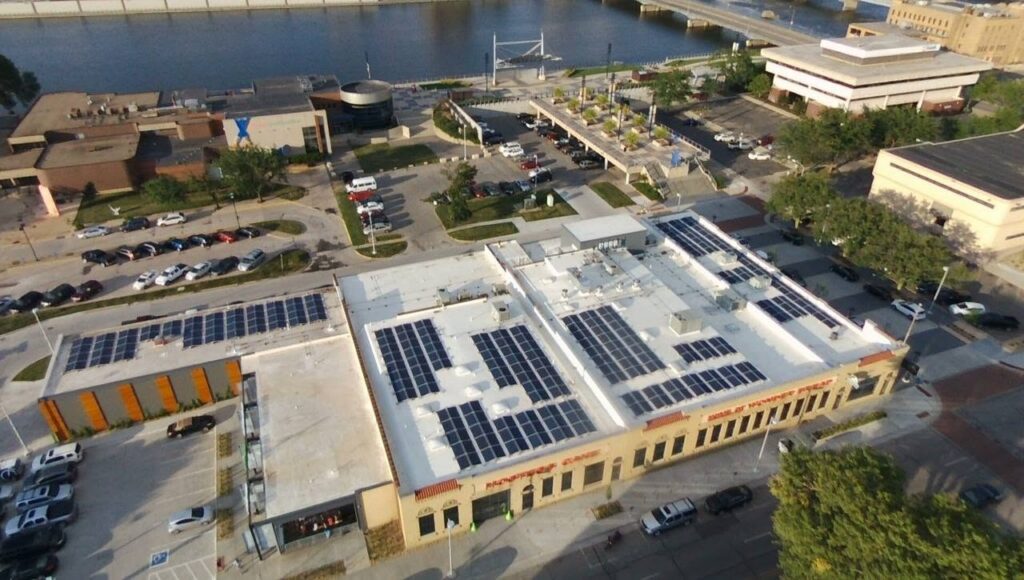
Photo Courtesy The TapRoom at WonderBread
SingleSpeed also helped shape a statewide program. When the IWRC launched its Iowa Green Brewery Certification, SingleSpeed’s Cedar Falls brewery became the first brewery certified, at the silver level. The Waterloo brewery then earned the program’s first platinum rating. Morgan said the center’s guidance “allowed us to increase energy efficiencies in a few areas as well as formulate an improved plan for landfill diversion for solid waste.”
The brewery composts all of its kitchen and post-consumer food waste and sends spent grain to a local farmer for cattle feed. The Waterloo building reserves two parking spaces for carpool vehicles and two for low-emitting vehicles. It also offers parking for 60 bikes, 46 outside and 14 inside, plus a shower for employees who ride to work and even hosts “Pint Night Rides” to support local non-profit organizations, which it first launched in 2017 in partnership with Cedar Falls’ Bike Tech.
In July 2023, SingleSpeed opened a third taproom in Des Moines, in the former Earl’s Tire building. Like the Waterloo bakery, the site got a second life, as a former auto repair shop redeveloped into a restaurant and brewery.
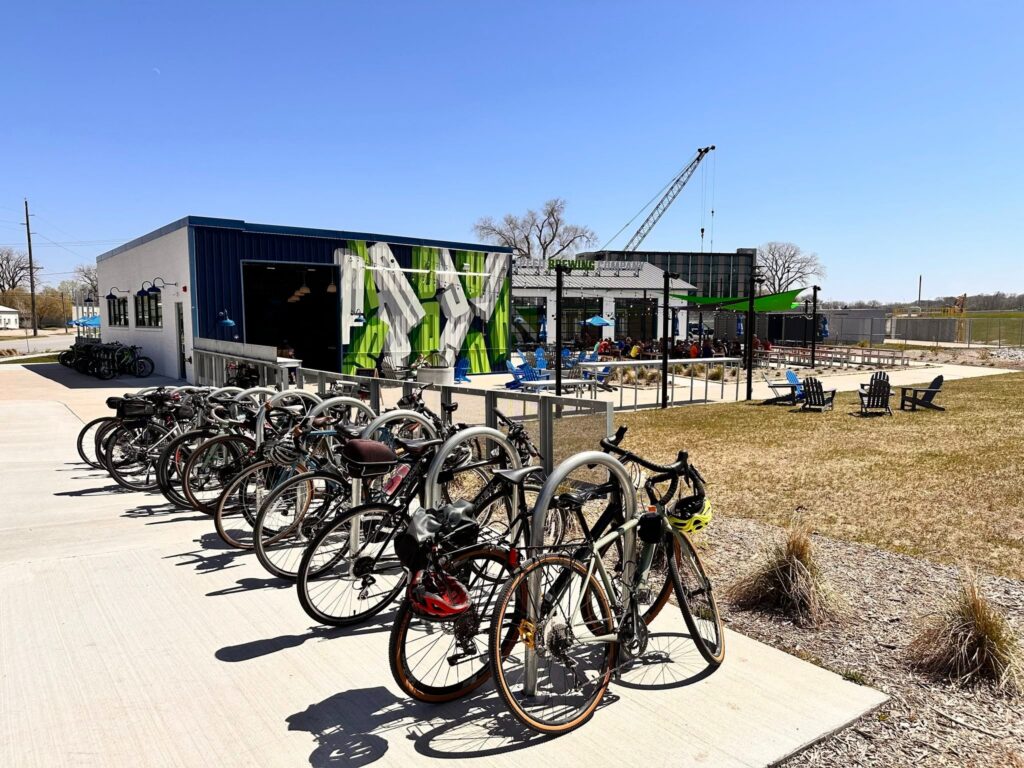
Photo Courtesy The TapRoom at WonderBread
By 2025, the Brewers Association, a national craft brewing trade group, tracked 268 brewery openings and 434 closings.
In October 2025, SingleSpeed announced that Backpocket Brewing and Peace Tree Brewing would move their production into the Waterloo building. The combined operation, called The Brewery at WonderBread, opened in January 2026. Crews raised the roof to fit Backpocket’s 100-barrel tanks, which needed 4.5 more feet of headroom, and the three brands now share 14,000 barrels of capacity. The city backed the expansion with a $750,000 grant and five years of tax rebates.
That capacity figure has a history. In October 2016, before the Waterloo taproom opened, BeerAdvocate reported that the new facility could expand to as much as 14,000 barrels a year.
“We can be strongest and have the brightest future if we fully join forces, combine into one facility and bring the best people from their team onto our team,” Morgan told The Gazette.
“This is a win for Waterloo, for Iowa craft beer, and for every fan who has supported our breweries along the way. By bringing these teams together at our WonderBread facility, we’re building a destination that showcases the best of Iowa beer and sets the stage for future innovation,” he said to KCRG.
The merger kept head brewers, operations staff, and marketing staff from both SingleSpeed and Backpocket, so each brand holds on to its own identity. For Morgan, the old bakery is now a place to plan ahead. “We see the future, and we’re trying to be on the front side of it,” he said. “And we think we are.”
Photo Courtesy The TapRoom at WonderBread