In the summer of 2017, while his oldest son was out on a tractor, Glen Mast explained to The Washington Post why so many of his Amish neighbors near Kalona, Iowa, had gone organic. “The Amish are more inclined to doing things naturally,” Mast said. “We have large families, and we have a close connection to the soil.” Organic prices keep those small farms profitable and their families on the land.
That connection underpins Kalona SuperNatural, an organic dairy brand that sources milk from about 60 family farms, each with herds averaging about 40 cows. Most of the farms sit near Kalona, and most have been in Amish and Mennonite hands for generations.
Farms that size are getting harder to find. The U.S. Department of Agriculture’s (USDA) National Agricultural Statistics Service counted 24,811 dairy farms licensed to sell milk in 2024, down from 26,245 the year before, and Iowa lost 45 licensed dairy herds that year alone. Progressive Dairy reported that the national count has fallen about 45% since 2014.
Organic farming took root around Kalona long before the brand existed. More than two decades before 2017, Amish dairy farmer Eldon T. Miller began hosting meetings in his basement to share information about organic farming, and the approach gradually caught on locally. By 2017, more than 90 USDA-certified organic operations sat within 10 miles of town. “This is our living and our way of life,” Miller, then 71, told the Post.
The farmers also had to solve a practical problem. Amish families do not work on Sundays, and a milk truck that comes every other day would arrive on a Sunday twice a month, the Oneota Community Food Co-op explained after a 2015 visit. So, the community pooled its own money to build a creamery that could work on its schedule.
“They just feel strongly about that from a family and a cultural standpoint. So, they came together, they contributed money, and we started with Farmers Creamery,” Bill Evans said in a 2017 interview with SmartBrief. Evans, whose background is in finance and accounting, first got involved to help with the money. Evans founded Kalona Organics in 2005 to sell what Farmers Creamery produced, and the farmers kept their stake: in 2007, 29 Amish and Mennonite dairy producers held a majority share of the creamery. Perry Yoder, an Old Order Amish farmer with 34 Holsteins and 5,000 laying hens at the time, described the appeal to the Des Moines Register: “We can pool our products and they’re responsible for the marketing.”
When the company celebrated its 20th anniversary with a farm-to-table dinner in Iowa City in August 2025, Evans, now its chief executive, told the Corridor Business Journal, “Today, we’re proud to continue supporting the small family farms that make our mission possible.”
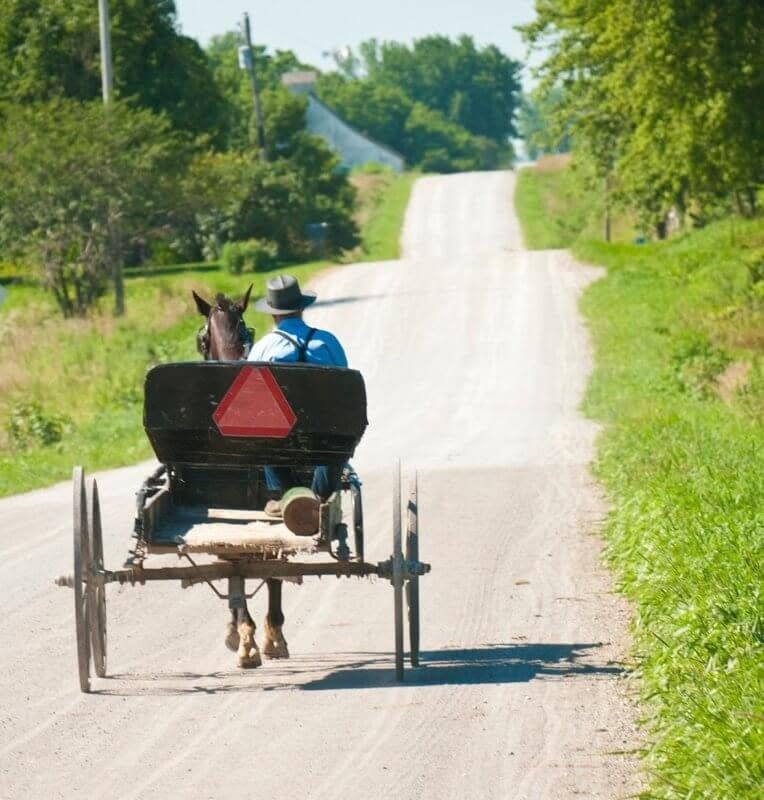
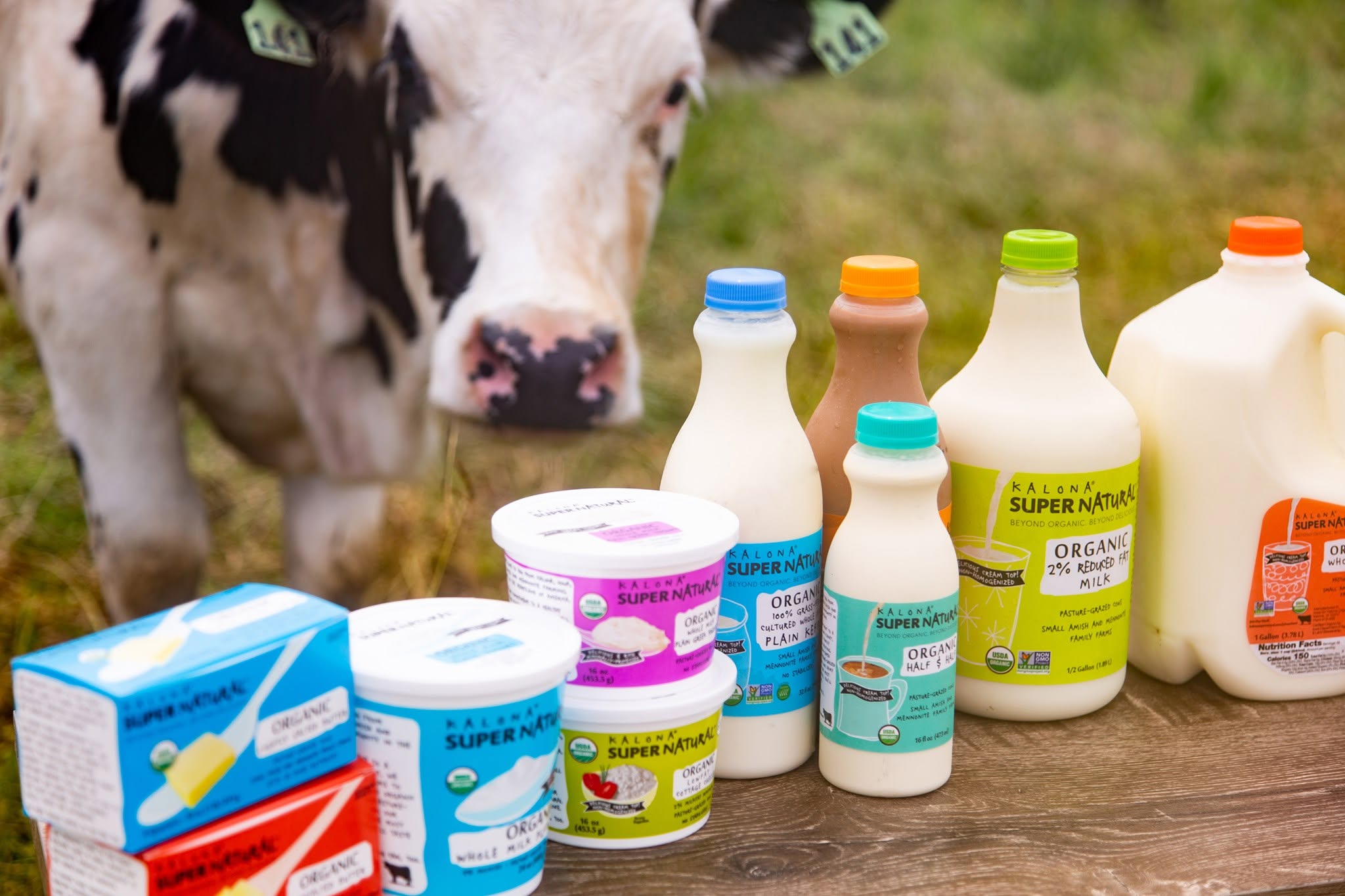
Photo Courtesy Kalona SuperNatural Dairy – Organic, Grass-fed, Regenerative Family Farms
On these farms, the cows harvest most of their own feed. “Our herd is 100% grass-fed,” farmer David Miller told the company in 2021. “Our cows graze on pasture for as much of the year as possible, and in the winter they eat the same forage that we’ve baled up from our farm.”
Federal organic rules require dairy cows to graze for at least 120 days a year and to get at least 30% of their dry matter intake from grazing during that season. Kalona SuperNatural says its farmers “go beyond this organic standard,” continuing to feed their cows organic grasses, forage and vegetables even in the winter, and that its farms use no genetically modified organisms (GMOs), antibiotics, pesticides, herbicides, synthetic fertilizers or growth hormones.
Phil Forbes, the company’s senior director of supply chain, has spent 35 years in organic production. He described one Amish farmer who works about 120 acres with horses, and therefore, “must care for his fields and animals in such a way that the sustainability of the system is paramount. He can’t afford to abuse his animals or fields. He also must do this in a very, VERY cost-effective way.” Forbes argued that “when soil biology is prioritized, costs are lowered and the growing system is more sustainable. More resilient. Better able to withstand the shocks of drought, deluge, wind, pests, weeds, etc.”
The company backs that up with money. “We do pay our farmers extra for their product,” managing partner Joe Miller said as part of a company interview series. “We want to support them with a living wage. They need to be awarded for the product they make.” He added that the company hosts several trainings a year for its farmers on good practices, without trying to force standardization. “We give them guidelines,” he explained, rather than “trying to create a mega farm out of a bunch of small farms.”
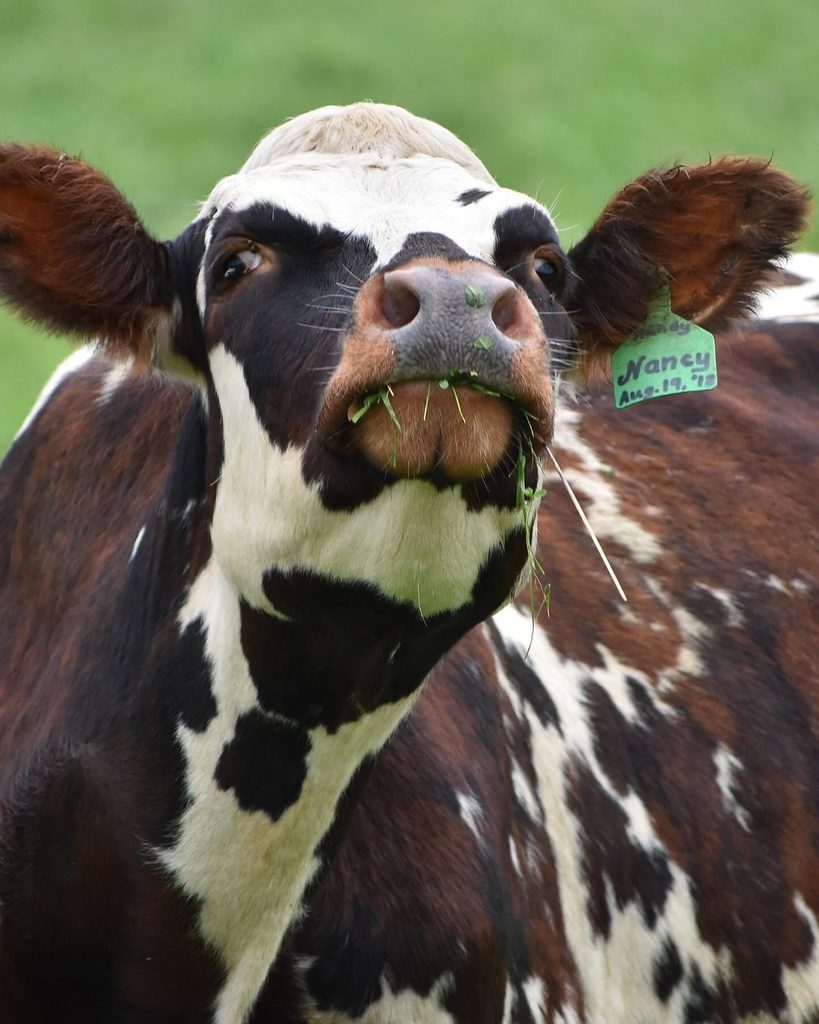
Photo Courtesy Kalona SuperNatural Dairy – Organic, Grass-fed, Regenerative Family Farms
Kalona SuperNatural wanted proof that those pastures were improving. In early 2023, the company announced that Land to Market had verified 42 of its farms as regenerative, using a Savory Institute protocol that tracks topsoil, water, air, and biodiversity. “Many of our farms have used organic and regenerative farming methods for decades,” Joe Miller said in the announcement. “We don’t just want to sell more products. We want consumers to learn how regenerative farming is good for cows, farms, their families, and our planet.”
The monitoring continued. Forbes is listed as executive director of the Kalona Regenerative Network, a nonprofit that received a $50,000 grant in 2024 from the USDA’s Sustainable Agriculture Research and Education (SARE) program. The project’s final report found that all 36 farms monitored in 2024 and 2025, covering 1,767 acres, were rated as regenerating, and that 77% were improving. Over that time, they had benefitted from Kalona Regenerative Network-hosted presentations, farm walks and tours, and webinars. Their overall Ecological Health Index score rose from 213 to 277 year over year, even though the 2025 growing season ran hotter and drier than normal.
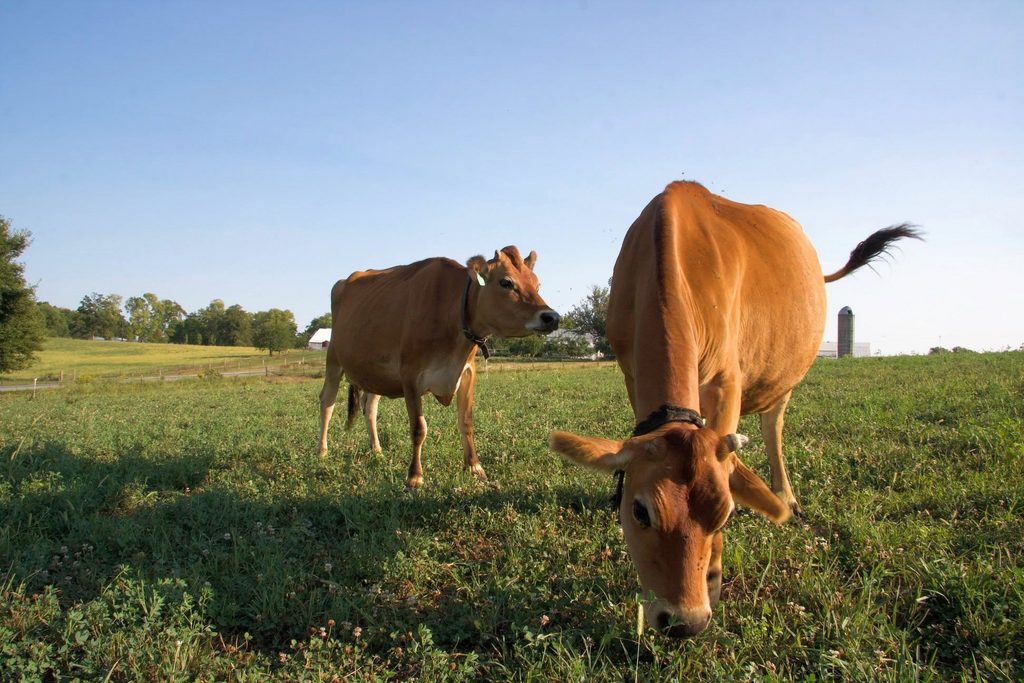
Photo Courtesy Kalona SuperNatural Dairy – Organic, Grass-fed, Regenerative Family Farms
Because the cows live on grass, the seasons set the supply. Grass growth after winter results in more milk. In the spring of 2025, as Iowa pastures surged, Phil Forbes said, “This year we’re flushing pretty hard. Lots of milk this year. Lots.”
The opposite happened in August 2025: as cows sought “comfort in the cooler barn rather than spending their days grazing under the scorching Iowa sun,” milk supply fell, and Kalona SuperNatural products ran short, according to the company. However, leadership decided not to use grain to artificially push yields back up. “We could easily supplement our cows’ diets with grain to maintain higher yields, but that would compromise the very integrity that makes our products special,” the company wrote. “Every decision we make comes back to this core principle: we stay true to our grass-fed commitment even when it means accepting lower production during difficult periods.”
The milk gets the same light touch. Kalona SuperNatural heats its fluid milk slowly to about 145 degrees Fahrenheit, holds it there for at least 30 minutes, and skips homogenization, so the cream rises to the top, “a sign of dairy in its most natural state.” The company also bought and renovated buildings from a former cheese company, opening Kalona Creamery, where it makes cheese curds, fudge and ice cream in view of visitors, with just as much attentiveness and care.
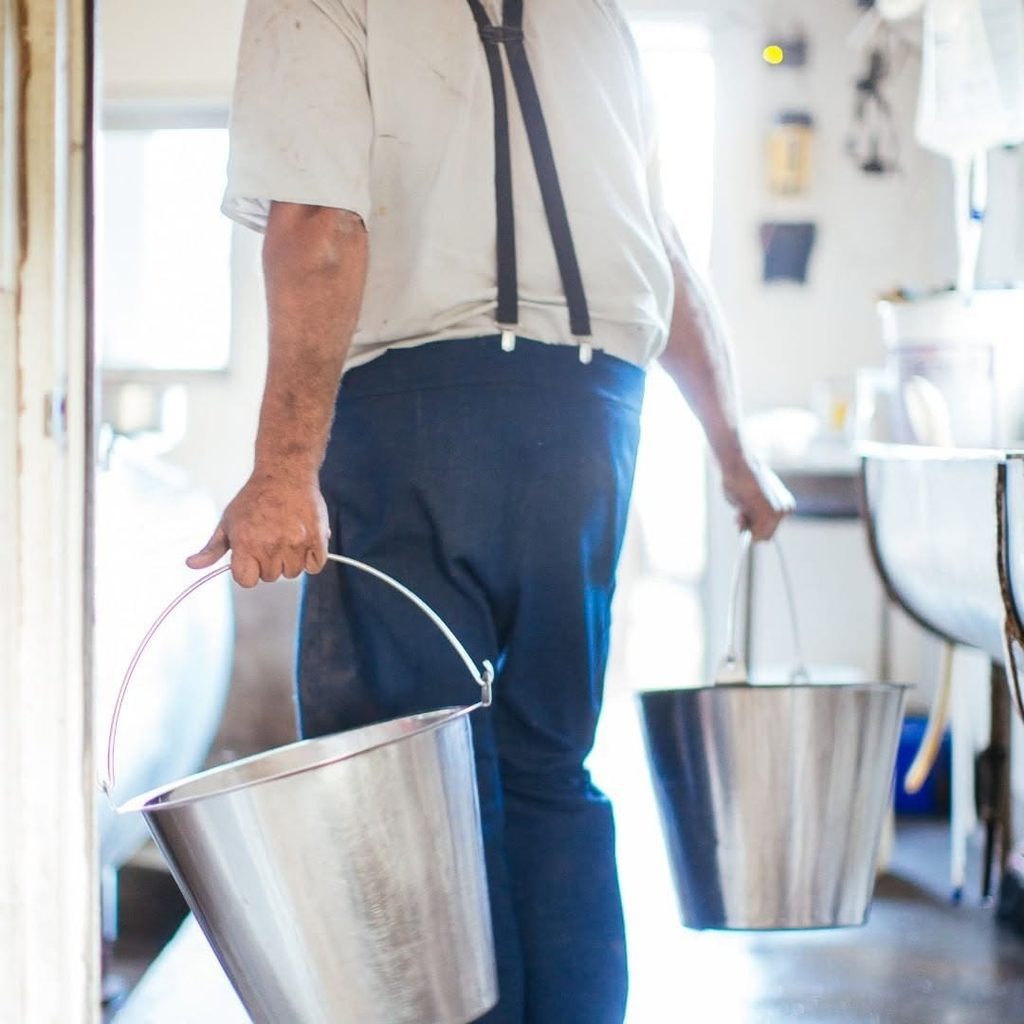
Photo Courtesy Kalona SuperNatural Dairy – Organic, Grass-fed, Regenerative Family Farms
Customers have followed. Emily Baxter started buying the milk for her toddler more than a decade ago, spent eight years demonstrating it in grocery stores and introducing it to shoppers, and now serves as the company’s director of marketing. Michelle, a homeschooling mother in Minnesota, said she appreciated being able to “get such great, healthy dairy for your family that really isn’t any more expensive than a lot of what’s already out there.” Plus, her son “genuinely enjoys Kalona SuperNatural’s chocolate milk. As a mom, knowing that he’s getting something nutritious that he actually wants to drink is such a win.”
Other buyers point to where the milk comes from. “I like supporting small American regenerative farms,” Jill, a Denver-based content creator, said. Garett Fogel, a data scientist in southwestern Missouri, put it another way: “By buying Kalona SuperNatural products, I am voting with my dollars for those things.”
The company says it sells its products in all 50 states. In January 2026, Harmons grocery stores across Utah began carrying its milk, cottage cheese, and chocolate milk.
For Forbes, the clearest sign of success is who is running the farms. “In my 18 years, I am now talking and dealing with the second generation,” he said in 2025. On farm visits, he makes a point of including them. “I’ll talk to not just the dad and mom, talk to the kids,” Forbes said. “Because you want those kids to continue this way of dairy farming.” He doesn’t doubt they will: “They understand deeply why their parents chose this path—the benefits for the animals, the soil, and the quality of the milk.”
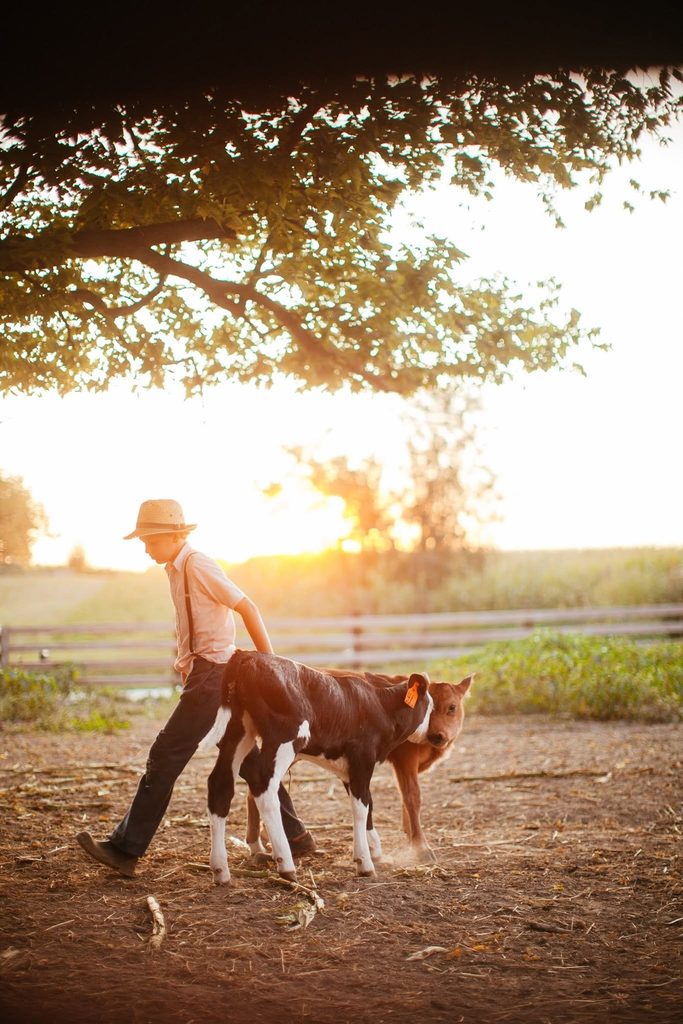
Photo Courtesy Kalona SuperNatural Dairy – Organic, Grass-fed, Regenerative Family Farms