

Confident in the company he had built, Peter Troast let strangers watch his household’s electric meter. As he recalled in a 2011 interview with GreenBuildingAdvisor, his company, Energy Circle, put his family’s home online one Earth Day so anyone could see its electricity use in real time. “We figured that was the ultimate statement—we were willing to go public with it,” he described. They were a typical household of gadget lovers, he added: “A family of four, two kids, more iPods than you can shake a stick at, there are multiple computers, a home office—we are not light users of electricity.” Since that Earth Day, he reported, the family had cut its electricity use by 29%.
Troast founded Energy Circle in 2008 in Maine. He first got the idea for Energy Circle when an energy auditor came to assess his own home, an experience that led him to sign up for a building science class. Energy Circle originally served homeowners directly, offering information and advice along with products such as smart strips and programmable thermostats.
Over time, Troast realized information alone could not fix a house. “Nothing happens in a house unless a contractor goes into a house and does some work,” he said on The Heat Pump Podcast in 2024. He explained that Energy Circle first tried selling contractors a software tool for about $25 a month, but most contractors said they needed more help. Energy Circle became essentially “the marketing department of a contractor.” By 2012, Energy Circle offered contractors a complete marketing program called Energy Circle Pro, with professionally designed websites, home-performance content, pay-per-click advertising support, and email marketing and social media support.
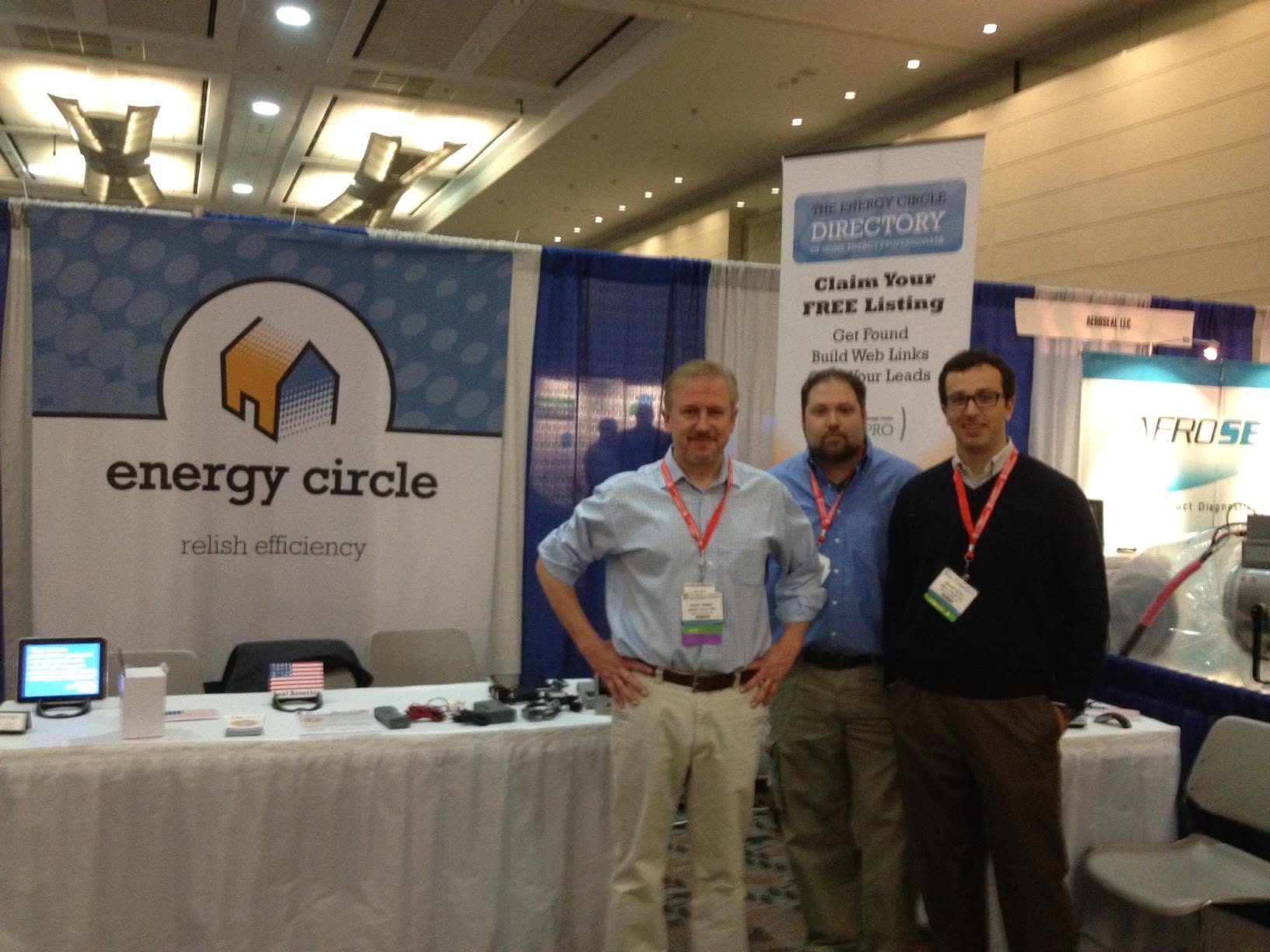
Photo Courtesy Energy Circle
Troast also put building science to work on a piece of Maine history. A 2012 post by Energy Vanguard credited him with championing a deep energy retrofit of a historic building in Freeport. That building, the Mallett House, is one of several cottages built in 1886 for workers at the local shoe factory, and it now serves as a community center and office space, according to Building Science Corporation, which guided the design team. After negotiating with the local historical society, the team added insulation to the inside of the front of the house, leaving its historic exterior details intact. After the work was done, the building measured 0.68 air changes per hour under a standard pressure test, a result Building Science Corporation called “impressive even for high-performance new construction.”
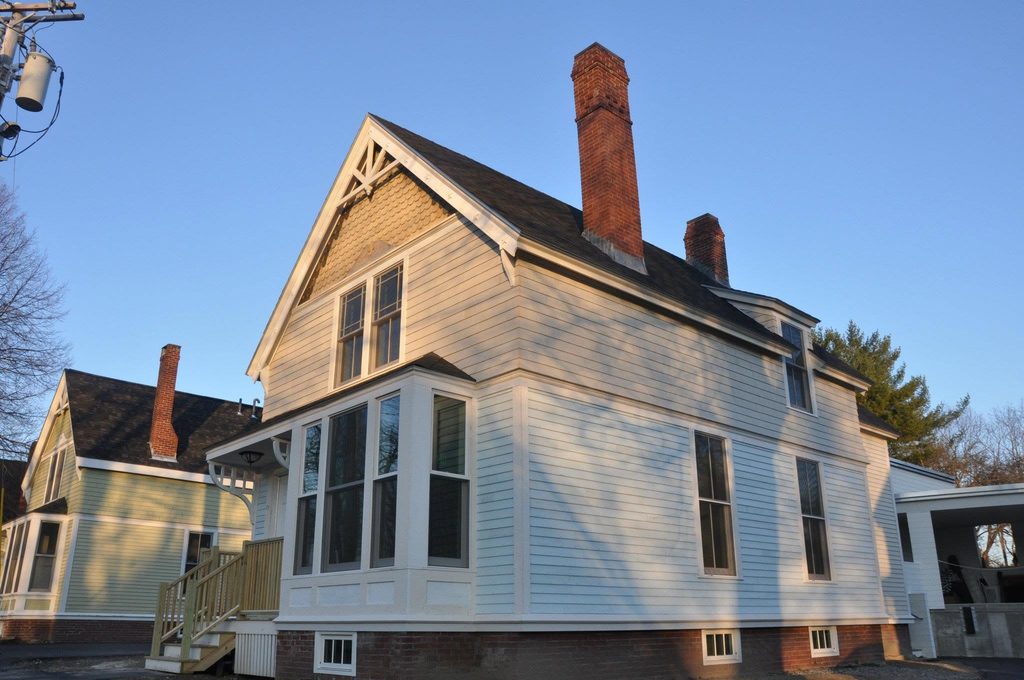
Photo Courtesy Mallett Deep Energy Retrofit, 57 Depot St, Freeport, ME
Today, Energy Circle is a Certified B Corp, and it works exclusively for what it calls the better building industry. The company says it serves heating and cooling contractors, insulation and home performance contractors, and solar installers, as well as trade associations, utilities, efficiency programs, and manufacturers. The company explains that its purpose is “to champion healthier, safer, more energy-efficient buildings by supporting the people, companies, and associations doing the work.”
The company’s services include strategy, search engine optimization and generative engine optimization marketing, email marketing, paid search and social media advertising, and video production. Its in-house web development team hosts and supports hundreds of contractors’ websites, the company reports. Every Energy Circle employee earns a Building Science Principles Certificate of Knowledge from the Building Performance Institute (BPI), so the full team “understands your business and how to authentically market and promote your services.”
Energy Circle also produces online courses, in-person workshops, and one-on-one coaching for programs that need skilled workers, and it notes that “workforce development and contractor training are some of the biggest obstacles” facing these industries. Troast has spoken at industry conferences for more than a decade, and he hosts The High Performance Edge, a podcast for contractors who want to turn technical skill into stronger and more profitable businesses.
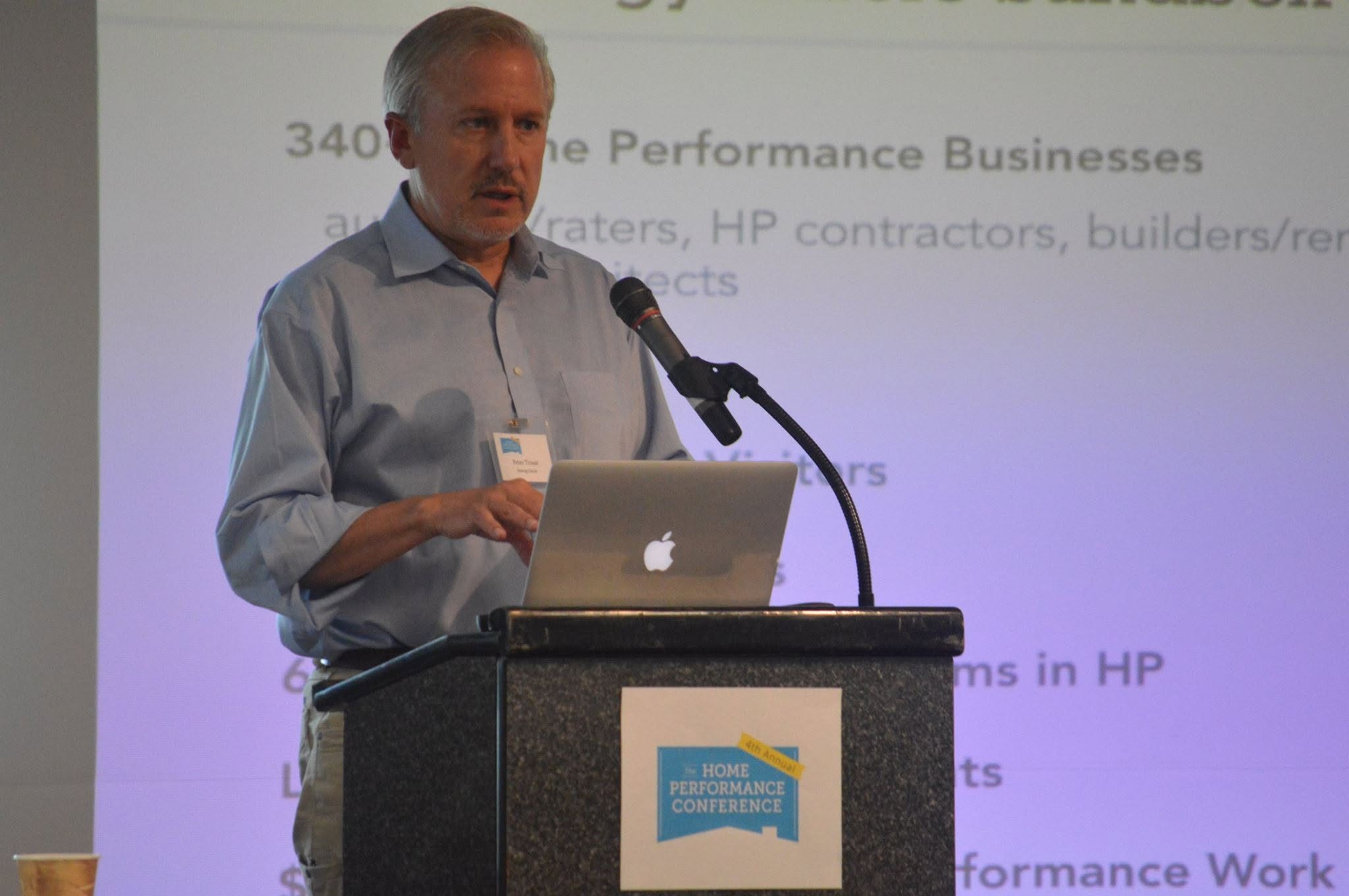
Photo Courtesy Energy Circle
Troast built the firm for owners who are stretched thin. “In this modern era, the totality of what you need to be good at to be a good small business is very difficult,” he told the Grow Maine podcast in 2019. Energy Circle has never required clients to sign contracts, Troast said in 2024, because “if your agency is not performing for you, you should not be obligated to continue to pay them money.” Marketing, he added, is “a critical investment by contractors. It has to work.”
He measures that work through his clients. In the 2019 interview, Troast described a contractor who was under $1 million in sales when the two began working together and, five years later, called to say, “I just had my first million dollar month.” At CARJON Air Conditioning & Heating, a family-owned company in Smithfield, Rhode Island, website leads averaged 2.6 a day after its new Energy Circle site launched, compared with 0.7 before. CARJON Vice President of Sales and Installation John DiMuccio Jr. wrote, “We received 92 web submissions in just over ONE month of site launch, more than a third of what we did in one whole year with our previous site.”
Energy Circle’s home state offers a vivid example of the demand its clients serve. Maine is the most heating oil-dependent state in the nation, with about half of all homes relying on oil as their primary heat source. In late September 2026, the average price of heating oil in Maine reached a record $6.02 per gallon. The governor’s office reported in March 2026 that installed heat pumps in Maine have doubled in three years to surpass 200,000.
Video Courtesy Energy Circle
The firm’s reach extends well beyond Maine, though. For the North American Insulation Manufacturers Association (NAIMA), Energy Circle built 25C Means Business, a program that gave insulation contractors free marketing tools to promote a federal tax credit for home efficiency upgrades. “Our research showed that contractors did not have the tools to talk to homeowners about the 25C tax credit. This campaign offers ready-made marketing content to help with that effort, and we’ve already seen hundreds of insulation contractors take advantage of these tools,” NAIMA CEO Curt Rich said. The program won the Content Marketing Institute’s 2025 Content Marketing Award for Best Content Marketing Program. By the time of that award, the program had delivered more than 8,000 pieces of customized content to 270 contractors in 45 states.
For Troast, the mission still comes back to houses and the people who fix them. “We need to fix a lot of buildings, and in the fixing of a lot of buildings, there is an enormous business opportunity,” he said. The founder who once let the world watch his family’s electric meter now helps contractors bring that work in the door.