

At the end of April, online comparison-shopping marketplace EnergySage released its semiannual Solar & Storage Marketplace Report. EnergySage vets installers and service providers before allowing them to join the marketplace, where shoppers can analyze and compare quotes for solar and energy efficiency products.
After analyzing quotes from the second half of 2024, the company found that, for the third consecutive six-month period, the median price of installing a solar system had decreased. At $2.50 per watt, it was also the lowest six-month median since EnergySage began tracking this data in 2014, when the median price was $3.75/W. $2.50/W is 33% lower than 2014’s median and 6.4% lower than the median in the first half of 2024. Additionally, the average highest quote per watt dropped below $3.00 per watt (W) for the first time since EnergySage started tracking this information, to $2.89/W. The average lowest quote per watt also hit its lowest level, at $2.41/W.
In the words of Emily Walker, EnergySage director of content and insights, “Heading into 2025, solar and battery prices had never been lower on the EnergySage Marketplace, and for homeowners, that means more affordable and accessible clean energy solutions.”
Looking solely at prices for solar, excluding storage, the median price was $2.65/W in the second half of 2024, compared to $2.80/W in the first half, representing a 5.4% decrease. EnergySage’s report attributes part of the price decline to the low costs of equipment, with Wood Mackenzie adding that in 2024, the price of solar panels dropped 30% year-over-year.
At the same time, solar panels are getting bigger and more energy-efficient. In the second half of 2023, only 1% of quotes featured solar panels with outputs exceeding 450 watts; by the second half of 2024, that percentage had increased to 33%. Walker elaborated, “As panel technologies improve, more homeowners are being offered higher-output systems—meaning fewer panels, more power, and a better return on investment.”

Photo Courtesy EnergySage
A similar trend can be seen for solar-plus-storage, where the median price was $2.40/W in the second half of 2024, compared to $2.59/W in the first half, representing a 7.3% decrease. This coincides with a trend of a skyrocketing number of solar projects with battery attachments, reaching an all-time high of 45% of national listings on EnergySage’s platform. Consumer interest in battery storage on EnergySage’s platform, meanwhile, rests at 73%, with Hawaii, Tennessee, Alabama, Indiana, and Georgia among the states displaying the most interest.
EnergySage attributed the price drop partially to the high demand for Tesla’s Powerwall 3, as the cost of its integrated hybrid inverter was factored separately into the storage pricing, measured in terms of cost per kilowatt-hour stored. Tesla was the most popular battery company on EnergySage’s marketplace, appearing in 63% of quotes, and was also the second-most popular inverter company. Equipment featuring Tesla inverters was also a constant among the lowest quotes.
Charlie Hadlow, EnergySage president and COO, explained, “Tesla’s emerging dominance in both storage and inverter quotes reflects the market’s appetite for integrated, all-in-one solutions. But as concerns around availability and brand sentiment surface, we’re watching closely to see whether this momentum holds or if consumer backlash will begin to shift installer and homeowner preferences.”
Meanwhile, quotes for battery storage systems also reached $999 per kilowatt-hour, another historic low on EnergySage’s platform.
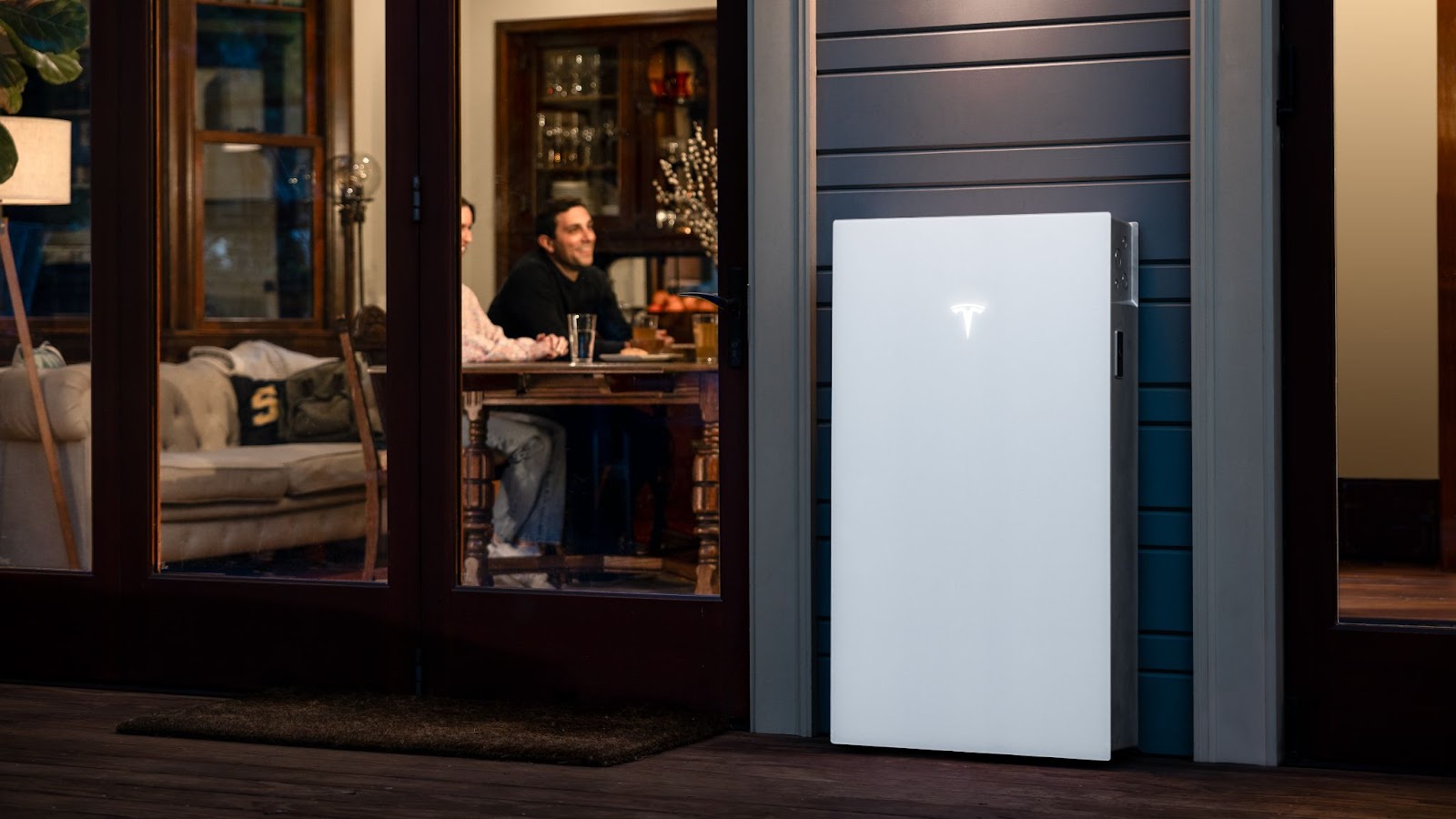
Photo Courtesy Tesla
Some of the most predominant states experiencing declines in solar prices included:
- Nevada, which saw its median price drop from $2.18/W in the first half of 2024 to $2.14/W in the second half
- Florida, which saw its median price drop from $2.20/W in the first half of 2024 to $2.08/W in the second half
- Texas, which saw its median price drop from $2.10/W in the first half of 2024 to $2.00/W in the second half
- Arizona, which saw its median price drop from $2.10/W in the first half of 2024 to $1.99/W in the second half
Both Nevada and Arizona now have prices below the national median. Arizona was a particular highlight, with significant amounts of sunshine and state incentives. It was the state with the lowest price, falling below $2/W for the first time. Its median price fell 5.2% from the first half of the year, even though it has consistently seen the lowest median quoted price for the past four years.
Additionally, Illinois has higher-than-average solar prices, but it still saw cost declines due to state incentives. The state saw its median price drop from $3.05/W in the first half of 2024 to $2.99/W in the second half.
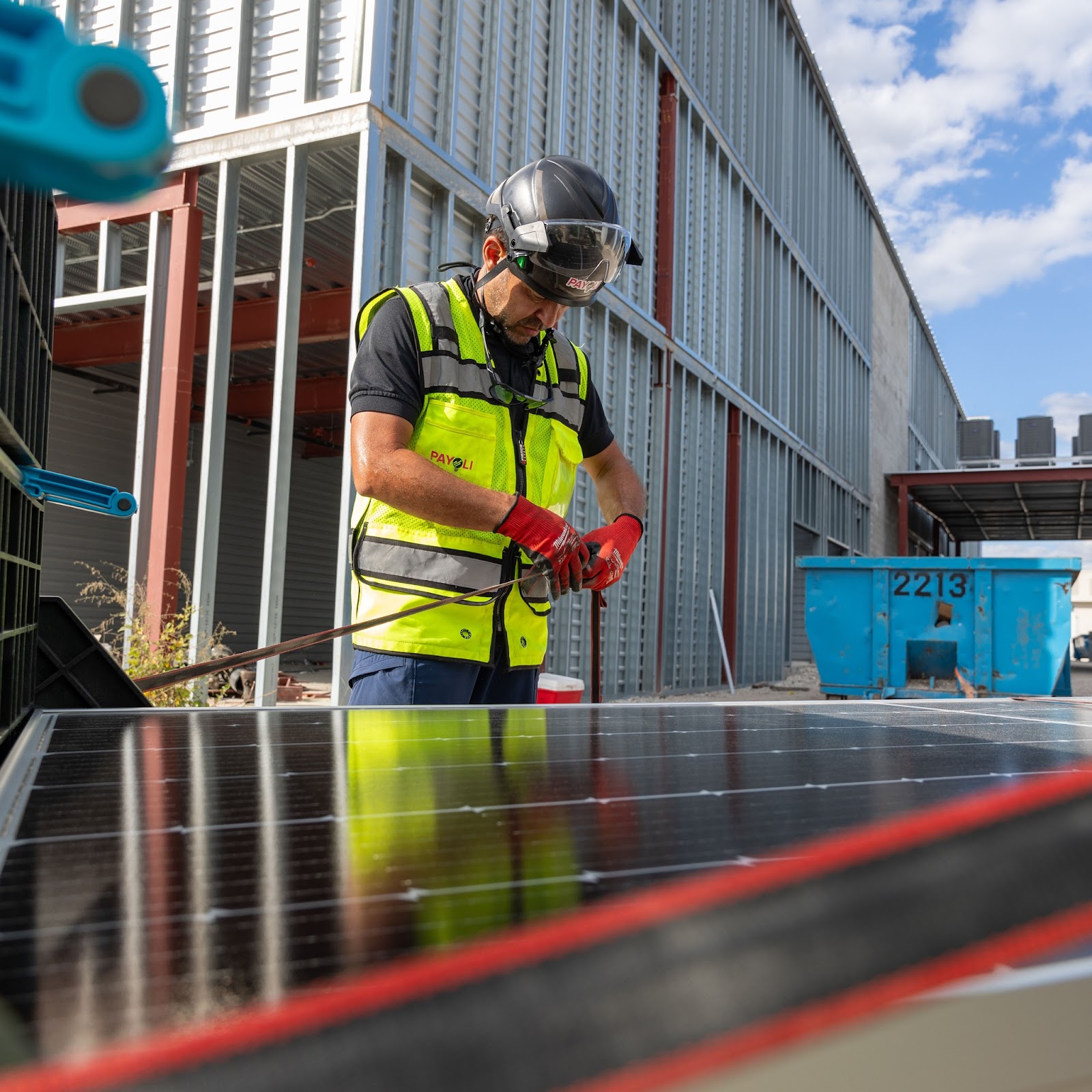
Photo Courtesy EnergySage
In a press release, Hadlow concluded, “The data in this report tells a broader story about the industry’s evolution. From the rise in storage adoption to the shift toward higher-efficiency equipment and lower costs, we’re seeing homeowners take greater control over their energy choices. EnergySage is here to help them power their way.”
The press release was clear, however, that the future of the solar industry is facing an uncertain future due to recent political changes. In a blog post, EnergySage explained, “Though solar prices have fallen for close to two years, dropping dramatically since EnergySage began tracking in 2014, changes in the political atmosphere could potentially reverse the trend in 2025.” Specifically, the combination of tariffs and the repeal of energy tax credits leaves the industry in a state of flux.
“We are tracking tariff-related solar panel stockpiling to see if it hinders U.S. solar technology growth in 2025,” the company wrote. Walker noted that the median of $2.50 per watt over the second half of 2024 “creates a compelling record-low benchmark to measure against as we begin to see the effects of shifting policies and tariffs take hold this year.”
EnergySage’s conclusion is clear: there’s no time like the present to adopt solar power. “Every day you wait to go solar, you’re putting money directly into your utility company’s pocket instead of your own,” the company wrote.