(Bloomberg) —
Moves in the US and Europe to pull back from electric cars hand Chinese automakers more opportunity to cement their lead in the transition away from internal combustion engines.
In two blows to the outlook for EVs, the European Commission in December abandoned its effective ban on combustion engine vehicles by 2035. A day earlier, Ford Motor Co. announced it would take $19.5 billion in charges tied to unwinding much of its EV strategy.
Those retreats create a gap that Chinese carmakers can fill, with companies like BYD Co. and Xiaomi Corp. making rapid advances with in-cabin technology, advanced driver-assistance systems and ultra-fast charging to further strengthen their position as leading producers of EVs.
“It’s really sinking in that the US or EU can’t catch up,” said Daniel Kollar, head of the automotive and mobility practice at consultancy Intralink Group.
Analysts at BloombergNEF last year forecast that global sales of battery-electric and plug-in hybrid cars will increase to 25.4 million vehicles in 2026, with China accounting for roughly two-thirds of the total.
The researcher’s outlook for the US is relatively bleak: It’s expecting plug-in car sales to plunge 30% in the final quarter of this year to the lowest since 2022. For next year, BNEF is projecting little or no growth due to the removal of federal tax credits for EV purchases and weakening of US fuel economy and emissions standards.
Europe is a key market for Chinese EV brands in search of growth and higher margins to offset a slowdown and long-running price war at home. While the backing away from the combustion engine ban and scaling back of incentives supporting EVs in the region could dent demand, Chinese cars still have room to maneuver, according to Yale Zhang, managing director of consultancy Automotive Foresight.
“It won’t have a direct impact,” Zhang said of the policy changes announced this week. Even with Europe’s tariffs, Chinese carmakers “have enough edge to compete.”
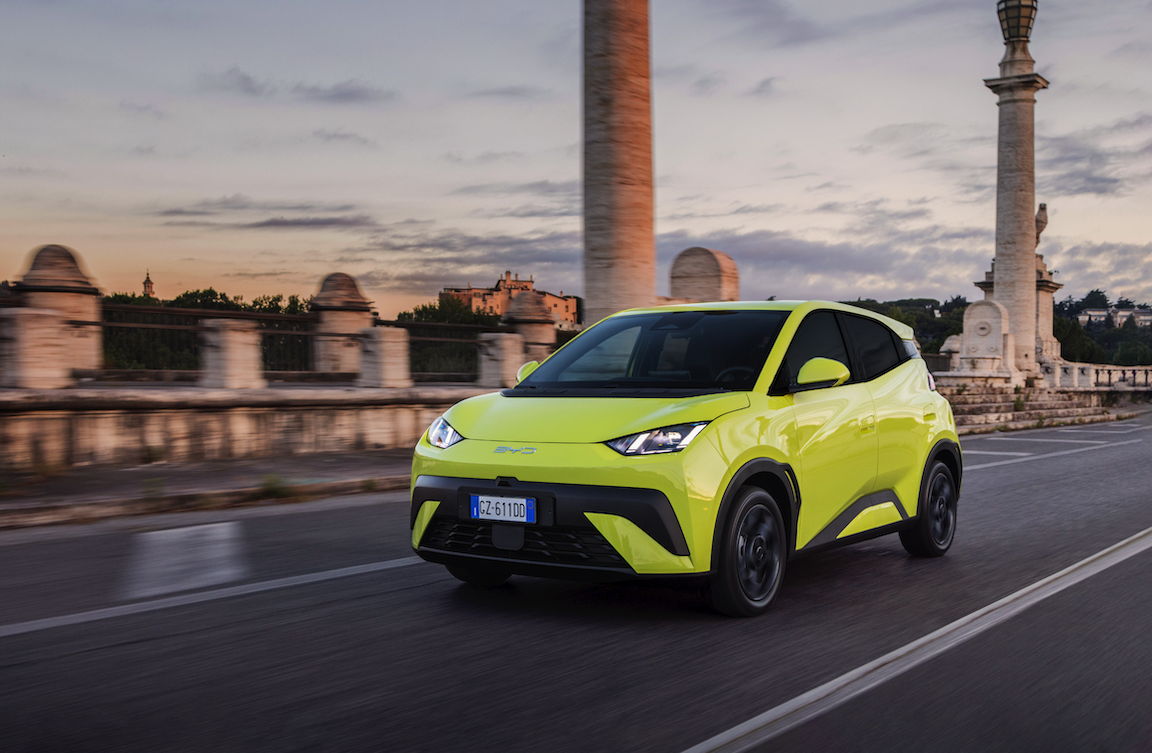
One of the main sticking points for drivers looking to make the switch to an electric car is price, an area where Chinese manufacturers have an advantage. BYD earlier this year launched the Dolphin Surf in Europe, a fully electric hatchback that sells for less than €23,000 ($27,000).
“There’s some real inefficiency in terms of European carmakers moving quickly and getting things done, and Chinese automakers going global shines a light on that,” said Colin McKerracher, BNEF’s head of clean transport.
The European Commission’s moves to dilute its ban on tailpipe emissions by 2035 shows a lack of will to do the “correct but difficult thing,” Zhang said. While it looks on the surface to be a positive move for European manufacturers, it will “inevitably lead to laziness and complacency.”
To be sure, Chinese EV makers are facing their own challenges, including slowing demand at home, intensifying competition and regulatory scrutiny. BYD’s total sales have fallen for three consecutive months, and the company is still producing one plug-in hybrid with a gas engine for every battery-only EV.
Chinese authorities are also reining in unreasonable price cuts and pressing carmakers to pay their suppliers faster, which could affect sales and cash flow.
While Chinese EVs have effectively been locked out of the US by punitive tariffs, they’re steadily making inroads in markets including South America, the Middle East and Southeast Asia. A lack of competitive models from European and US automakers risks ceding those markets to Chinese players.
“In an era where you have to move really fast on new tech and new competition, you have to be fit for the task,” McKerracher said.
© 2026 Bloomberg L.P.