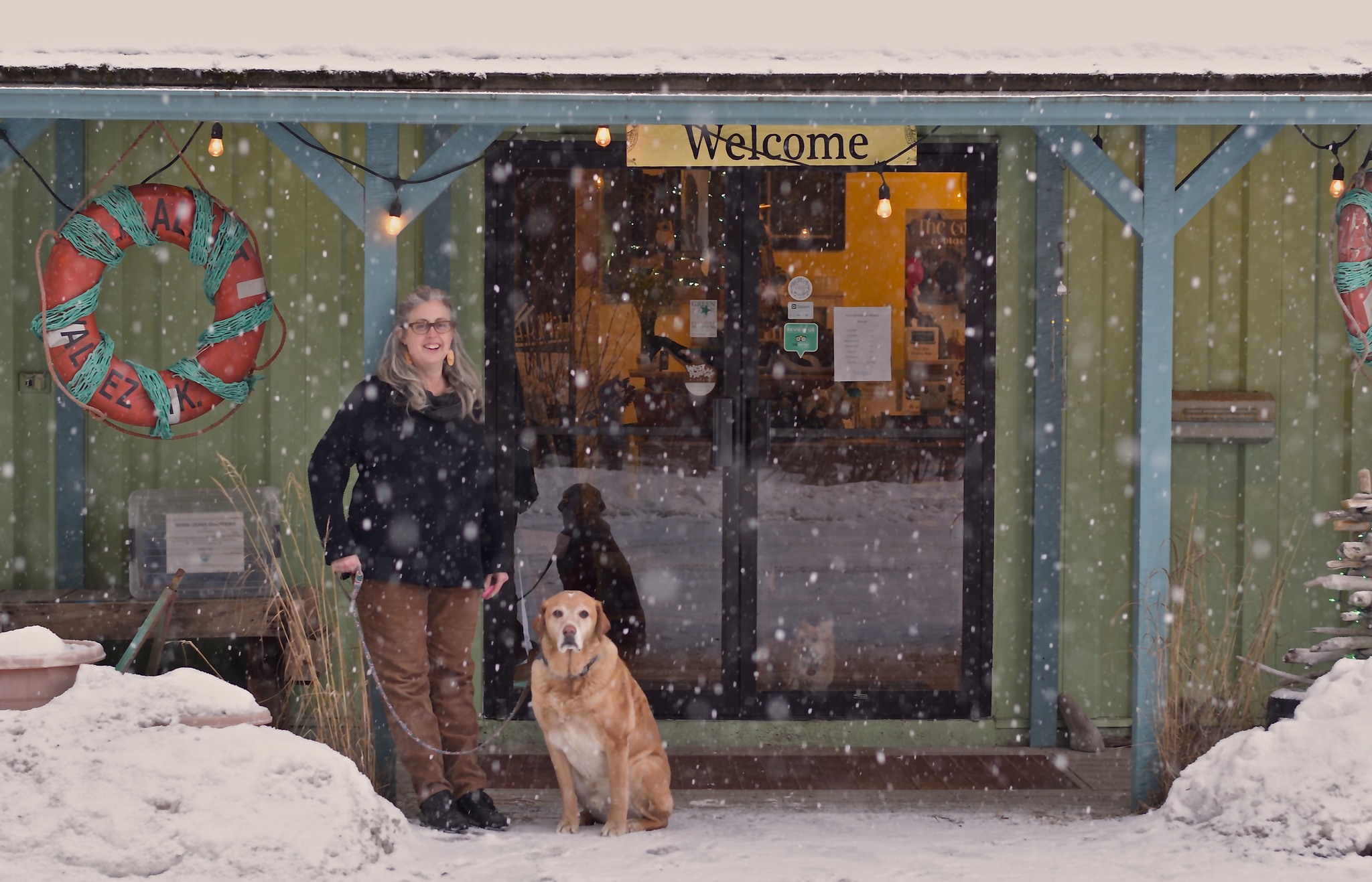
When Karen West set out to open her first store, Sustainable Wares, in Homer, Alaska, she chose a half-century-old metal structure on Ocean Drive that had once been Les and Bessie Crane’s Sporter Arms, a name longtime residents still recognized. West gave the storefront a fresh coat of paint, hung a sign cut from repurposed wood, and added an LED “open” sign made from old egg cartons. She also outfitted the inside, turning Bundt cake pans into light shades, a skateboard and snowboard into display shelves, and fishing poles into curtain rods. According to theHomer News, which profiled the shop when it opened in 2014, “the very building itself embodies the spirit of her product line.”
That product line had a simple idea behind it. “The idea of Sustainable Wares originated from wanting to change what I brought into my home and what I sent to the landfill. I learned about the concept of shopping consciously, to question purchases,” the company’s founder, Karen West, wrote. West wanted to buy well-made, low-waste, repairable goods, but she kept finding she could only get them online. She told the Homer News that everybody else was in the same position, and that the store “eventually evolved because of the need.” Her answer: a place in town where buying the durable thing, the refillable thing, the thing made down the road, would be as normal and as easy as any other errand.
West arrived at the idea with both an environmental and storefront experience. After graduating from the University of Maryland, Baltimore County in 2002 with a degree in environmental science and cartography, she moved to Alaska and began working with the Alaska Park Service. “I came to Homer and thought ‘I want to die here,’” she said. Before opening Sustainable Wares, she worked in retail at NOMAR and Spenard Builders Supply, and upon launching her first small-business venture, she recalled it as “quite a learning process.”
What she built is a curated mix of offerings. At the opening, per the Homer News, the shelves held hats and gloves made from used sweaters, bamboo and steel drinking straws, and bowls and jewelry made from vinyl records. The Alchemy bags, belts, and wallets were cut from recycled tire inner tubes, and the Paws West pet line included dog beds stuffed with recycled plastic bottles. West told the paper she was trying to stock what the town was missing rather than what other shops already carried, as she described, “See what’s lacking in town, so there’s a good variety in Homer.” The store described its mission as providing an easy and convenient way to shop consciously.
The product line has expanded to include organic bamboo kitchenware, bowls and cups made of coconuts that serve as alternatives to single-use plastics, paper towels made from 100% recycled material, sea sponges sustainably harvested from the Atlantic, Caribbean, or Bahamas, candles made with 100% beeswax that support pollinators, reusable bags made of recycled plastic bottles or organic cotton, and compostable waste bags. Some of the more unique standouts include cobweb brooms with horsehair bristles, bags and wallets made from upcycled banners and billboards, and book journals and notepads upcycled from items saved from landfill.

Photo Courtesy Sustainable Wares
The same logic extends to where the goods come from, prioritizing local. She worked with local companies to decorate the store, including signs and benches from a Homer artisan called Lost Things Design. West has also been consistent since the beginning about stocking what is made in Alaska and on the lower Kenai Peninsula. The shop currently sells soap bars made with goat milk from a small local farm, wild Alaskan fireweed flowers, and pure Alaskan water, for example. It also works with local consignment partners, like Flutterby Creations, to display some of their wares in its storefront. For a shopper, choosing a locally made item over a box shipped from far away keeps the maker and the money in town. The store is listed as Made in Alaska / Alaska Grown on the BuyAlaska directory.
West also launched The Growing Shed to support local businesses, giving “someone the opportunity to try things out without the commitment of occupying their own space, a way to test the market in Homer, and get exposure from the already established traffic of a retail store.”
Meanwhile, when shipping orders out, West told Alaska Business Magazine that she saves incoming packages and uses them for mail orders, so “I don’t really purchase packing material.” The company also promises that “if your purchase is plastic-free, it will arrive to you plastic-free.” Every shipment includes a sticker that reads, “Everything is reused and usually able to be recycled.”
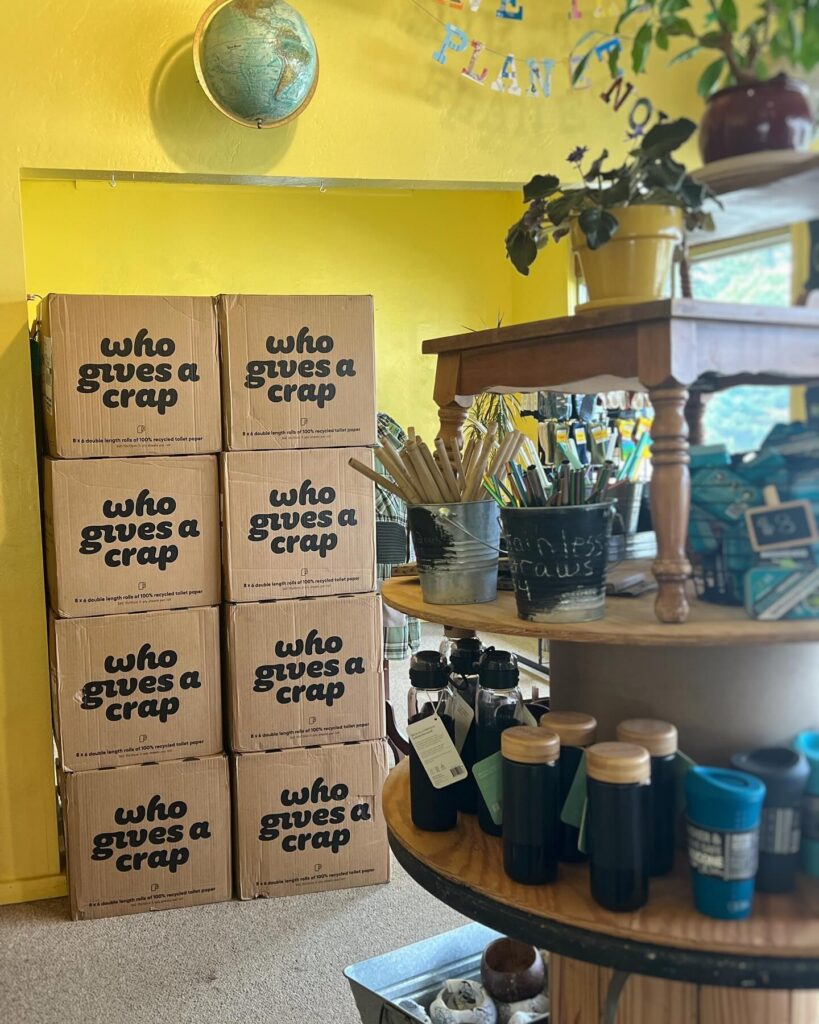
Photo Courtesy Sustainable Wares
More than a decade in, the store has become more of a community fixture than a single retail counter. It has been a distribution point for Boomerang Bags, the reusable shopping bags made locally from materials such as donated or thrifted shirts, through a partnership between the Girl Scouts and the Center for Alaskan Coastal Studies. It has also been one of two Homer drop-off sites for Alaska Plastic Recovery‘s “super sack” collection program, which collects household plastics for processing into recycled lumber. Each large weatherproof bag can hold about 70 to 80 pounds of plastic, and each resulting recycled-plastic two-by-four has an expected lifespan of up to 20 years and can be repurposed up to seven times.
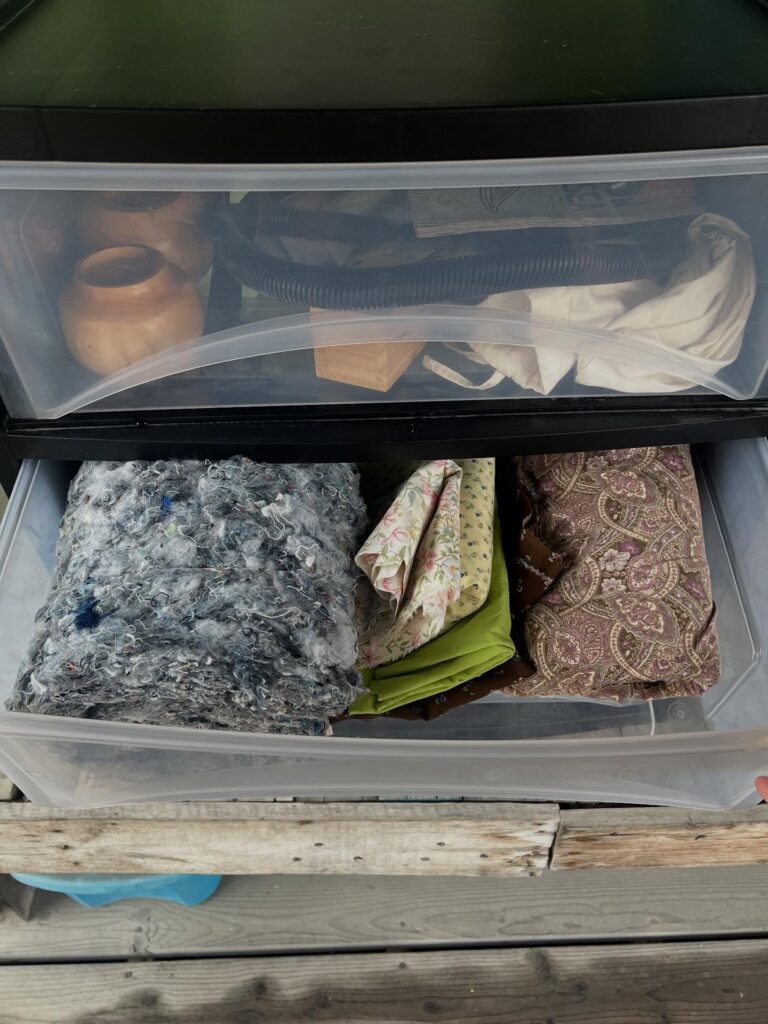
Photo Courtesy Sustainable Wares
West’s own definition of the word over the shop’s door is not a slogan. “Sustainable” means “living within its carrying capacity,” she told the Homer News. “It’s anything. Sustaining your body. Your body is its own environment. This town has its own environment. This store is its own environment.”

Photo Courtesy Sustainable Wares