
(Bloomberg) —
Aerospace startup Star Catcher Industries Inc., which is developing technology to beam solar power to orbiting satellites, said it wirelessly transmitted more electricity in a ground test than ever before, marking another step toward creating the equivalent of a space grid.
Using a suite of lasers, the company successfully sent energy to off-the-shelf solar panels positioned more than 1 kilometer (0.62 miles) away. The tests took place at NASA’s Kennedy Space Center in Florida in October.
The 1.1 kilowatt of converted electricity delivered at once exceeded the previous record set by the US government’s Defense Advanced Research Projects Agency, or Darpa. During Star Catcher’s multiday campaign, it beamed more than 10 megajoules of energy, according to the company.
Star Catcher now plans to begin its Series A funding round after an earlier seed round that raised $22.9 million. The Jacksonville, Florida-based company is preparing for its first in-space trial, planned for 2026.
It aims to fly a demonstration satellite on a SpaceX rideshare flight as soon as next year. Star Catcher said it has signed more than $50 million in contracts with potential customers.
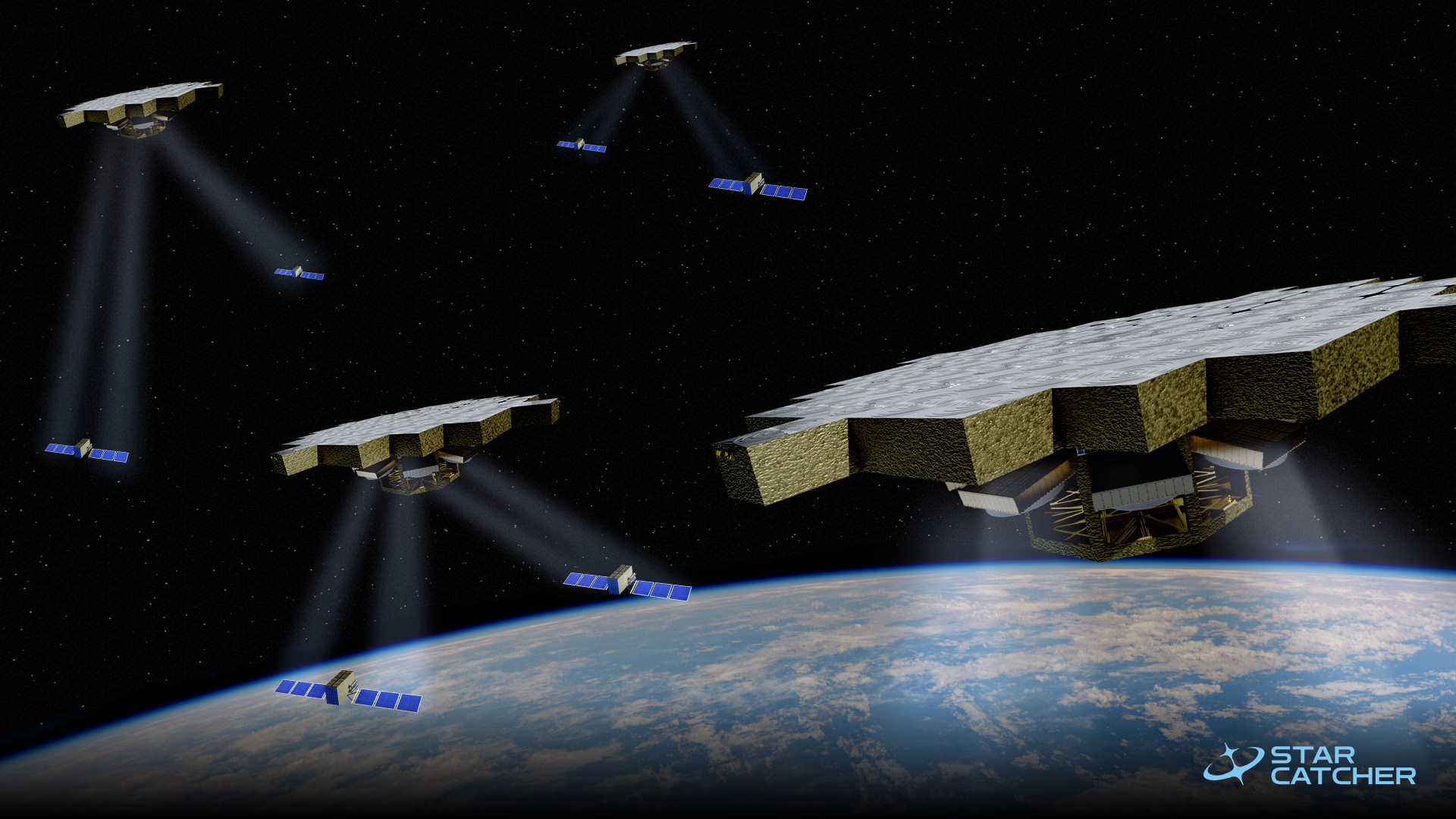
The firm wants to create what it’s calling an orbital power grid. It’s developing spacecraft to beam concentrated electrical power to satellites on demand — acting somewhat like an artificial sun.
To generate enough operating power, most satellites are equipped with solar panels, but those have limitations. As satellites fly around the planet, the sun periodically disappears from view, forcing operators to contend with limited power supplies.
Star Catcher founder and Chief Executive Officer Andrew Rush previously helmed 3D-printing company Made in Space Inc., which was acquired by Redwire Corp. in 2020.
“When we were doing 3D printing at Made in Space, for example, there were missions that we were designing where we were talking about turning the 3D printer off in the middle of a print because of a lack of power availability,” he said.
Star Catcher would fill in the gaps by using its satellites as relays, collecting sunlight and then converting it into concentrated laser light. Tracking technology currently under development would pinpoint the locations of orbiting machines, and the company would recharge them.
Providing more power to satellites will strengthen in-space capabilities like direct-to-device connectivity and orbital data centers, Rush said.
Before trying this technology in the skies, Star Catcher has been testing its ability to beam electrical power over long distances on Earth. The company first demonstrated this in March at EverBank Stadium, home to the NFL’s Jacksonville Jaguars.
Star Catcher then conducted October trials at the runway where NASA’s space shuttles used to land.
In addition, it sent power to batteries inside a prototype of Intuitive Machines Inc.’s lunar rover, which then took a spin around the area.
© 2025 Bloomberg L.P.