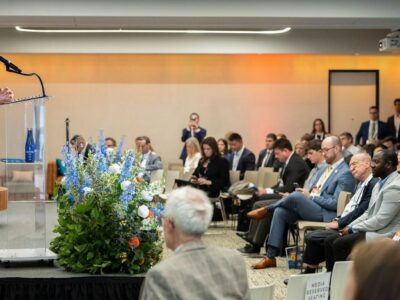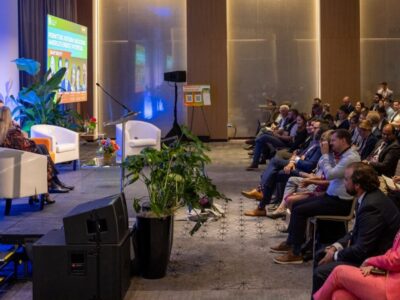
At the 2024 Policymakers Symposium, then-Rep. John Curtis of Utah argued that conservatives lose something by staying out of the energy conversation. “I believe strongly that without a conservative voice, that we make mistakes, and that by conservatives stepping up and being involved and engaged in this, we’ll make better decisions… The narrative is false, that in order to be clean, you have to give up affordability, you have to give up reliability, you have to give up energy security for your country,” he told the room. Curtis is back on that program this year, this time as Utah’s U.S. Senator.
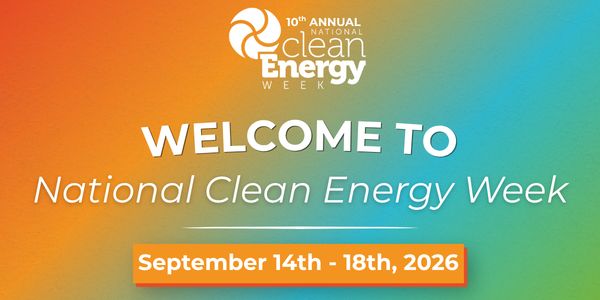
Kicking off its tenth year, the program starts today and is part of National Clean Energy Week (NCEW), which operates under the Citizens for Responsible Energy Solutions (CRES) Forum. The Policymakers Symposium at its center takes place tomorrow, September 15, and Wednesday, September 16, at Convene Hamilton Square on 14th Street NW in Washington, D.C. Attendance is free, and the panels stream online for anyone who cannot get to Washington.
The tenth symposium lands in a year when the demand picture has changed. The U.S. Energy Information Administration (EIA) expects electricity sales to reach a record 4,135 billion kilowatt-hours in 2026 and 4,211 billion kilowatt-hours in 2027, driven by data center construction and rising manufacturing activity. At the same time, global oil prices rose to an average of $91 per barrel in August, up $7 per barrel month over month. That pressure runs through most of the week’s agenda.
Tuesday and Wednesday will both open at 9:30 a.m. with remarks from James Dozier, who chairs NCEW and serves as Founding President and Board Chair of CRES Forum. Multiple government leaders and policymakers will then span the two days. On day one, New Hampshire Gov. Kelly Ayotte (R) will deliver virtual remarks, and Alaska Gov. Mike Dunleavy (R) will join an armchair discussion. Across both days, Rep. Mariannette Miller-Meeks (R-IA-01), Rep. Juan Ciscomani (R-AZ-06), Rep. Bob Latta (R-OH-05), Rep. Gabe Evans (R-CO-08), Rep. Susie Lee (D-NV-03), Rep. Nikki Budzinski (D-IL-13), Sen. Sheldon Whitehouse (D-RI), Sen. John Curtis (R-UT), Rep. Marc Veasey (R-TX-33) and Rep. Scott Peters (D-CA-50) will deliver remarks. On day two, Rep. Jake Auchincloss (D-MA-04) will take up discussions surrounding next-generation geothermal and his bipartisan Hot Rock Act during “The Power Beneath Our Feet,” joined by Charles Hernick, head of energy and environment at Amazon.
Video Courtesy Congresswoman Mariannette Miller-Meeks, M.D.
Administration officials will also appear throughout the day. Bureau of Land Management Director Stevan Pearce will deliver remarks on the first morning, and Associate Deputy Secretary of Energy Alex Fitzsimmons will later be joined by Rep. Julie Fedorchak (R-ND-AL) and Assistant Secretary of the Office of Electricity Catherine Jereza. The next day, Senior Advisor to the Office of Energy Dominance Financing Jeffrey McClure will join “Financing the Future: Deploying Capital at Scale,” alongside Pattern Energy CEO Hunter Armistead, Crux Co-Founder Alfred Johnson, American Council on Renewable Energy (ACORE) President and CEO Ray Long, Galway Sustainable Capital Founder Jennifer Von Bismarck, and Macquarie Asset Management Green Investments Senior Managing Director William Demas. The Department of Energy describes the session as an examination of how to move private capital into American energy at scale.
Sessions will shed light on the current state of clean energy. “Forecasting the 120th Congress: Clean Energy Policy Landscape,” which NCEW bills as its signature “crystal ball” discussion with former Rep. Carlos Curbelo (R-FL-26) and representatives of Lot Sixteen, Holland & Knight, and Causeway Strategy Group. “The State of Energy: Insights from Industry” will put six trade association leaders on one stage: Mark Menezes of the United States Energy Association, Karen Harbert of the American Gas Association, Malcolm Woolf of the National Hydropower Association, Jason Grumet of American Clean Power, John Kotek of the Nuclear Energy Institute, and Xan Fishman of the Bipartisan Policy Center.
Other sessions will focus on more niche areas. On transportation, Ford government affairs head Jessica Carter will discuss the importance of durable policy amid an aging national fleet, and representatives from GTI Energy, the Zero Emission Transportation Association, the RNG Coalition, and the Bipartisan Policy Center will discuss “all-of-the-above” fuel strategy.
Armchair discussions will include ethanol’s value proposition with Growth Energy General Counsel Joe Kakesh, and fusion’s rapid development with Bob Mumgaard, CEO and Co-Founder of Commonwealth Fusion Systems, and how solar and storage technologies can meet growing demand for affordable and reliable energy with Tim Pawlenty, President and CEO of the Solar Energy Industries Association.
Other conversations will cover broader issues, including how artificial intelligence is reshaping American energy, how to build energy infrastructure at the speed of demand, how to build more resilient supply chains and enhance energy security, how to deploy capital at scale, and the importance of continued energy investments to drive workforce development and enhance America’s competitiveness.
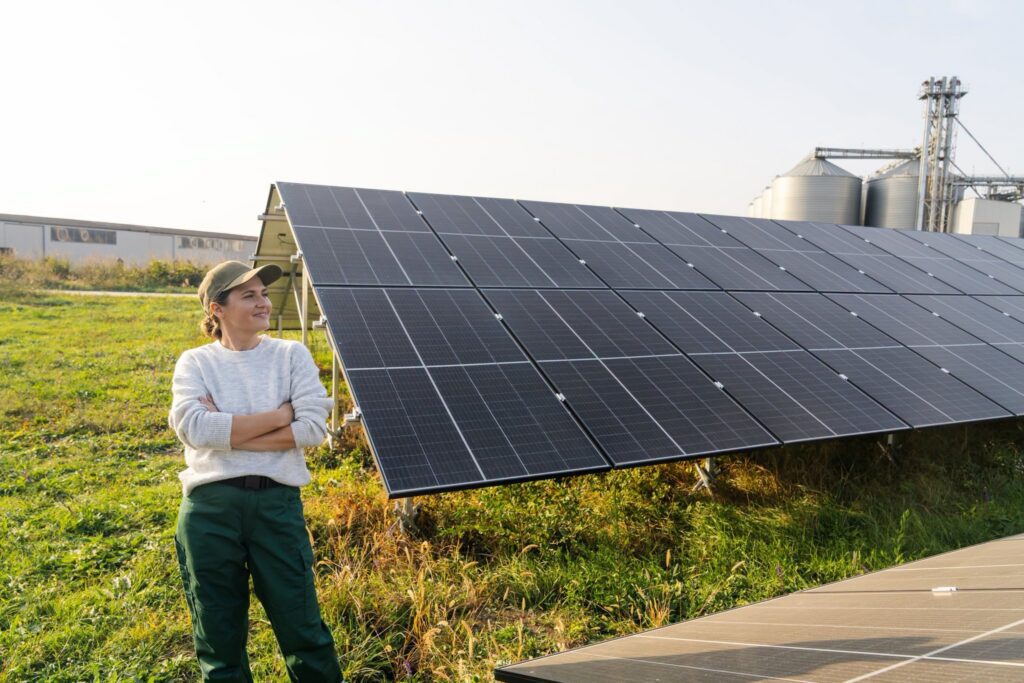
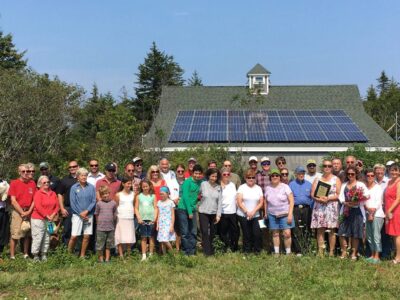
Photo Courtesy Solar Energy Industries Association
Dozier noted that the week reaches well past the Washington, D.C. ecosystem and across party lines, stating, “As electricity demand continues to climb, we need every state, red and blue, aligned on our energy priorities.”
Fourteen states and the District of Columbia have already signed proclamations recognizing Clean Energy Week this year. Govs. Mike Dunleavy of Alaska, Tate Reeves of Mississippi, Kevin Stitt of Oklahoma, and Tony Evers of Wisconsin, along with D.C. Mayor Muriel Bowser, went first. Govs. Kelly Ayotte of New Hampshire, Michelle Lujan Grisham of New Mexico, Katie Hobbs of Arizona, Tina Kotek of Oregon, and Henry McMaster of South Carolina followed, and Illinois, Kentucky, Maine, Maryland, and Michigan have since posted proclamations.
The documents are where the economic case gets specific. Maine Gov. Janet Mills counted more than 16,000 clean energy jobs in her state, put renewable sources at 54% of Maine’s net electricity generation, and cited more than 200,000 high-efficiency electric heat pumps already installed against a goal of 275,000 by 2027. South Carolina Gov. Henry McMaster tallied more than 48,000 clean energy workers and four nuclear plants supplying 54% of the state’s net generation in 2025, the third-most nuclear power in the country. Michigan Gov. Gretchen Whitmer put her state’s clean energy employment above 127,771 in 2025, and Oklahoma Gov. Kevin Stitt listed more than 25,532. Multiple proclamations carry nearly identical language about clean energy jobs being inherently local and impossible to outsource, because the construction, installation, and maintenance happen on site.
Alaska Gov. Mike Dunleavy used his proclamation to make a supply-chain argument, noting that Alaska holds 57 of the 60 minerals on the 2025 U.S. List of Critical Minerals, including graphite, cobalt, rare earths, zinc, copper, and silver.
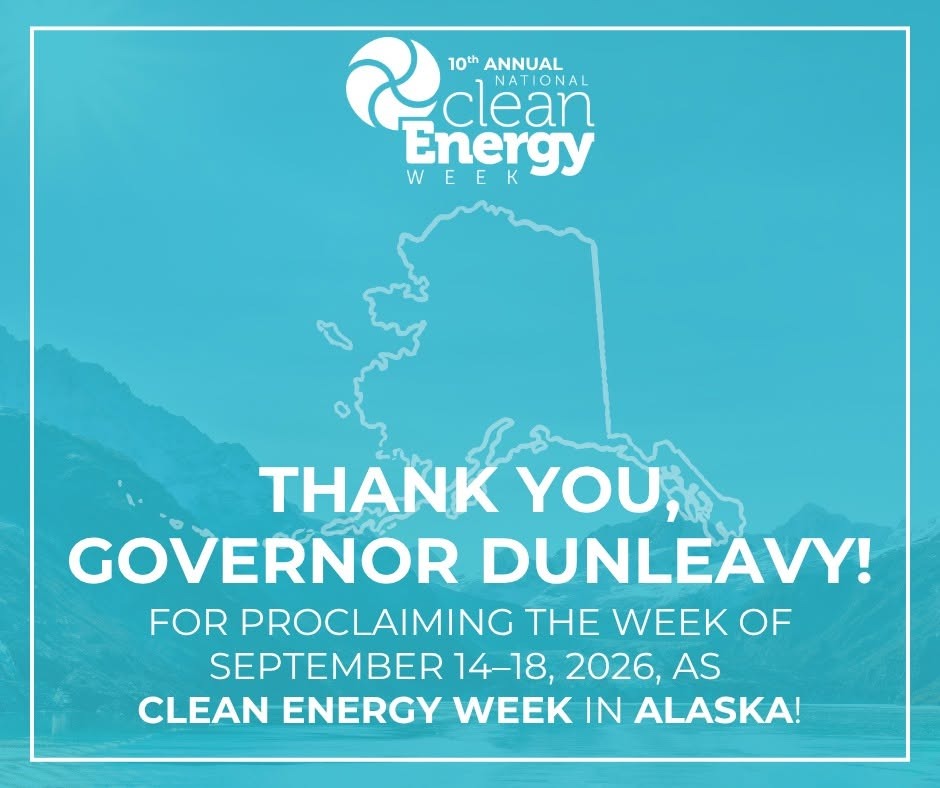
Photo Courtesy National Clean Energy Week
Two evening events sit alongside the panels. A VIP reception and dinner drew 44 congressional staff and four members of Congress in 2025. This year’s will include Gov. Jared Polis (D-CO) and Sen. Alan Armstrong (R-OK). Additionally, a Young Professionals Happy Hour, sponsored by the Nuclear Energy Institute, brings together more than 150 young professionals from industry and government.
Registration for the symposium is open.

Photo Courtesy National Clean Energy Week