
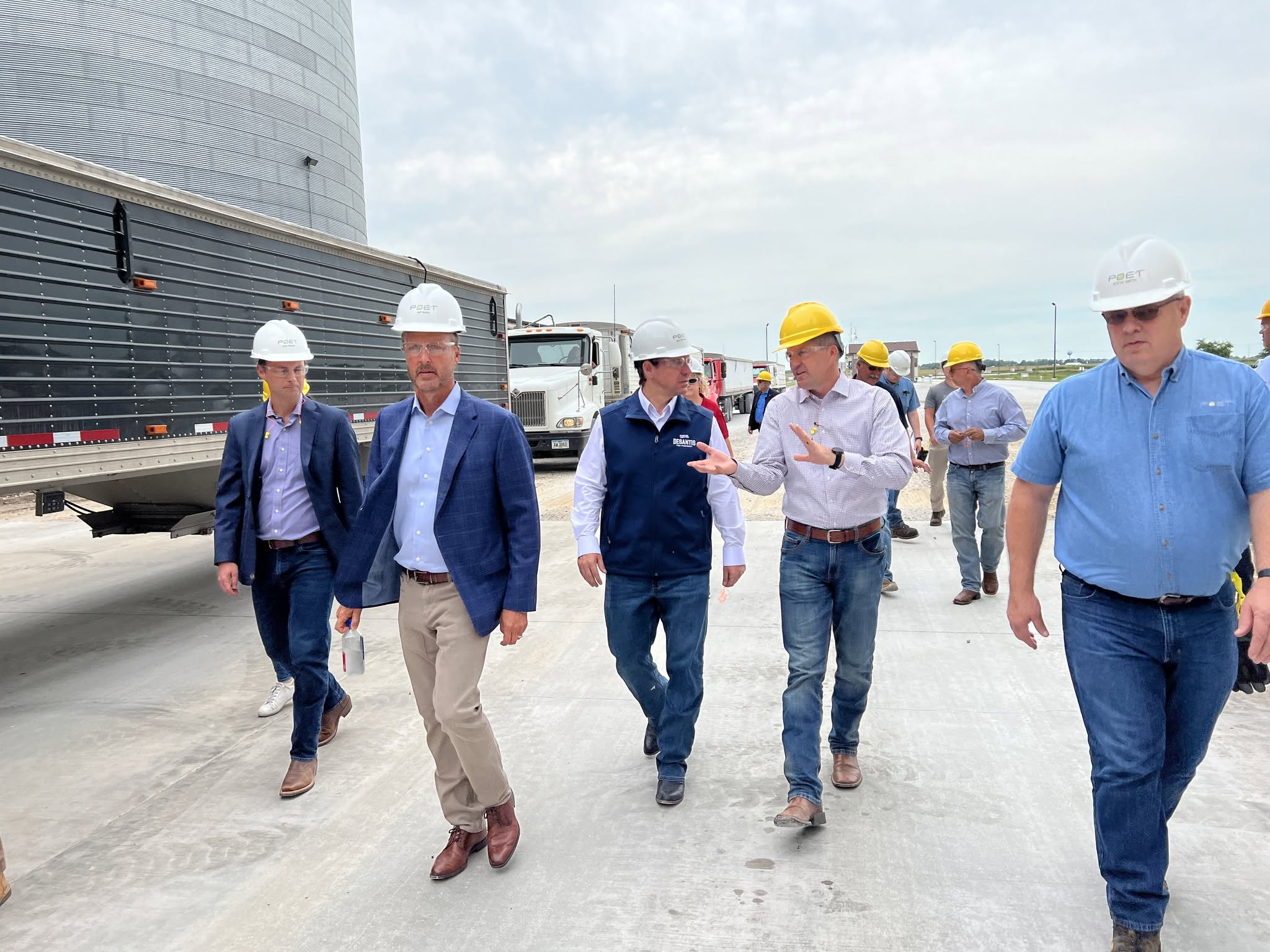
In the late 1990s, Howard Roe kept watching trainloads of corn leave town. Roe, a banker in Manning, Iowa, and then-president of the Manning Betterment Foundation, knew the farmers around him were getting about $1.88 per bushel and shipping their crop out to be turned into something more valuable elsewhere. “So we started looking for alternatives that would allow us to add the value ourselves,” he recalled.
That search led Roe to Jeff Broin, the founder of POET, a South Dakota company that had been building ethanol plants since it started with a single facility in Scotland, South Dakota, in 1987. Roe, by his own account, “pestered him long enough that he finally decided to come down.” Broin went to Manning in 1998, and a farmer-led group went to work. By the spring of 2001, the group had attracted 440 investors and raised enough capital for a majority co-op ownership of a $55 million ethanol plant capable of producing 40 million gallons annually. They broke ground near Coon Rapids in June 2001, and the plant began grinding corn in August 2002. It was POET’s first plant in Iowa and, at the time, the largest dry-grind, farmer-owned ethanol plant in the state.
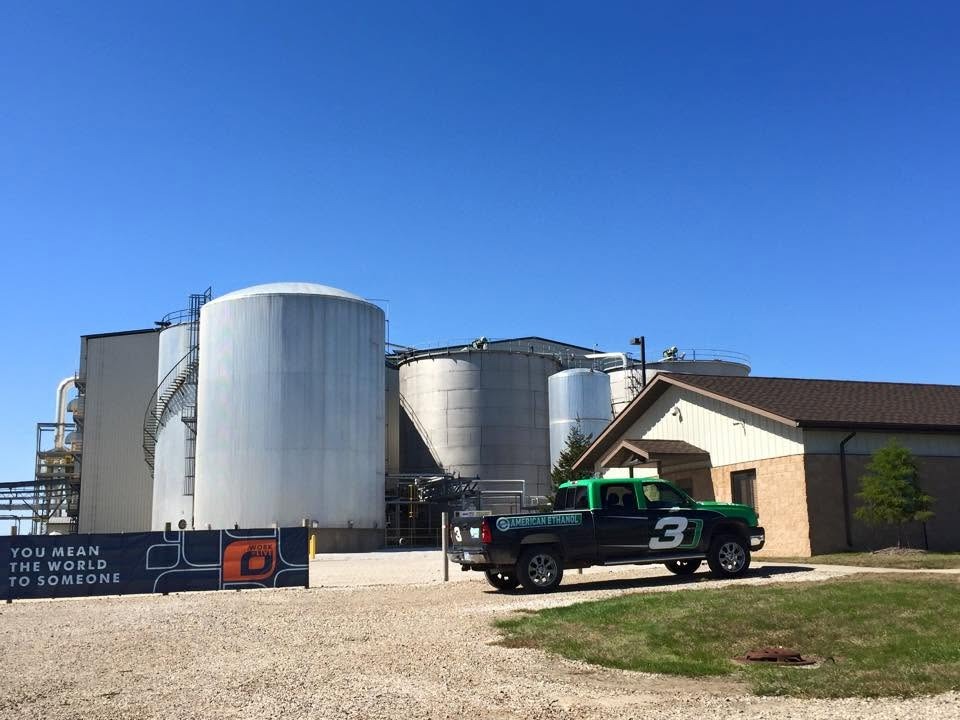
Photo Courtesy Midwest Partnership EDC
More than two decades later, that single farmer-owned plant has become a network. POET, now headquartered in Sioux Falls, operates 35 bioprocessing facilities in the Midwest. Iowa is home to the largest concentration of POET facilities; POET lists facilities in roughly a dozen Iowa towns, among them Coon Rapids, Hanlontown, Ashton, Emmetsburg, Jewell, Gowrie, and Corning. Some were built from the ground up. Others arrived later: in June 2021, POET acquired the bioethanol business of Flint Hills Resources, including six plants in Iowa and Nebraska – including in Arthur, Fairbank, Iowa Falls, Menlo, and Shell Rock – plus two terminals in Texas and Georgia, which lifted the company to 33 facilities and a 40 percent jump in capacity.
The output of that Iowa network is both large and local. The Corning, Gowrie, and Jewell plants each consume approximately 23-24 million bushels of locally grown corn to produce 90 million gallons of bioethanol annually. The acquired plants run bigger still: Arthur, Fairbank, Menlo, and Shell Rock each produce 131-132 million gallons a year, while Iowa Falls produces 112 million gallons.
POET estimates each of its bioprocessing facilities generates roughly $200 million in local economic impact annually, the kind of figure that shows up in a small county as corn bids, tax revenue, and payroll. Each also creates local jobs. Corning, Emmetsburg, and Hanlontown employ about 40 people each, representing an annual payroll of nearly $1.5 million in Hanlontown alone. The facilities also provide value-added markets for farmers, as POET alone purchases 7% of the annual U.S. corn crop from more than 30,000 farmers. It is also an investment in local communities. For example, the Coon Rapids facility represents a $55 million investment by the farmer-owners, with investors now numbering more than 450 producers and non-producers.
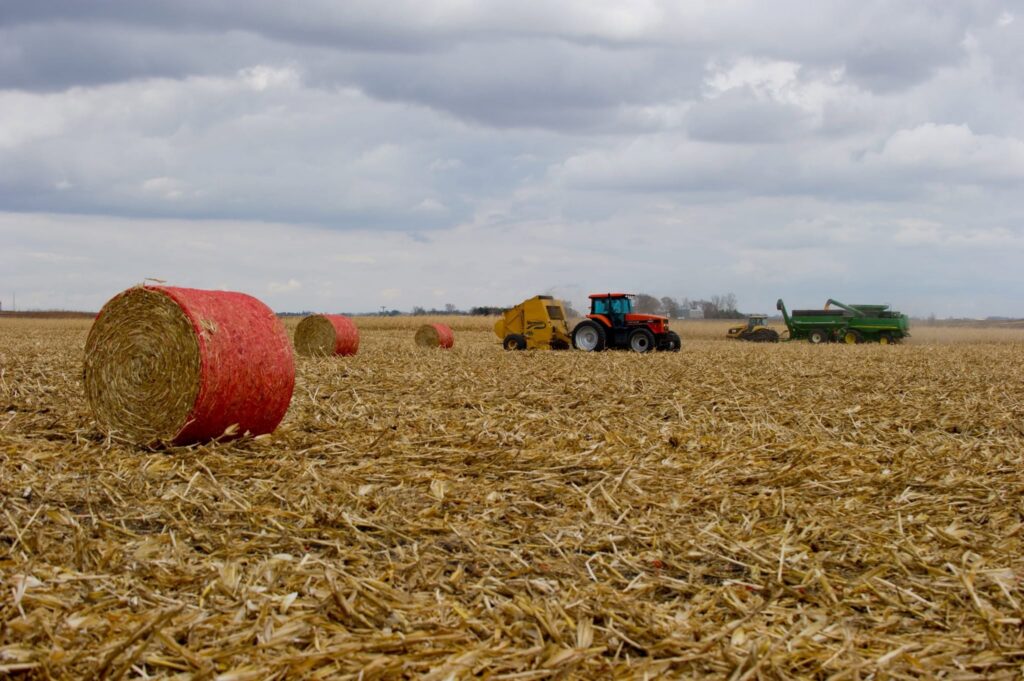
Photo Courtesy POET
Those plants make more than fuel. Corn arrives by the truckload, and what leaves is bioethanol for the nation’s fuel supply, along with a range of co-products: high-protein animal feed, corn oil, purified alcohol, and captured carbon dioxide. Ryan Cummings, the operations manager at POET’s Shell Rock plant, described the shift his crew made over the years in plain terms: “We took a plant making only bioethanol and transformed it almost into a feedmill.” That feed is not an afterthought. Shell Rock’s newest product, a corn fermented protein feed formerly called NexPro, ships worldwide, including, as general manager Kristin Clay noted, for use in aquaculture. Every year, that single facility produces 130 million gallons of bioethanol, 220,000 tons of distillers grains, five million gallons of distillers corn oil, and 75 tons of NexPro.
Stack those plants together with the rest of the state’s, and the scale becomes hard to overstate. Iowa is the nation’s leading ethanol producer, and the broader renewable fuels industry it anchors contributed more than $23.7 billion in output and $5.7 billion in value added in 2024, according to a study commissioned by the Iowa Renewable Fuels Association. The industry also supported more than 34,600 jobs, with average wages exceeding $76,000 per year, totaling $2.6 billion in labor income. Iowa’s ethanol plants were the first stop for 62% of the state’s corn crop. The state produced 4.6 billion gallons of ethanol in 2024, close to 30% of the national total.
For the farmers Howard Roe was thinking about, that is a market that stays in the neighborhood. And as POET frames it, “Creating a cleaner future means getting our hands dirty. It doesn’t mean that our work isn’t cutting-edge. It just means that our breakthroughs are covered in layers of dust, sweat, and good old-fashioned grit.” That same entrepreneurial spirit has helped make POET the world’s largest producer of biofuels, which the company calls “clean, renewable, American-made energy.” Bioethanol contains significantly fewer toxic compounds than many conventional fuel additives and reduces emissions by nearly 50% compared to gasoline. POET estimates that global bioethanol use reduces emissions by 110 million metric tons annually: “That’s like taking 20 million vehicles off the road each year.”

Photo Courtesy POET
The throughline across the decades is the one Roe started with, and it tends to get framed less as environmental policy than as independence. Bill Howell, who managed the Coon Rapids plant as of 2012, came to it after 12 years as an Air Force officer and another 12 with a major oil company. His read on the work was blunt. “We really need to be energy independent, which means renewable fuels, not just drilling a bunch more holes in the ground. That’s why I’m here. I’m really excited about the potential ethanol and renewable fuels give to our nation,” he told Vital, POET’s magazine. Broin used similar language at the grand opening of the Corning plant in May 2007, saying the milestone “makes our country a more secure place by reducing our need for foreign oil.” Sen. Chuck Grassley, who spoke at that ceremony, agreed, “Energy security is one of the nation’s top priorities, and I salute you for helping to lead the way.”
The industry’s next markets look outward. The Renewable Fuels Association and producers like POET are pushing for year-round sales of higher ethanol blends and for ethanol-to-jet sustainable aviation fuel, a pathway that LanzaJet proved at commercial scale in Georgia in 2024. Those markets could create additional demand for Iowa-grown corn.
Back in Manning, the idea was simpler than any of that. Keep the value home. Reflecting years later on the ethanol plant in Coon Rapids, semiretired Howard Roe put it the way a banker might. “It’s always been one of my goals to try to make things better than what they were. This is definitely one of those projects.”

Photo Courtesy POET