For five generations, Utah PaperBox has remained a family-run business committed to “packaging excellence,” producing folding cartons, rigid boxes, and even custom designs. As CEO Steve Keyser said on the Salt Lake Chamber’s podcast, Speaking on Business, “We pride ourselves on being a small business that can provide high-quality, eye-catching custom packaging for both small local start-ups and large national brands, such as Smith Optics and Casper Ice Cream. What’s more, we have committed to doing so sustainably.”
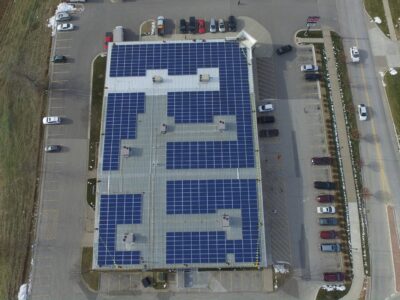
That sustainability can be seen in multiple areas. The company’s headquarters in Salt Lake City became LEED Gold Certified in 2013, with 1,000 solar panels on the roof that meet one-fifth of its energy needs, 20-ton press cooling units that save enough energy to power 70 homes, and GPS sun-tracking skylights that eliminate the need for 50 light fixtures. In its operations, the company refuses to use wood from old-growth forests, and instead sources from forests certified by the Forest Stewardship Council or the Sustainable Forestry Initiative. Utah PaperBox also recycles as much as it can, using seven different scrap categories and ultimately preventing 90 percent of its waste from entering landfills.
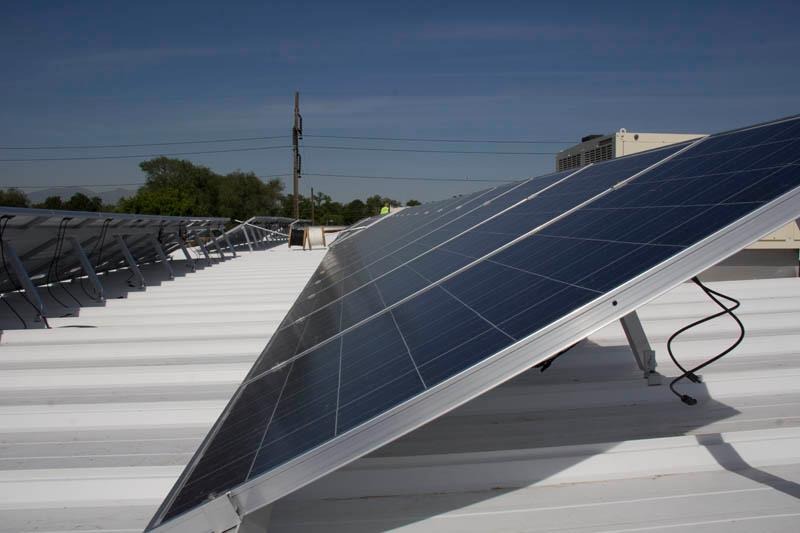
Photo Courtesy Utah PaperBox
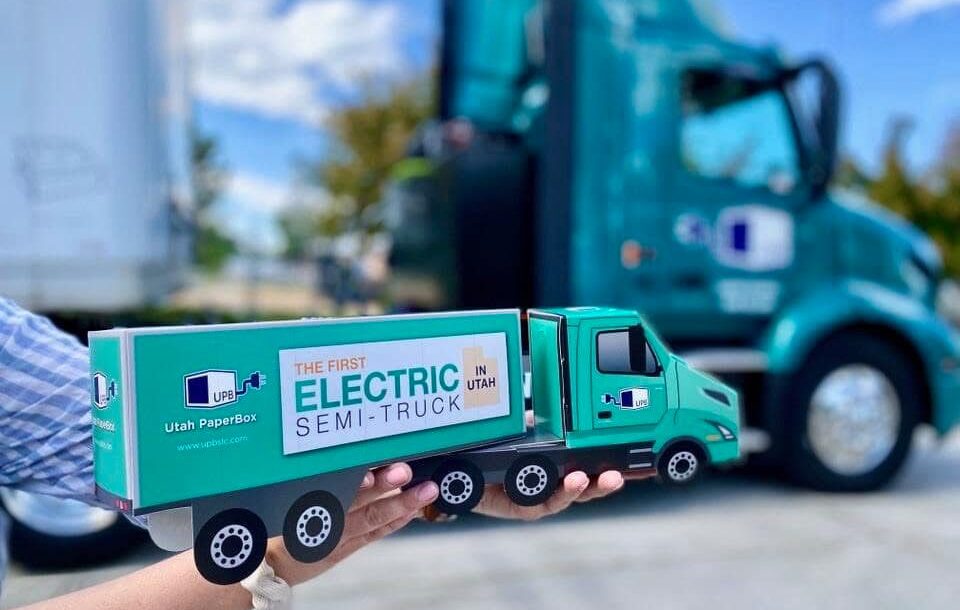
However, perhaps the most innovative move was the company’s decision to become the first in Utah to own an electric semi-truck, which Volvo delivered in 2024. The idea originated with Keyser, who spent nearly a decade living in California, surfing and skiing extensively before joining Utah PaperBox. “If you’re into snowsports, you’re pretty sensitive about what’s going on in the environment,” he explained to Fox13. Being the first company to take this path did not scare him, though, he added: “That’s just kind of how we roll. I think in 2009, when we put the solar on our building. We were like the ninth-largest producer of solar in Utah.”
One of Keyser’s most significant environmental concerns is the local air quality. He described, “If the air gets worse, I have to deal with it. So I’m trying to be a part of the solution to the problem.” He is also a board member of Leaders for Clean Air, a nonprofit committed to improving the state’s air quality by advocating for electric vehicle technology and advancing charging infrastructure. The decision to replace the company’s 25-year-old semi truck with a new electric model that would eliminate the need for 800 gallons of diesel per month made perfect sense.
“My daughter is the fifth generation of our family to join the business, so we understand the vital importance of protecting the air quality in the community where we have lived and worked for decades,” Keyser said at the ribbon cutting. His daughter Madison, who is also the company’s vice president of administration, elaborated to the Salt Lake Chamber, “Being stewards of the community and our environment is a really important part of our company. It’s one of our core values, and we use those values to guide us in all of our decision-making.”
Utah PaperBox also encourages its employees to go electric. It installed Level 2 charging stations and a solar carport in its parking lot, which are free for team members to use, as “we hope to encourage more to drive these vehicles as a benefit for the air quality in Salt Lake City.”

Photo Courtesy Utah PaperBox
Part of the reasoning for the new semi-truck was also economic. The company’s solar array cost about $100,000, or about $10 per watt, but with the panels, Utah PaperBox today only pays about $1.50 per watt. Keyser added, “In four years, it paid for itself. I think people need to think of things over the long haul, and not the short term.” While the electric semi-truck cost a hefty $500,000, Keyser estimated that saving $2,500 monthly on fuel would allow the model to pay for itself within a decade.
The electric semi-truck will also enable Utah PowerBox to make customer deliveries efficiently. The truck can fully charge in three hours and drive routes between Salt Lake City, Provo, and Ogden, and back, on one charge. With fifteen times more torque than a Tesla 3, it can make it over the 7,000-foot Parleys Summit at 70 miles per hour, as well. Customers, including big names like Starbucks and Casper Ice Cream, can therefore rely on timely deliveries. Madison added that it is even more rewarding to be a part of smaller companies’ journeys: “It’s so fun to watch our clients grow. For example, Crumbl, Nu Skin, and Sweet Candy Company. It’s economically valuable and a cool experience to watch other small businesses in Utah be successful.”
Altogether, this small business is pivoting into the future. The words on the side of the new semi-truck say it all: “Zero emissions, infinite possibilities.”
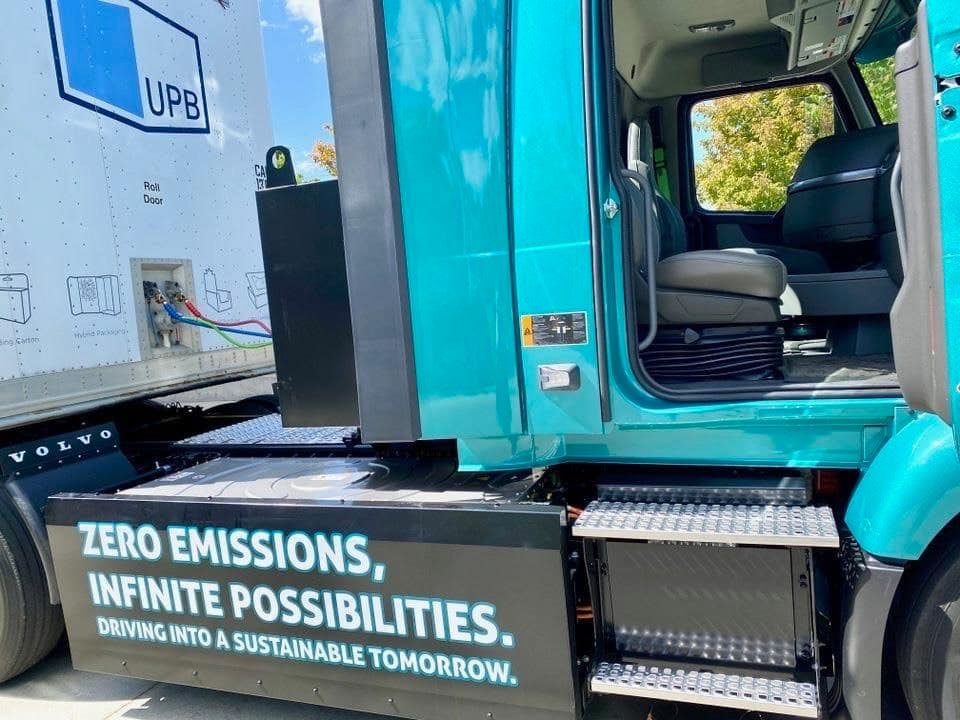
Photo Courtesy Utah PaperBox