(Bloomberg) —
Automakers including Hyundai Motor Co. and Ford Motor Co. said they would extend discounts on certain electric models after a $7,500 federal tax credit expired, a bid to maintain momentum after a surge in third-quarter sales.
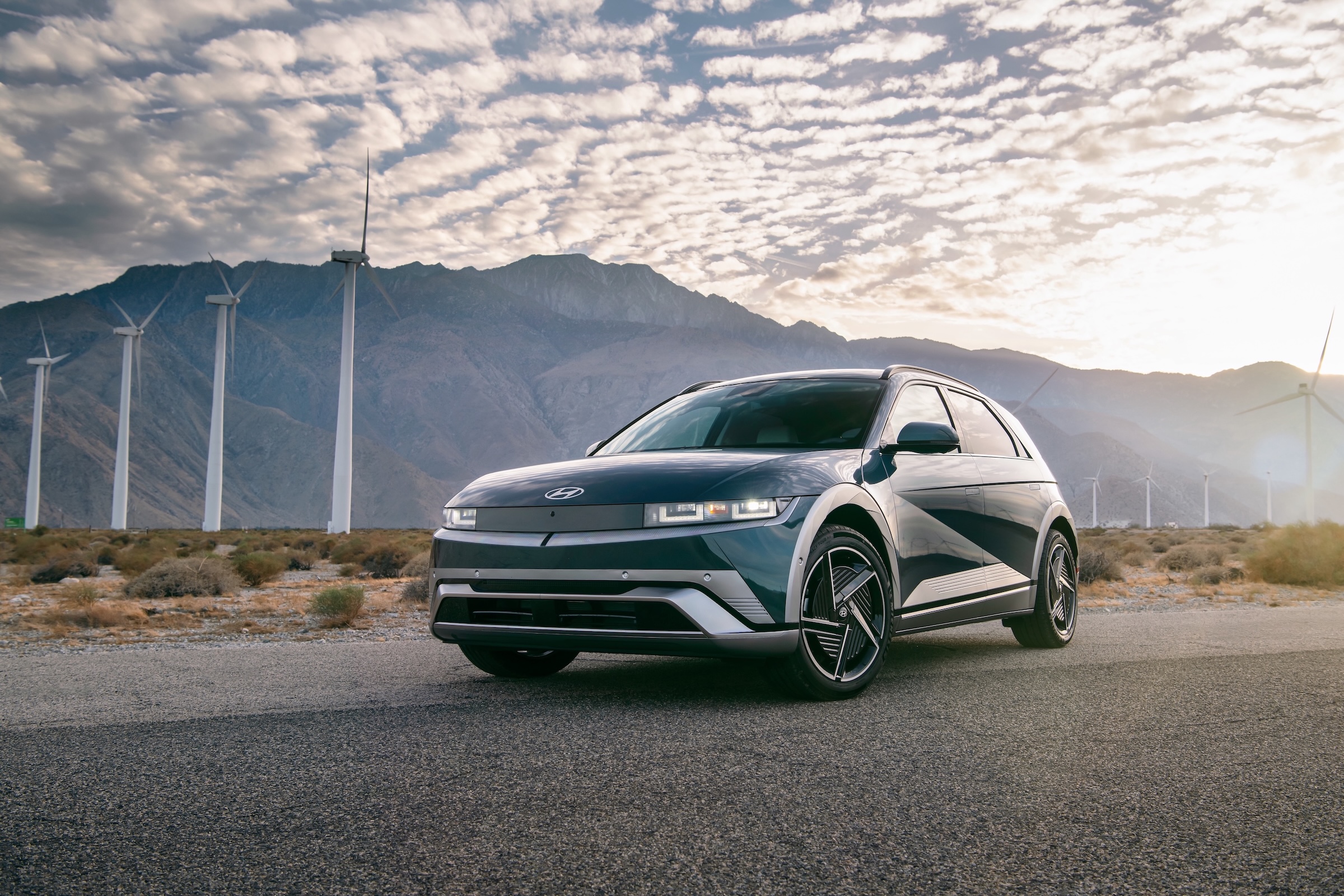
Car companies are stepping in to preserve discounts and smooth the sell-down of existing EV inventory after the federal EV subsidy phased out Sept. 30. GM, Ford and Jeep-owner Stellantis NV are making the $7,500 discount available for leased vehicles that are in transit or on dealer lots. The offers from Hyundai and Stellantis apply to leases and purchases; the Korean automaker will kick in $7,500 in cash for the 2025 version of its Ioniq 5; it’s also lowering the price of the 2026 model by as much as $9,800, depending on the trim.
EV sales are expected to slow in coming quarters as President Donald Trump’s policy changes take hold and automakers dial back production and rejigger product plans to add more gas and hybrid models. Full battery-electric models have been a tough sell for many American car buyers, who’ve been turned off by high prices and spotty charging infrastructure.
“I wouldn’t be surprised if EV sales in the US go down to 5%” from about 10% now, Ford Chief Executive Officer Jim Farley said at a conference in Detroit this week. The EV market will be “way smaller than we thought.”
Automakers’ profits are already taking a hit to absorb the cost of US tariffs on imported vehicles and auto parts. Based on the trade agreements Trump announced this summer, tariffs could add an extra $5,500 to the cost of an imported vehicle, and $1,000 on US-assembled vehicles with imported components, according to researcher Cox Automotive.
EV Divergence
Growth in EV sales in the US are not expected to move much this decade, reaching 11% of the US market by 2029 compared with 8.1% last year, according to a September forecast by EY, a unit of consultant Ernst & Young Global.
But it’s a different story in other parts of the world. EY predicts EVs in Europe will make up more than half of new vehicle sales by 2032. In China, they’ll surpass half the market in 2033.
Automakers are pursuing different strategies to cope with the uneven pace of adoption. While Hyundai is retooling its $5.5 billion plant in Savannah, Georgia, to make hybrids as well as EVs, it’s not downplaying their market relevance.
“I do believe because of the surge we saw in September, there’s going to be a reset in October, maybe November. But the EV market will settle,” said Randy Parker, CEO of Hyundai’s North America business.
“There was an EV market before the IRA and there’s gonna be an EV market after the IRA,” he told reporters on a call Tuesday, referencing former President Joe Biden’s climate bill, the Inflation Reduction Act.
Hyundai said it’s dipping into its own pocket to fund the $7,500 cash rebate on the 2025 Ioniq 5 and the discounts on 2026 models.
Parker said the move “showcases our financial strength and the ability to navigate the market with a lot of uncertainty.”
Ford is simply passing along the value of federal credits it already locked in through its finance arm.
“Ford is working to provide Ford electric vehicle shoppers with competitive lease payments on retail leases through Ford Credit until Dec. 31,” the company said in a statement.
GM Ends Extended EV Tax Credit Plan and Offers Its Own Incentive
General Motors Co. has decided not to offer federal tax credits on electric vehicles that were in transit to dealers or on their lots before last month’s expiration of the $7,500 incentive, opting instead to give about $6,000 of its own cash for lease support and to keep EV sales going.
GM’s move shows how automakers are coping with a rapid reversals in policy under President Donald Trump. The administration ended Biden-era EV tax credits and has watered down penalties for selling vehicles with low fuel economy and high emissions, enticing automakers to sell more profitable gasoline-powered vehicles and make fewer EVs.
GM previously announced it would make the $7,500 discount available for leased vehicles that were already in transit or on dealer lots. “GM worked on an extended offer for the benefit of our customers and dealers. After further consideration, we have decided not to claim the tax credit,” a company spokesman said in an email. “GM will fund the incentive lease terms through the end of October.”
© 2025 Bloomberg L.P.